What Is a Ghazal? The Urdu Ghazal Explained
غزل
Updated
The ghazal (غزل) is the crown of Urdu poetry: a short lyric made of couplets, each complete in itself, held together by rhyme, refrain and mood. It came into Urdu from Persian, and in the hands of Mir, Ghalib, Faiz and Faraz it became the form most loved, quoted and sung across South Asia.
You can read sixty ghazals of the great master Mir Taqi Mir with a facing English translation in Intikhab-e-Mir.
How a ghazal is built
Sher (couplet). A ghazal is a chain of couplets, usually five to fifteen. Each sher is a complete poem in two lines; a ghazal can move from love to death to God from one couplet to the next.
Radif (refrain) and qafiya (rhyme). Every couplet ends with the same word or phrase, the radif, and just before it comes a rhyming word, the qafiya. In Ghalib's famous ghazal the radif is nikle and the rhymes are dam, kam and so on.
Matla and maqta. The first couplet, the matla, has the rhyme and refrain in both lines. The last, the maqta, usually contains the poet's pen-name, the takhallus.
Bahr (metre). All the lines share one metre, built from patterns of long and short syllables, which gives the ghazal its music when recited or sung.
An example
The matla and maqta of one of Ghalib's best-known ghazals. Both lines of the matla end with the radif nikle, after the qafiya dam and kam; every later couplet ends its second line the same way (ham nikle, khaam nikle). In the maqta Ghalib names himself.
| Urdu | Roman | English |
|---|---|---|
| ہزاروں خواہشیں ایسی کہ ہر خواہش پہ دم نکلے | hazaaroñ KHwaahisheñ aisii ki har KHwaahish pe dam nikle | Thousands of desires, each one worth dying for; |
| بہت نکلے مرے ارمان لیکن پھر بھی کم نکلے | bahut nikle mire armaan lekin phir bhii kam nikle | many of my longings came true, and still too few. |
| کہاں میخانے کا دروازہ غالبؔ اور کہاں واعظ | kahaañ maiKHaane kaa darvaaza Ghaalib aur kahaañ vaa.iz | How far apart are the tavern door, Ghalib, and the preacher! |
| پر اتنا جانتے ہیں کل وہ جاتا تھا کہ ہم نکلے | par itnaa jaante haiñ kal vo jaataa thaa ki ham nikle | Yet this much I know: as I came out, he was going in. |
Takhallus: the poet's pen-name
The takhallus (تخلص) is the short pen-name an Urdu poet takes and writes into the maqta, often addressing himself: Mirza Asadullah Khan wrote as Ghalib (and early on as Asad), Mir Taqi as Mir, Muhammad Iqbal as Iqbal. Printed texts often set a small sign, ؔ, over the name, as in غالبؔ, so the reader sees that the poet is speaking of himself. A couplet with the takhallus is how a ghazal signs off.
Scanning the metre (taqti)
This ghazal is in bahr-e-hazaj musamman salim, one of the commonest Urdu metres: four feet of mafaa.iilun, a short syllable and three long ones (u – – –). Scanning a line, taqti, means dividing it into these feet. The first line falls into them exactly:
| Foot | Syllables | Pattern |
|---|---|---|
| 1 | ha · zaa · roñ · KHwaa | u – – – |
| 2 | hi · sheñ · ai · sii | u – – – |
| 3 | ki · har · KHwaa · hish | u – – – |
| 4 | pe · dam · nik · le | u – – – |
Try it yourself
Paste any Urdu line into our free metre checker to see it scanned, browse the common metres, or open Intikhab-e-Ghalib and turn on the reader's Learner view, which marks the radif, qafiya, matla, maqta and takhallus in every ghazal. The Learn Urdu Poetry course teaches all of this step by step.
What ghazals are about
The ghazal speaks of love, almost always unfulfilled: the lover's longing, the beloved's cruelty, the rival, the night of separation. Around this it builds a world of symbols: the nightingale and the rose, the moth and the candle, the wine-bearer (saqi) and the tavern, the preacher and the mystic. Because the beloved can be human or divine, the same couplet can be read as a love poem, a mystical poem or, in the twentieth century, a political one.
The great ghazal poets
Wali Dakhni brought the Urdu ghazal from the Deccan to Delhi around 1700. The eighteenth century belongs to Mir, Sauda and Dard; the nineteenth to Ghalib, Zauq, Momin and Dagh, and to the last Mughal emperor, Bahadur Shah Zafar. The twentieth century renewed the form through Hasrat Mohani, Firaq Gorakhpuri, Faiz, Nasir Kazmi, Ahmad Faraz, Parveen Shakir and Jaun Elia. See our list of great Urdu poets.
The sung ghazal
Ghazals are performed as well as read. Begum Akhtar, Mehdi Hassan, Iqbal Bano, Ghulam Ali, Farida Khanum, Abida Parveen and Jagjit Singh made the sung ghazal one of the great musical traditions of South Asia, and for many listeners it is their first meeting with Urdu poetry.
Read it here
Ghazal · 1841–1863
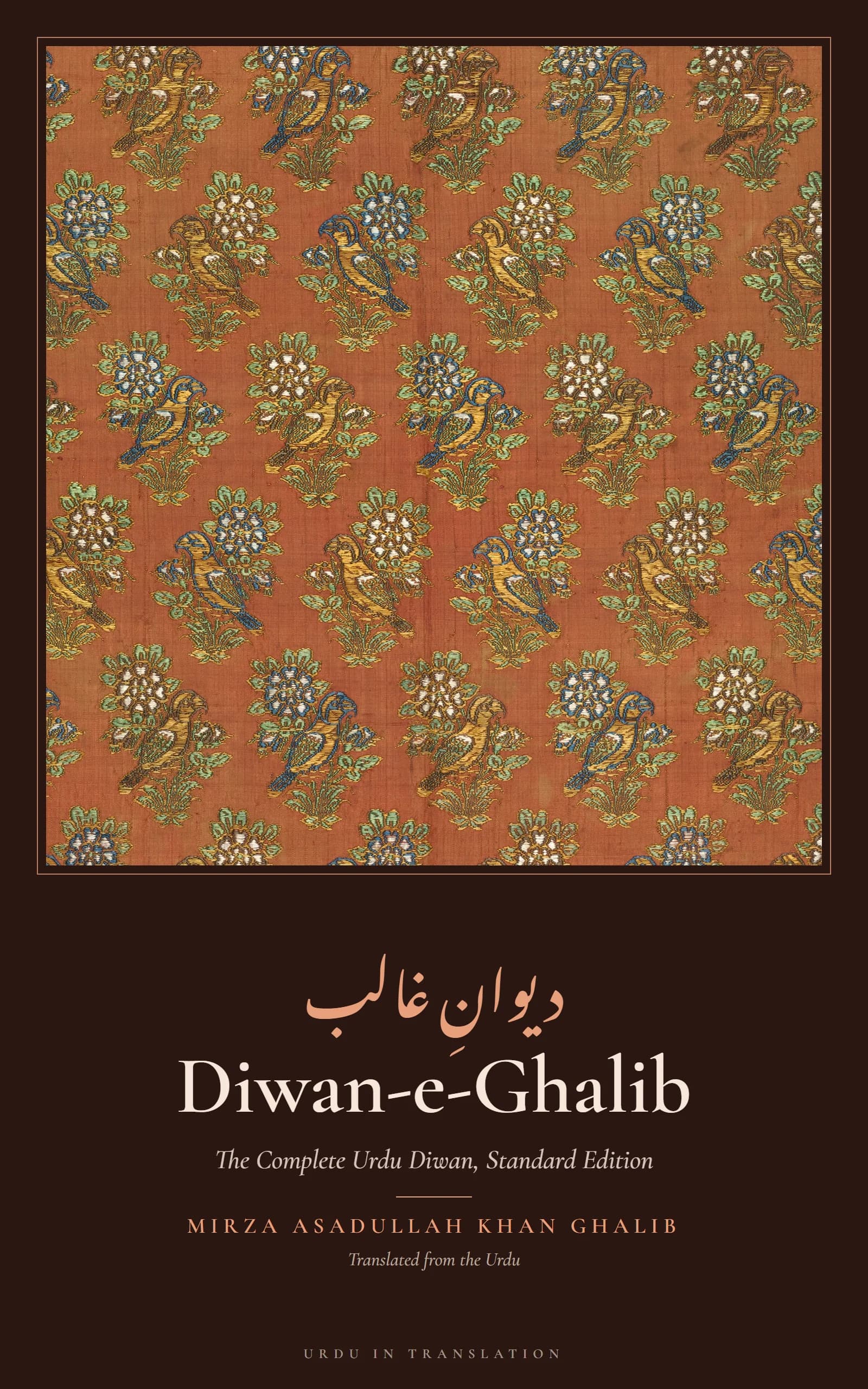
First two chapters freeDiwan-e-Ghalib (Standard Edition)
دیوانِ غالب (متداول نسخہ)
Mirza Asadullah Khan Ghalib
The Urdu Diwan of Mirza Asadullah Khan Ghalib (1797–1869) as it is read today. The ghazals follow the text of the Nizami Press edition (Kanpur, 1862), the last printed in Ghalib's lifetime and corrected by him, as edited by the Urdu Web team for Wikisource (2006), who also took in verses from the Hamidiya, Mehr and Arshi texts: all 273 ghazals in the order of their radif, from "Against whose playful pen does the picture plead?" to "A thousand desires", "O foolish heart" and "It is only a heart". The last six are found outside Mehr's edition. After them come the qasidas in praise of Ali and of Bahadur Shah, and Ghalib's Urdu qit'as, sehras and ruba'is. An English translation faces the Urdu couplet by couplet, with short glosses for names and allusions. The first two chapters are free to read. The Diwan as Ghalib first published it, in 1841, is also in the library: https://www.urduintranslation.com/works/diwan-e-ghalib
16 chaptersEnglishmore languages coming
Ghazal · 1811
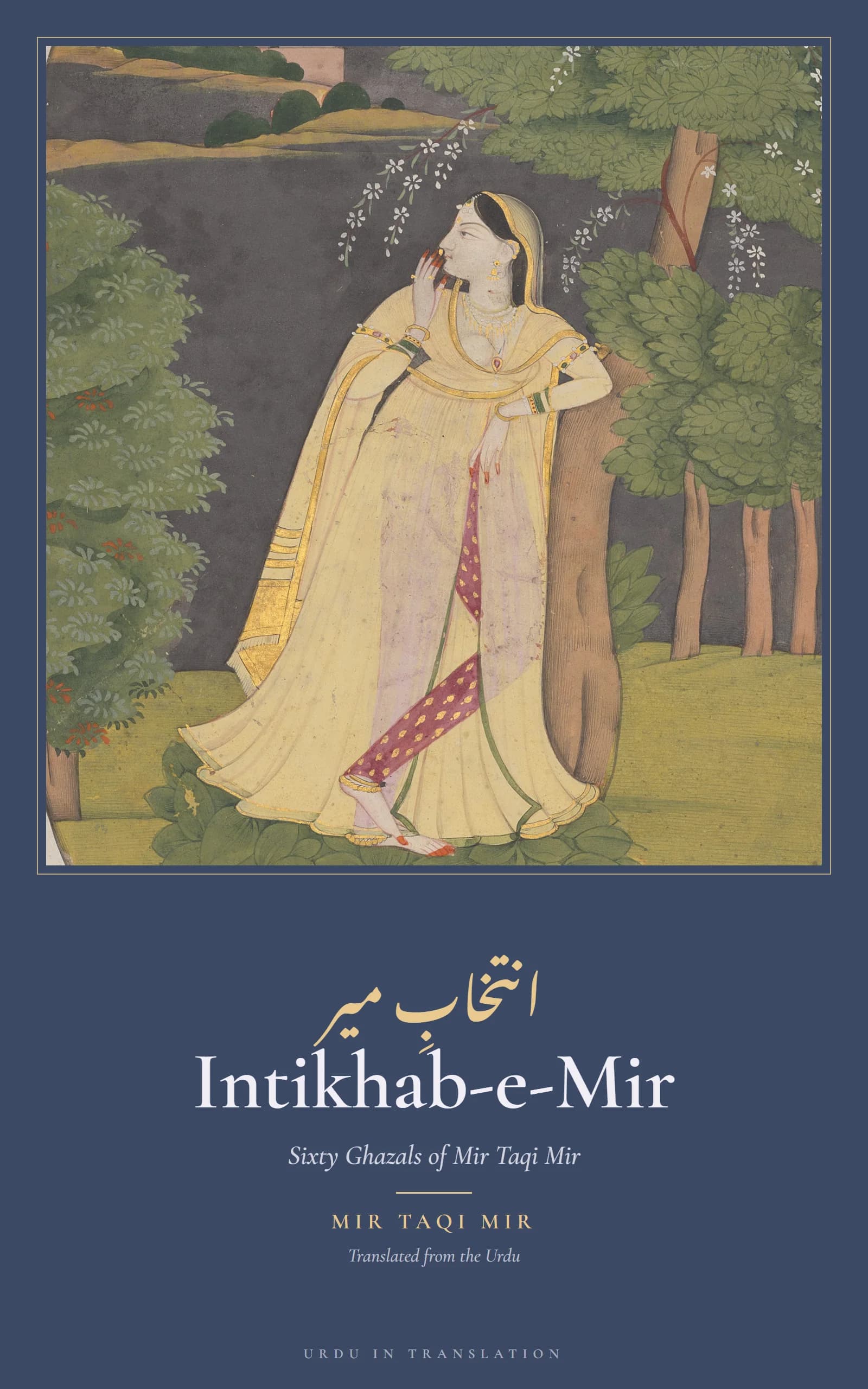
First two chapters freeIntikhab-e-Mir: Sixty Ghazals of Mir Taqi Mir
انتخابِ میر
Mir Taqi Mir
Mir Taqi Mir (1723–1810) is the poet Ghalib himself bowed to: "You are not the only master of Rekhta, Ghalib; they say there was a Mir in times gone by." He lived through the sack of Delhi by Nadir Shah and Ahmad Shah Abdali, lost patrons, home and city, and made of that ruin the plainest and most piercing ghazals in the language: love as an illness no medicine cures, the heart as a city laid waste, the poet as a beggar who sings at the door and moves on. This selection of sixty ghazals follows the HEC BS-Urdu course, from "The leaf and the bush know my state" and "All my plans turned upside down" to "I came like a beggar, called out, and went". Urdu text with a facing English translation, couplet by couplet; the first ten ghazals are free to read.
6 chaptersEnglishEspañolFrançaisالعربية中文Русский
Questions and answers
What is a ghazal?
A lyric poem made of independent couplets that share one metre, a rhyme (qafiya) and usually a refrain (radif). The first couplet rhymes in both lines and the last usually names the poet.
What is the difference between a ghazal and a nazm?
Each couplet of a ghazal stands alone, and the poem has no title. A nazm has a title and develops one subject from beginning to end.
Who is the greatest ghazal poet?
Mir Taqi Mir and Mirza Ghalib are usually named as the two greatest masters of the Urdu ghazal.
What is a maqta?
The last couplet of a ghazal, in which the poet usually includes his or her pen-name (takhallus).
More guides
- What Is a Nazm? The Urdu Nazm from Nazir to Free Verse · The titled, single-subject Urdu poem, from rhymed stanzas to free verse.
- Mirza Ghalib: Life, Poetry and Letters · The most quoted poet of Urdu, and the witness of Delhi's fall in 1857.
- Intikhab-e-Mir: Sixty Ghazals of Mir Taqi Mir in English · Sixty ghazals by the poet Ghalib called the master, with facing English translation.
- The Great Urdu Poets: From Wali and Mir to Faiz and Faraz · Three centuries of Urdu poetry in one list, with where to read each poet.