What Is a Nazm? The Urdu Nazm from Nazir to Free Verse
نظم
Updated
A nazm (نظم) is an Urdu poem with a title that develops a single subject from beginning to end. Where the ghazal is a necklace of separate couplets, the nazm is one continuous thought: a story, an argument, a description, a meditation. It is the form through which Urdu poetry turned to society, politics and the modern world.
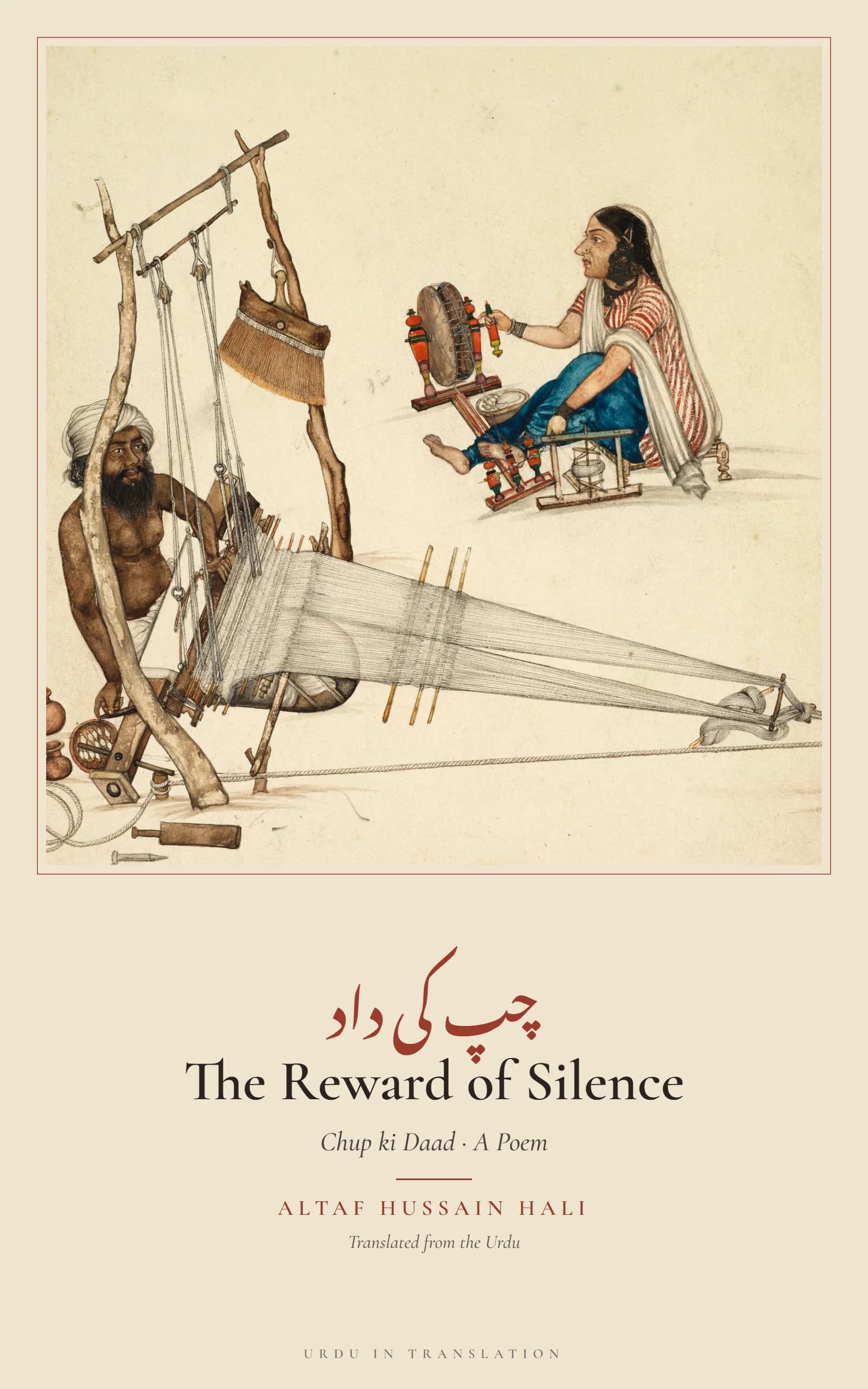
Read Hali's nazm on women, Chup ki Daad, with a facing English translation here.
Forms of the nazm
Paband nazm: rhymed and metred, often in stanzas, such as the six-line musaddas of Hali's famous poem.
Nazm-e-mu'arra: blank verse, with metre but no rhyme.
Azad nazm: free verse, with lines of varying length built from the traditional metres.
Nasri nazm: the prose poem, without metre.
History
In the eighteenth century Nazir Akbarabadi wrote nazms about everyday life in Agra, its festivals, fairs, bread and money, far from the courtly ghazal. In 1874 the poetry gatherings of the Anjuman-e-Punjab in Lahore, led by Muhammad Husain Azad and Hali, called for poems on real subjects, and the nazm became the voice of reform: Hali's Musaddas and Chup ki Daad, then the great philosophical poems of Iqbal.
From 1936 the Progressive Writers' Movement made the nazm a tool of social protest, with Faiz, Majaz and Sahir Ludhianvi. In Lahore the Halqa-e-Arbab-e-Zauq, founded in 1939, championed modernist free verse, above all N. M. Rashid and Miraji. Later poets such as Majeed Amjad and Akhtar-ul-Iman, and today's poets of myth discussed in Asateeri Mabahis, carry the form on.
Read it here
Questions and answers
What is a nazm in Urdu poetry?
A poem with a title that develops one subject throughout, in rhymed stanzas, blank verse, free verse or prose.
What is the difference between a nazm and a ghazal?
A nazm has a title and one continuous subject. A ghazal has no title, and each of its couplets is a separate poem linked only by metre, rhyme and refrain.
More guides
- What Is a Ghazal? The Urdu Ghazal Explained · How a ghazal is built, what it is about, and who wrote and sang the greatest ones.
- Allama Muhammad Iqbal: Poet-Philosopher of the East · The poet-philosopher of selfhood, and the national poet of Pakistan.
- Faiz Ahmad Faiz: Poet of Love and Revolution · The poet who made the ghazal's language of love speak for justice.
- Chup ki Daad by Hali: The Poem on Women, Explained · Hali's 1905 poem honouring women's silent endurance and their right to learning.