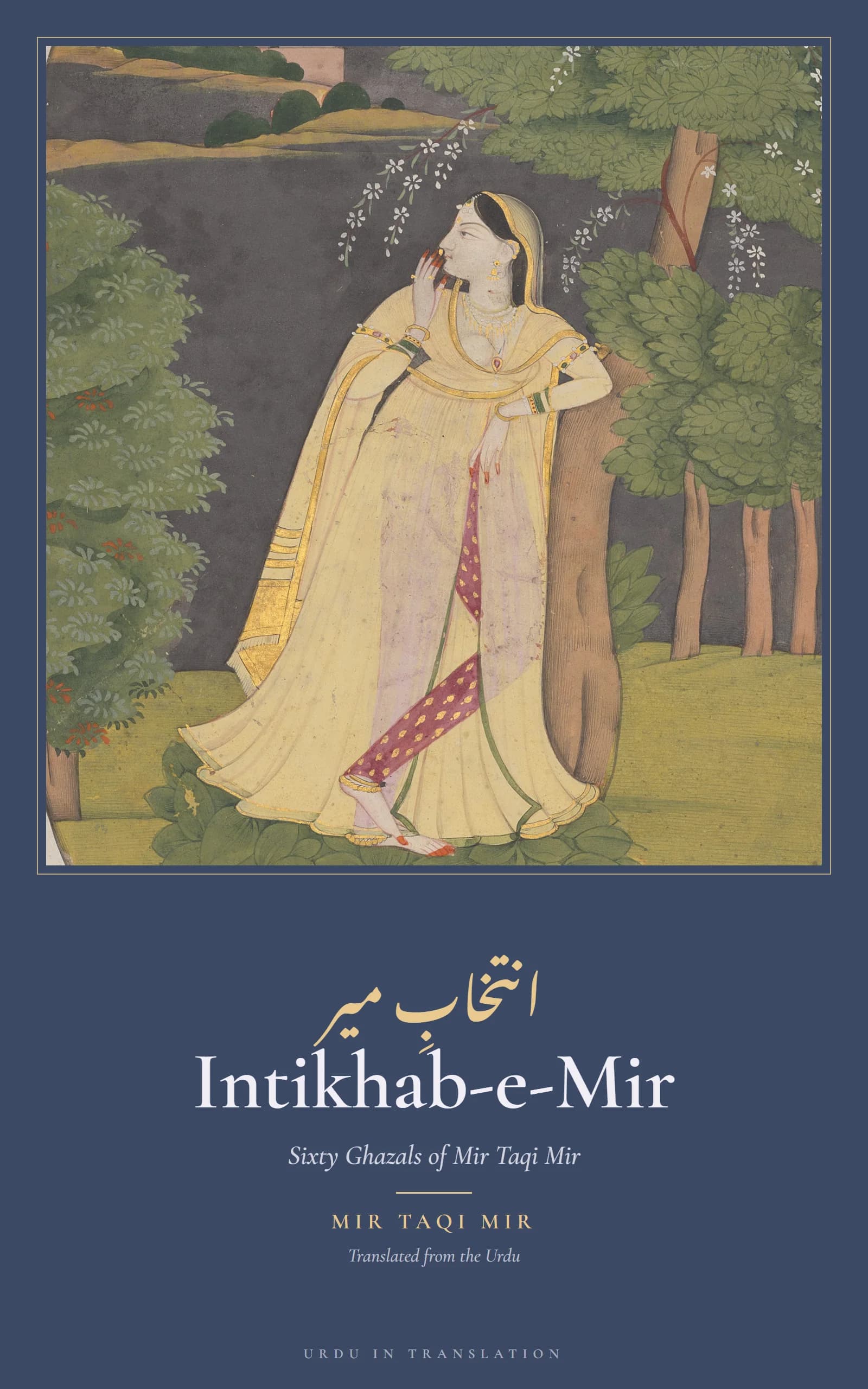
Intikhab-e-Mir: Sixty Ghazals of Mir Taqi Mir in English
انتخابِ میر
Updated
Mir Taqi Mir (1723–1810) is the great master of the Urdu ghazal, the poet even Ghalib bowed to. Intikhab-e-Mir (انتخابِ میر, A Selection from Mir) gathers sixty of his ghazals, arranged in six groups of ten, each with a facing English translation.
You can read Intikhab-e-Mir in Urdu with English translation; the opening ghazals are free.
Why Mir matters
Mir lived through the ruin of Delhi: the invasions of Nadir Shah and Ahmad Shah Abdali, the loss of patrons and of his home. From that experience he made a poetry of grief and love in the plainest language, close to speech, which still feels startlingly direct. Ghalib wrote of him: You are not the only master of Rekhta, Ghalib; they say there was a Mir in times gone by. (Rekhta was the old name for Urdu poetry.)
How to read a ghazal
A ghazal is a chain of couplets, sher, each complete in itself, linked by a shared rhyme (qafiya) and refrain (radif). The last couplet usually contains the poet's pen-name, takhallus; in these poems, Mir. Read each couplet slowly as a separate poem, then notice how the refrain gathers them into one mood.
On this site every ghazal has the Urdu text with an English translation beside it, so you can follow the meaning couplet by couplet.
The six groups
The ghazals are grouped in tens, each named after a line from within it: Why Weep on Love's Long Road?, The Wound and the Scar, A Voice from My Grave, Like the Scent of the Rose, Grief Told Behind the Veil of Verse and When Will Mir's Ghazal Not Be Read? Learn more about the poet in our guide to Mir Taqi Mir.
Read it here
Questions and answers
Who was Mir Taqi Mir?
An Urdu poet of eighteenth-century Delhi and Lucknow (1723–1810), widely regarded as the greatest master of the classical ghazal.
Why is Mir called Khuda-e-Sukhan?
Khuda-e-Sukhan, "the god of poetry", is the title later poets and critics gave him in recognition of his mastery.
Where can I read Mir's ghazals in English?
On this site: sixty ghazals with the Urdu text and a facing English translation.
More guides
- Mir Taqi Mir: Life and Poetry of the Master of the Ghazal · The eighteenth-century poet Urdu calls Khuda-e-Sukhan, the god of poetry.
- Chup ki Daad by Hali: The Poem on Women, Explained · Hali's 1905 poem honouring women's silent endurance and their right to learning.