The Great Urdu Poets: From Wali and Mir to Faiz and Faraz
اردو کے عظیم شاعر
Updated
Urdu poetry is one of the great poetic traditions of the world. Here are its major poets in order, with what each is known for. Poets with a full guide are linked; the works of Mir and Hali can be read on this site with a facing English translation.
The classical age (1700–1857)
Wali Dakhni (died about 1707): brought the Urdu ghazal from the Deccan to Delhi.
[Mir Taqi Mir](/guides/mir-taqi-mir) (1723–1810): the master of the ghazal, poet of love and loss. Read sixty of his ghazals.
Mirza Sauda (1713–1781): master of the qasida and of satire. Khwaja Mir Dard (1721–1785): the great Sufi poet of Delhi.
Nazir Akbarabadi (about 1735–1830): poet of everyday life and festivals, father of the nazm.
Sheikh Ibrahim Zauq (1790–1854) and Momin Khan Momin (1800–1851): Ghalib's rivals in Delhi.
[Mirza Ghalib](/guides/mirza-ghalib) (1797–1869): the most celebrated of all. [Bahadur Shah Zafar](/guides/bahadur-shah-zafar) (1775–1862): the last emperor, a poet of sorrow.
[Mir Anees](/guides/mir-anees) (1803–1874): the supreme master of the marsiya, the elegy on Karbala.
Reform and modernity (1857–1947)
Dagh Dehlavi (1831–1905): the last great poet of the classical Delhi idiom.
[Altaf Hussain Hali](/guides/altaf-hussain-hali) (1837–1914): reformer, critic and author of the Musaddas and Chup ki Daad.
[Akbar Allahabadi](/guides/akbar-allahabadi) (1846–1921): the great comic satirist of Westernisation.
[Allama Iqbal](/guides/allama-iqbal) (1877–1938): poet-philosopher and Pakistan's national poet.
[Josh Malihabadi](/guides/josh-malihabadi) (1898–1982): "the poet of revolution". [Firaq Gorakhpuri](/guides/firaq-gorakhpuri) (1896–1982): the great modern ghazal poet of India.
After 1947
[Faiz Ahmad Faiz](/guides/faiz-ahmad-faiz) (1911–1984): poet of love and revolution. [Sahir Ludhianvi](/guides/sahir-ludhianvi) (1921–1980): poet and film lyricist.
N. M. Rashid (1910–1975) and Miraji (1912–1949): pioneers of free verse. Majeed Amjad (1914–1974): a quiet master of the modern nazm.
Nasir Kazmi (1925–1972): renewer of the simple, melancholy ghazal.
[Ahmad Faraz](/guides/ahmad-faraz) (1931–2008), [Jaun Elia](/guides/jaun-elia) (1931–2002) and [Parveen Shakir](/guides/parveen-shakir) (1952–1994): the most read ghazal poets of recent times.
Read it here
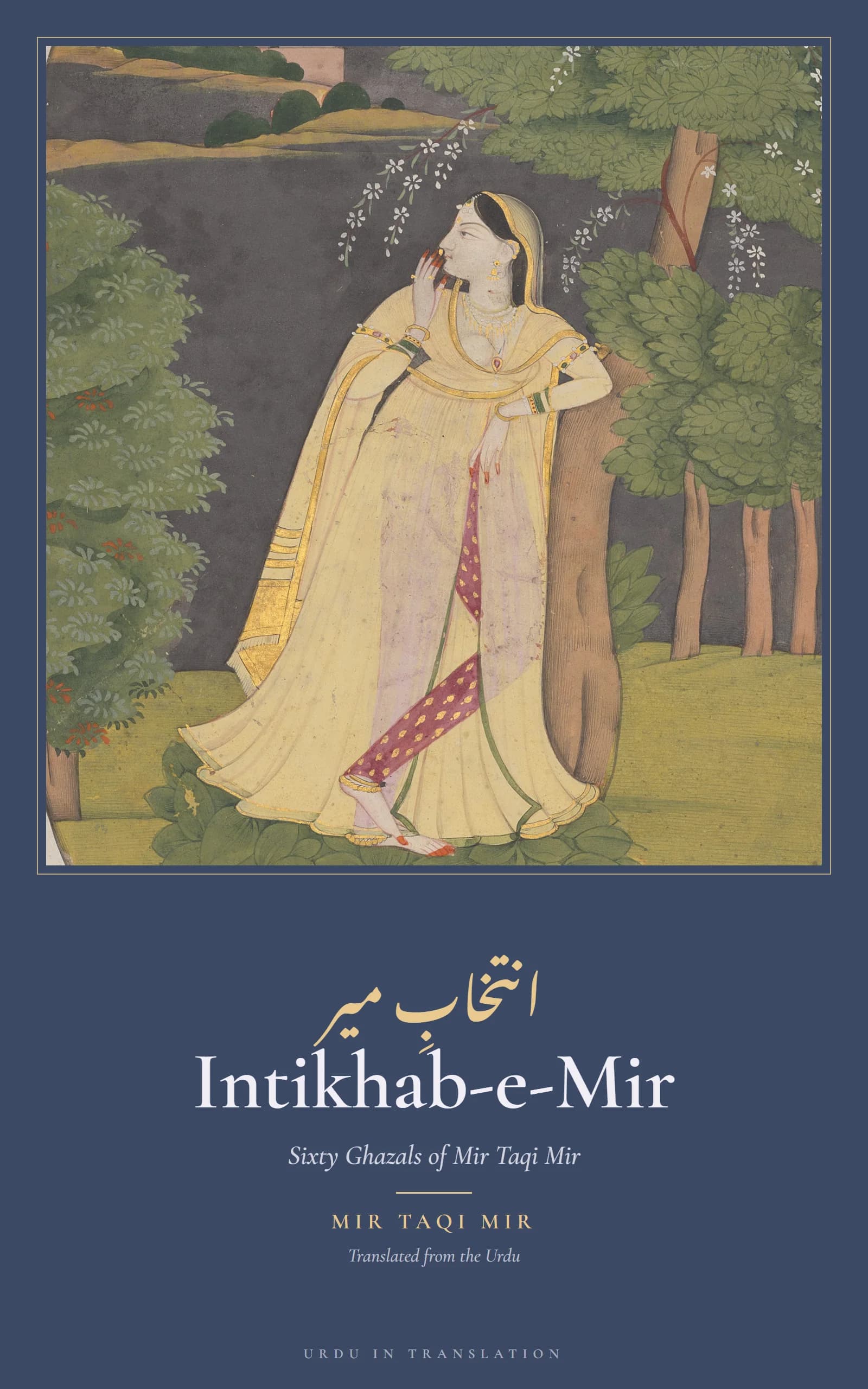
Ghazal · 1811
First two chapters freeIntikhab-e-Mir: Sixty Ghazals of Mir Taqi Mir
انتخابِ میر
Mir Taqi Mir
Mir Taqi Mir (1723–1810) is the poet Ghalib himself bowed to: "You are not the only master of Rekhta, Ghalib; they say there was a Mir in times gone by." He lived through the sack of Delhi by Nadir Shah and Ahmad Shah Abdali, lost patrons, home and city, and made of that ruin the plainest and most piercing ghazals in the language: love as an illness no medicine cures, the heart as a city laid waste, the poet as a beggar who sings at the door and moves on. This selection of sixty ghazals follows the HEC BS-Urdu course, from "The leaf and the bush know my state" and "All my plans turned upside down" to "I came like a beggar, called out, and went". Urdu text with a facing English translation, couplet by couplet; the first ten ghazals are free to read.
6 chaptersEnglishEspañolFrançaisالعربية中文Русский
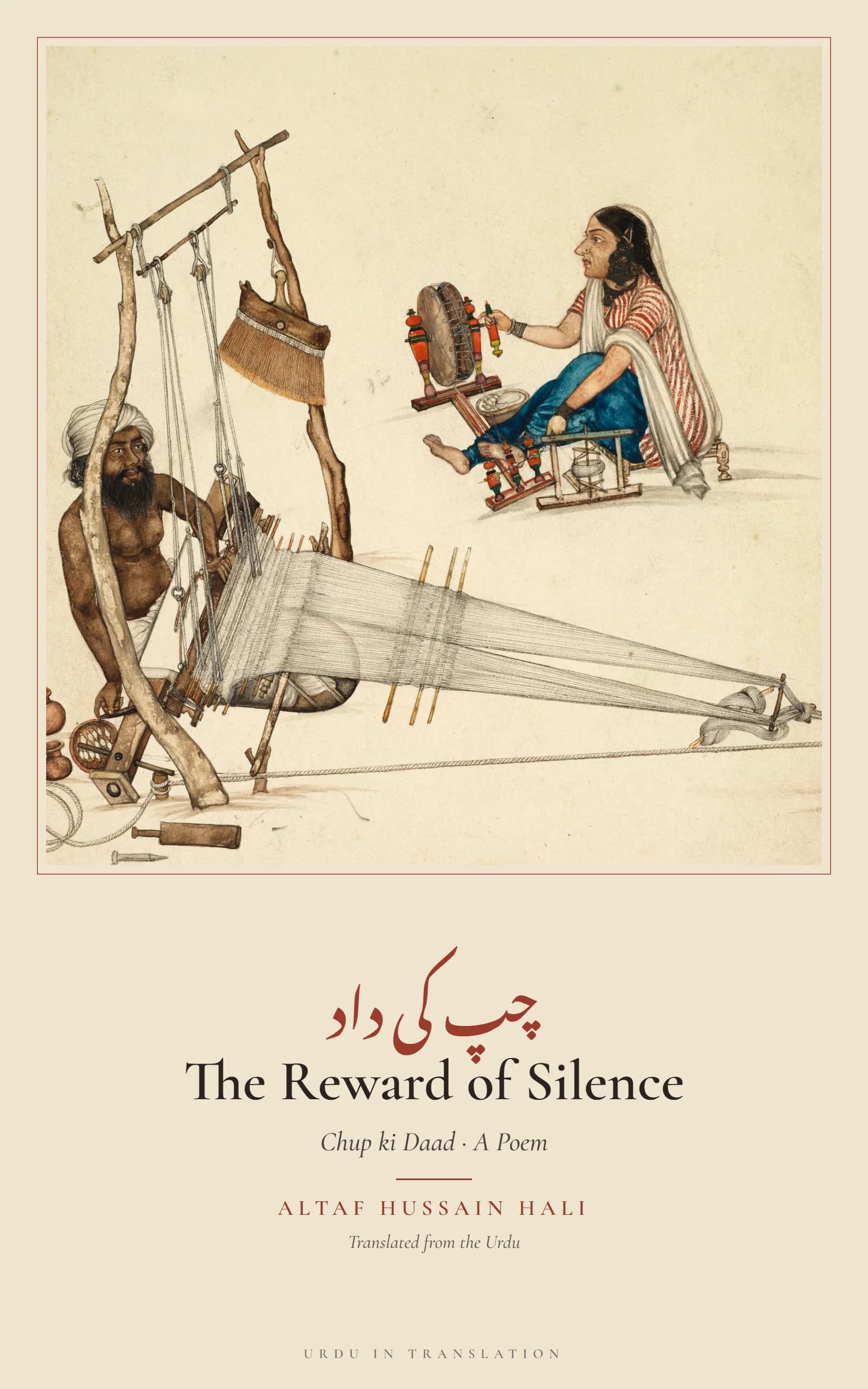
Nazm · 1905
First two chapters freeThe Reward of Silence
چپ کی داد
Altaf Hussain Hali
Hali's poem of 1905 addressed to the women of India: eight stanzas on what women give the world, what they endure in their fathers' and husbands' houses, the ages of injustice they were made to bear in silence, and the dawn of their right to learning. Written by the reformer who gave Urdu the Musaddas, it remains the most moving plea for women's education in the language. Urdu text with a facing English translation; the note on the poet and the first stanza are free to read.
9 chaptersEnglishEspañolFrançaisالعربية中文Русский
Questions and answers
Who is the greatest Urdu poet?
Mirza Ghalib is the most celebrated, with Mir Taqi Mir often named as his equal. Allama Iqbal and Faiz Ahmad Faiz are the most important twentieth-century poets.
Who was the first Urdu poet?
Amir Khusrau (1253–1325) is traditionally credited with the first verses in early Urdu (Hindavi), and Wali Dakhni with establishing the Urdu ghazal around 1700.
More guides
- What Is a Ghazal? The Urdu Ghazal Explained · How a ghazal is built, what it is about, and who wrote and sang the greatest ones.
- What Is a Nazm? The Urdu Nazm from Nazir to Free Verse · The titled, single-subject Urdu poem, from rhymed stanzas to free verse.
- Mirza Ghalib: Life, Poetry and Letters · The most quoted poet of Urdu, and the witness of Delhi's fall in 1857.
- Allama Muhammad Iqbal: Poet-Philosopher of the East · The poet-philosopher of selfhood, and the national poet of Pakistan.