Mir Taqi Mir: Life and Poetry of the Master of the Ghazal
میر تقی میر
Updated
Mir Taqi Mir (میر تقی میر, 1723–1810) is the great classical master of the Urdu ghazal. Later poets called him Khuda-e-Sukhan, the god of poetry, and Ghalib himself conceded that there had been a master before him: they say there was a Mir in times gone by.
Life
Mir was born in Agra in 1723. His father, a pious man with Sufi leanings, died when Mir was a boy, and he went to Delhi in search of a living. He grew up as a poet in a Delhi repeatedly sacked and impoverished, by Nadir Shah in 1739 and by Ahmad Shah Abdali's invasions, and he lost one patron after another.
In 1782 he left Delhi for Lucknow at the invitation of Nawab Asaf-ud-Daula, and he spent the rest of his life there, famously proud and aloof among the Lucknow poets. He died in Lucknow in 1810.
Poetry
Mir's collected Urdu poetry fills six divans. He wrote in every form, but his fame rests on the ghazal. His language is close to everyday speech, his tone melancholy and intimate, and his subject the suffering of love and loss, which readers have always also heard as the ruin of Delhi.
He also wrote, in Persian, an autobiography, Zikr-e-Mir, and Nikat-ush-Shuara, a biographical dictionary of Urdu poets.
Read Mir in English
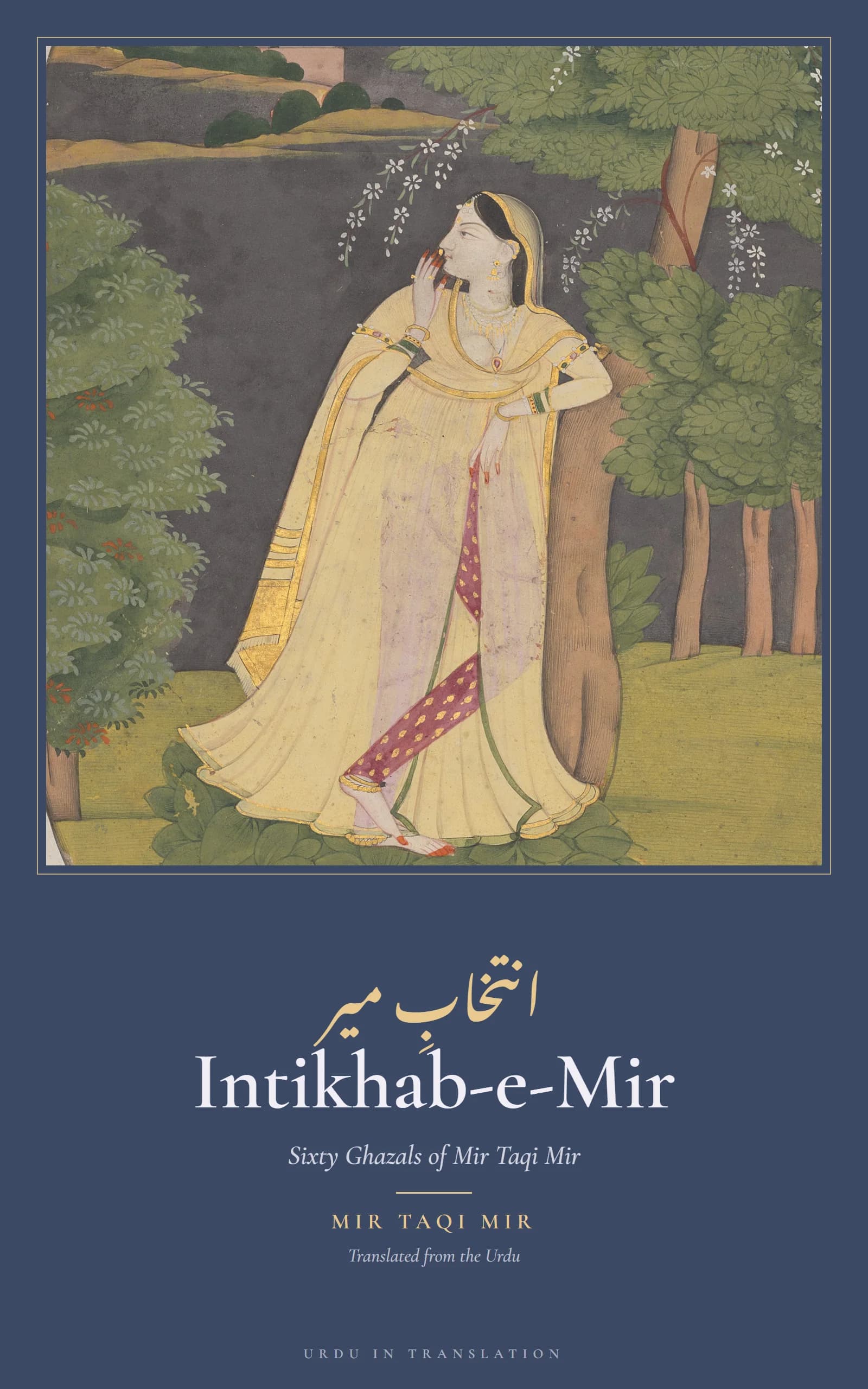
Intikhab-e-Mir on this site gathers sixty of his ghazals with a facing English translation. Start reading.
Read it here
Questions and answers
Who is the greatest Urdu ghazal poet?
Mir Taqi Mir and Mirza Ghalib are usually named as the two greatest masters of the Urdu ghazal.
When did Mir Taqi Mir live?
From 1723 to 1810, in Agra, Delhi and finally Lucknow.
What did Ghalib say about Mir?
In a famous couplet Ghalib wrote that he was not the only master of Rekhta (Urdu poetry): there had been a Mir in times gone by.
More guides
- Intikhab-e-Mir: Sixty Ghazals of Mir Taqi Mir in English · Sixty ghazals by the poet Ghalib called the master, with facing English translation.