Deputy Nazir Ahmad: Life and Novels
ڈپٹی نذیر احمد
Updated
Deputy Nazir Ahmad (ڈپٹی نذیر احمد, 1830–1912) is the father of the Urdu novel. A scholar of Arabic, a senior government official and a translator of the Qur'an, he began writing stories to teach his own daughters, and in doing so created a new form in Urdu literature.
Life
Nazir Ahmad was born in 1830 in a village of Bijnor district and came to Delhi as a boy to study in the mosque schools. He then studied at Delhi College, where he learned Arabic and came into contact with Western learning. He survived the upheaval of 1857 in Delhi.
After the uprising he rose through government service and became a deputy collector, which gave him the title "Deputy" by which he is still known. He helped translate the Indian Penal Code into Urdu. Later he served the state of Hyderabad, and he retired to Delhi, where he devoted himself to writing, lecturing and a celebrated Urdu translation of the Qur'an. He died in Delhi in 1912.
Novels
Mirat-ul-Arus (The Bride's Mirror, 1869): the contrasting lives of two sisters, the sensible Asghari and the spoilt Akbari.
Banat-un-Nash (1872): a sequel about education for girls.
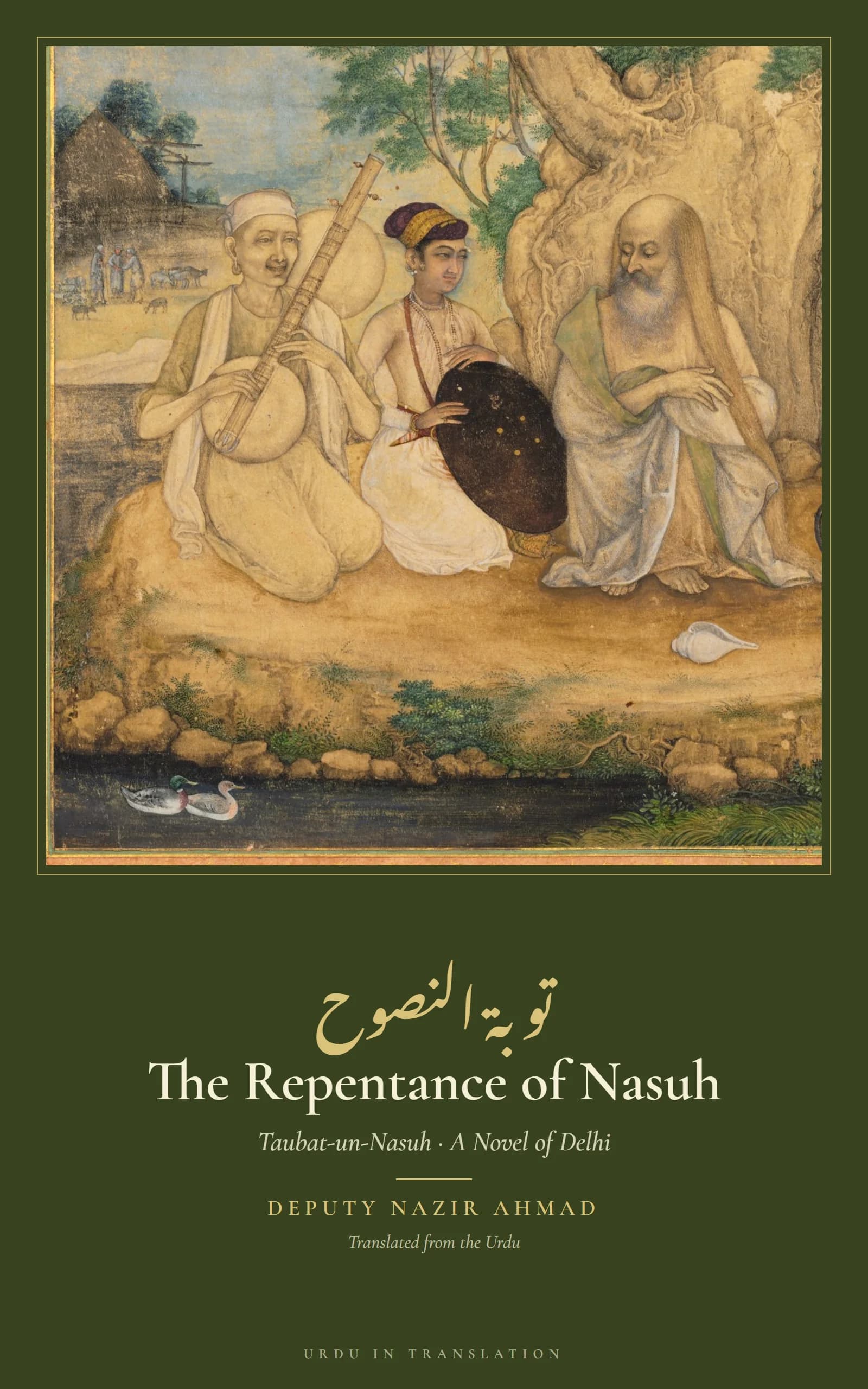
Taubat-un-Nasuh (1874): a father's religious awakening and his rebellious son. See our guide or read it here.
Fasana-e-Mubtala (1885): on the evils of polygamy.
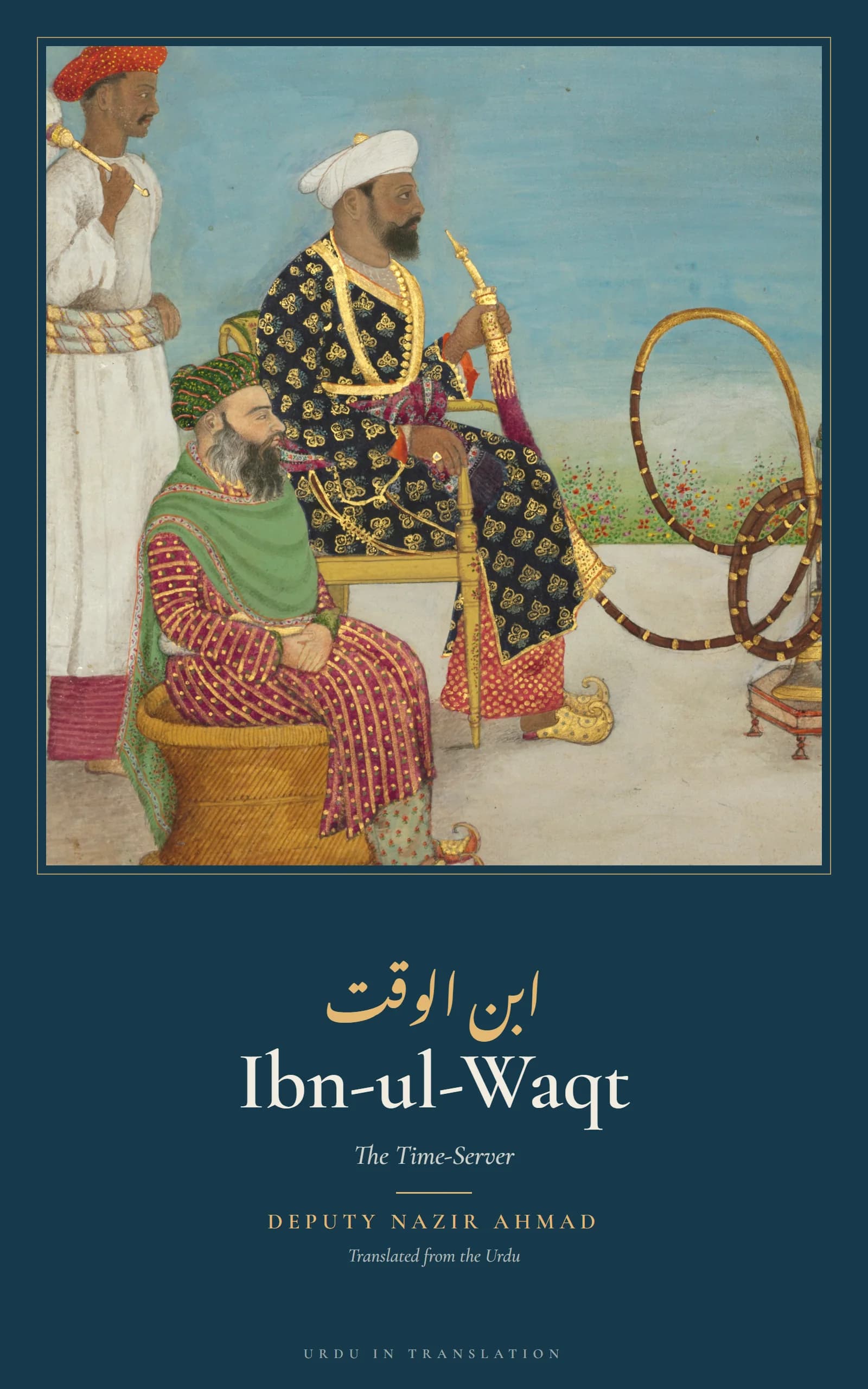
Ibn-ul-Waqt (1888): a satire on imitation of English ways. See our guide or read it here.
Ayyama (1891): on the remarriage of widows.
Why he matters
Nazir Ahmad set his stories in ordinary Muslim households of Delhi, in the speech of their women and children, at a time when Urdu fiction meant fairy-tale romance. His purpose was moral reform, but his gift for dialogue and character made his books live. He belongs to the age of Sir Syed and Hali, the great reformers after 1857.
Read it here
Роман · 1874
Первые две главы бесплатноТаубат-ун-Насух (Покаяние Насуха)
توبۃ النصوح
Назир Ахмад
Роман Назира Ахмада, вышедший в 1874 году. Во время эпидемии холеры в Дели Насух, почтенный, состоятельный и беспечный мусульманский господин, заболевает и в горячечном сне видит, как его покойного отца судят перед Богом. Он просыпается другим человеком и решает исправить свой дом; но если жена Фахмида готова его поддержать, а младшие дети следуют за ним, то взрослый старший сын Калим — щёголь, поэт и острослов — и слышать об этом не хочет. Семейная драма об отцах и детях, вере и моде, принадлежащая перу автора «Ибн-уль-Вакта» и «Мират-уль-Арус», — одно из основополагающих произведений урдуского романа. Текст на урду с параллельным переводом; первые две главы открыты для свободного чтения.
12 главEnglishEspañolFrançaisالعربية中文Русский
Роман · 1888
Первые две главы бесплатноИбн-уль-Вакт (Приспособленец)
ابن الوقت
Назир Ахмад
Сатирический роман Назира Ахмада 1888 года. Во время восстания 1857 года Ибн-уль-Вакт, управитель при дворе могольской царевны и знаток арабского и персидского, укрывает раненого англичанина, мистера Нобла. Когда Дели пал, наградой ему становится место в английском обществе, и он бросается в него с головой: бунгало, стол с ножами и вилками, шляпа, собака и новое убеждение, что правители во всём лучше подвластных. Вернуть его в разум отправляют двоюродного брата, Худжжат-уль-Ислама. Написанная в эпоху сэра Сайида, это первая великая урдуская сатира на колониальное подражательство — и до сих пор очень смешная. Текст на урду с параллельным английским переводом; первые две главы доступны бесплатно.
28 главEnglishEspañolFrançaisالعربية中文Русский
Questions and answers
Why is Nazir Ahmad called Deputy?
Because he held the post of deputy collector in the British administration.
What was Nazir Ahmad's first novel?
Mirat-ul-Arus (The Bride's Mirror), published in 1869, often called the first Urdu novel.
More guides
- Taubat-un-Nasuh by Nazir Ahmad: Summary, Characters and Themes · A Delhi father's conversion after a cholera dream, and the son who refuses to follow.
- Ibn-ul-Waqt by Nazir Ahmad: Summary and Themes · The first great Urdu satire of colonial mimicry: knives, forks, hats and arguments.
- Classic Urdu Novels to Read in English Translation · From the first Urdu novel to Premchand: the classics, in order, with where to read them.