Taubat-un-Nasuh by Nazir Ahmad: Summary, Characters and Themes
توبۃ النصوح
Updated
Taubat-un-Nasuh (توبۃ النصوح, The Repentance of Nasuh), published in 1874, is one of the founding works of the Urdu novel. Its author, Deputy Nazir Ahmad, wrote it to teach, but he could not help writing real people: a father in the grip of a new faith, a wife caught between husband and children, and a clever, idle, charming eldest son who will not be reformed.
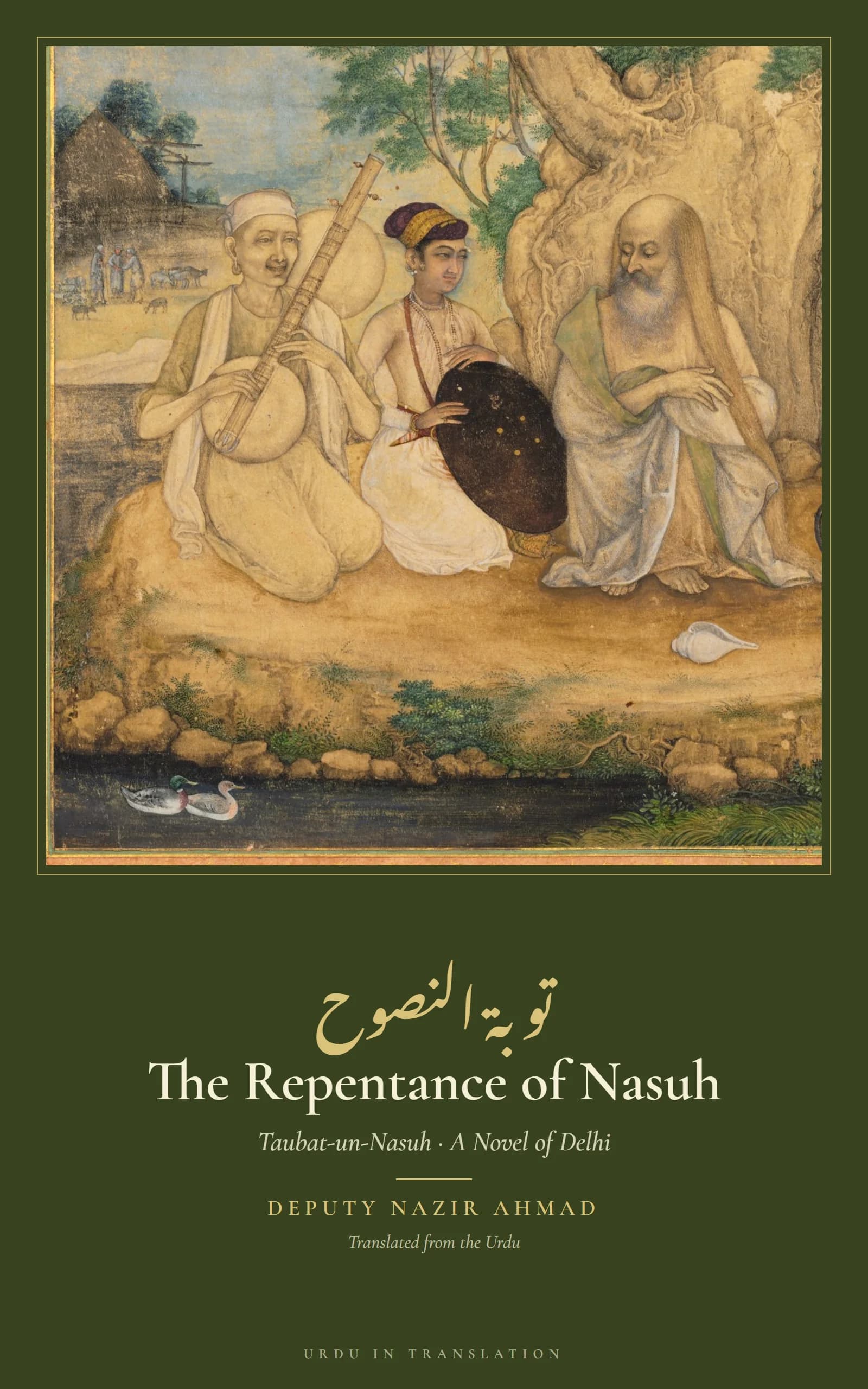
You can read Taubat-un-Nasuh in Urdu with a facing English translation; the first two chapters are free.
Plot summary
The dream. Cholera sweeps through Delhi. Nasuh, a comfortable, respectable and thoroughly careless gentleman, catches it, and in his fever dreams that his dead father stands trial before God. Nasuh sees that his own household would fare no better. He recovers a changed man.
Reform at home. Nasuh confides in his wife Fahmida, and together they set out to bring their children to prayer and a serious life. The younger ones come round in their own ways: little Hamida with a child's directness, the son Salim through his own doubts, the second son Alim after a long talk with his father. The daughter Naima, sharp-tongued and spoilt, quarrels bitterly with her mother.
Kalim. The eldest son, Kalim, is a poet, a dandy and a wit, and he will not even come when his father sends for him. Nasuh's answer is drastic: he burns Kalim's library of poetry and frivolous books. Kalim leaves home, tries his fortune with a worldly friend, Zahirdar Beg, and goes off to seek a post in the princely state of Daulatabad. The adventure ends badly, and Kalim's fate gives the novel its sombre close.
Main characters
Nasuh: the father, whose conversion drives the story; his name echoes the Qur'anic phrase tauba-tan-nasuha, "sincere repentance".
Fahmida: his wife, practical and loving, the go-between of the household.
Kalim: the eldest son, the novel's most vivid figure, whose arguments with his father are its best scenes.
Alim and Salim: the younger sons, each persuaded in a different way.
Naima and Hamida: the elder daughter, proud and difficult, and the youngest child.
Why it matters
Earlier Urdu fiction was the dastan: kings, jinns and marvels, like Bagh-o-Bahar. Nazir Ahmad set his stories in ordinary Delhi homes, with ordinary speech. Readers argue to this day about whether Nasuh or Kalim wins the argument, which is a sign of how alive the book still is. Read more about Nazir Ahmad and his later satire Ibn-ul-Waqt.
Read it here
Questions and answers
Who wrote Taubat-un-Nasuh?
Deputy Nazir Ahmad (1830–1912), a Delhi scholar and government official. It was published in 1874.
What does Taubat-un-Nasuh mean?
The Repentance of Nasuh. The title plays on the Qur'anic phrase for a sincere repentance.
Is Taubat-un-Nasuh the first Urdu novel?
It is often named among the first, together with Nazir Ahmad's earlier Mirat-ul-Arus (1869).
More guides
- Deputy Nazir Ahmad: Life and Novels · The Delhi scholar and official who wrote the first Urdu novels.
- Ibn-ul-Waqt by Nazir Ahmad: Summary and Themes · The first great Urdu satire of colonial mimicry: knives, forks, hats and arguments.
- Classic Urdu Novels to Read in English Translation · From the first Urdu novel to Premchand: the classics, in order, with where to read them.