Sir Syed Ahmad Khan: Life, Works and the Aligarh Movement
سر سید احمد خاں
Updated
Sir Syed Ahmad Khan (سر سید احمد خاں, 1817–1898) was the most important Muslim reformer of nineteenth-century India. He founded the college that became Aligarh Muslim University, argued for modern education and rational religion, and through his journal Tahzib-ul-Akhlaq created the plain, persuasive style of modern Urdu prose.
Life
Syed Ahmad was born in Delhi in 1817 into a family close to the Mughal court. He joined the East India Company's judicial service in 1838. During the uprising of 1857 he was a judicial officer at Bijnor, where he protected the English residents.
In 1869–70 he spent more than a year in England, and returned convinced that Indian Muslims needed modern Western education. In 1875 he founded the Muhammadan Anglo-Oriental College at Aligarh, which became Aligarh Muslim University in 1920. He was knighted in 1888 and died in Aligarh in 1898.
Major works
Asar-us-Sanadid (1847): a survey of the monuments of Delhi.
Asbab-e-Baghawat-e-Hind (The Causes of the Indian Revolt, 1859): a bold argument that British policy, not Indian treachery, caused the uprising.
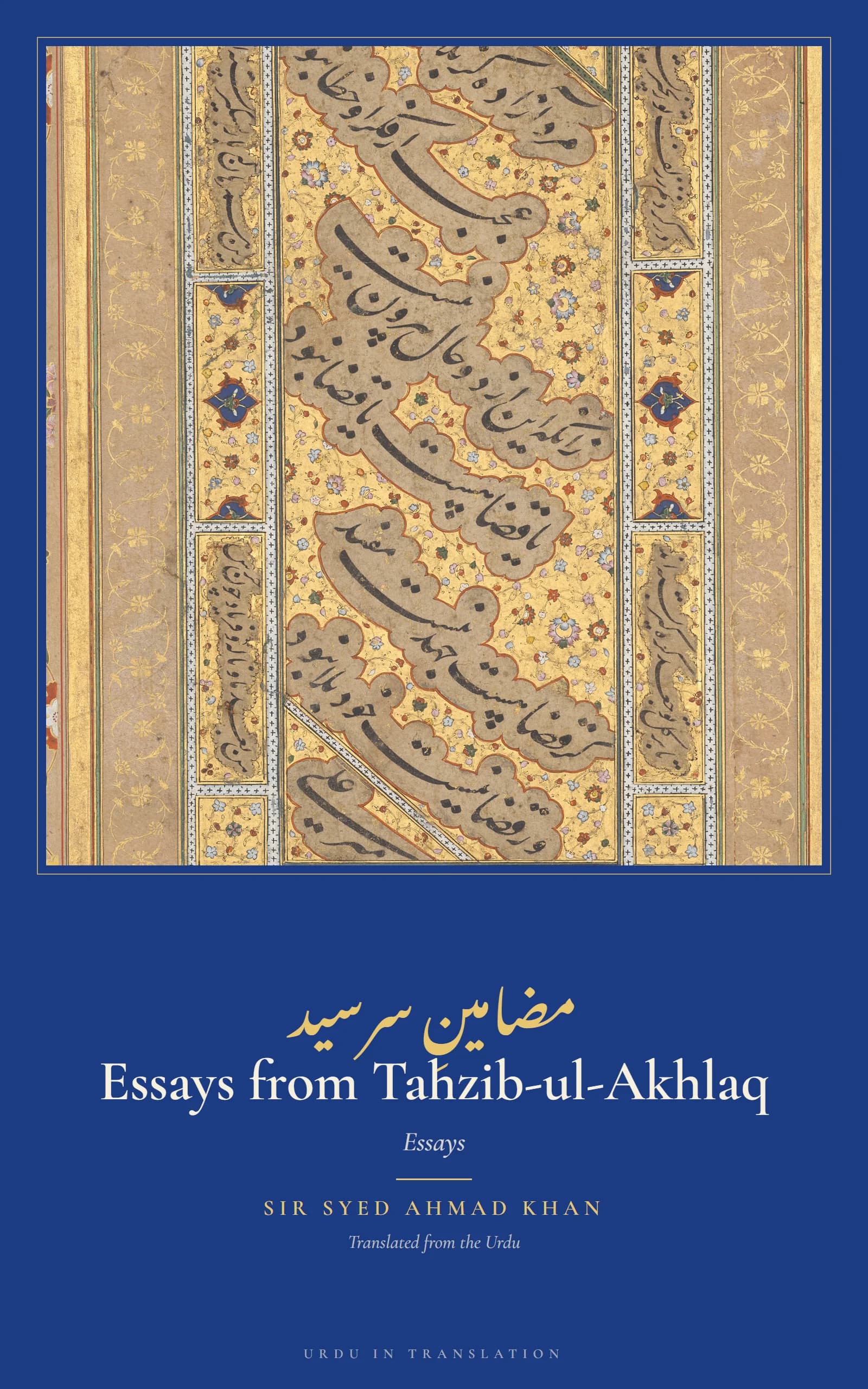
Tahzib-ul-Akhlaq (from 1870): the journal of reform, and his essays in it. See our guide to the essays or read them here.
Commentaries on the Bible and the Qur'an, and many lectures and letters.
Why he matters
Sir Syed's influence runs through everything that followed: Hali wrote the Musaddas at his urging and his biography, Hayat-e-Javed; Nazir Ahmad satirised the extremes of his movement in Ibn-ul-Waqt. His prose, written to persuade ordinary readers, remains a model of clarity.
Read it here
Questions and answers
What is Sir Syed Ahmad Khan famous for?
Founding the Muhammadan Anglo-Oriental College (now Aligarh Muslim University), leading the Aligarh movement for modern education, and his Urdu essays.
When was Aligarh Muslim University founded?
Sir Syed founded it as the Muhammadan Anglo-Oriental College in 1875. It became a university in 1920.
What is Asbab-e-Baghawat-e-Hind?
Sir Syed's 1859 essay on the causes of the Indian revolt of 1857.
More guides
- Sir Syed's Essays from Tahzib-ul-Akhlaq: A Guide · The essays that launched the Aligarh movement and gave Urdu its modern prose.
- Altaf Hussain Hali: Poet, Critic and Reformer · Ghalib's pupil, Sir Syed's ally, and the founder of modern Urdu criticism.
- Deputy Nazir Ahmad: Life and Novels · The Delhi scholar and official who wrote the first Urdu novels.