Ibn-ul-Waqt by Nazir Ahmad: Summary and Themes
ابن الوقت
Updated
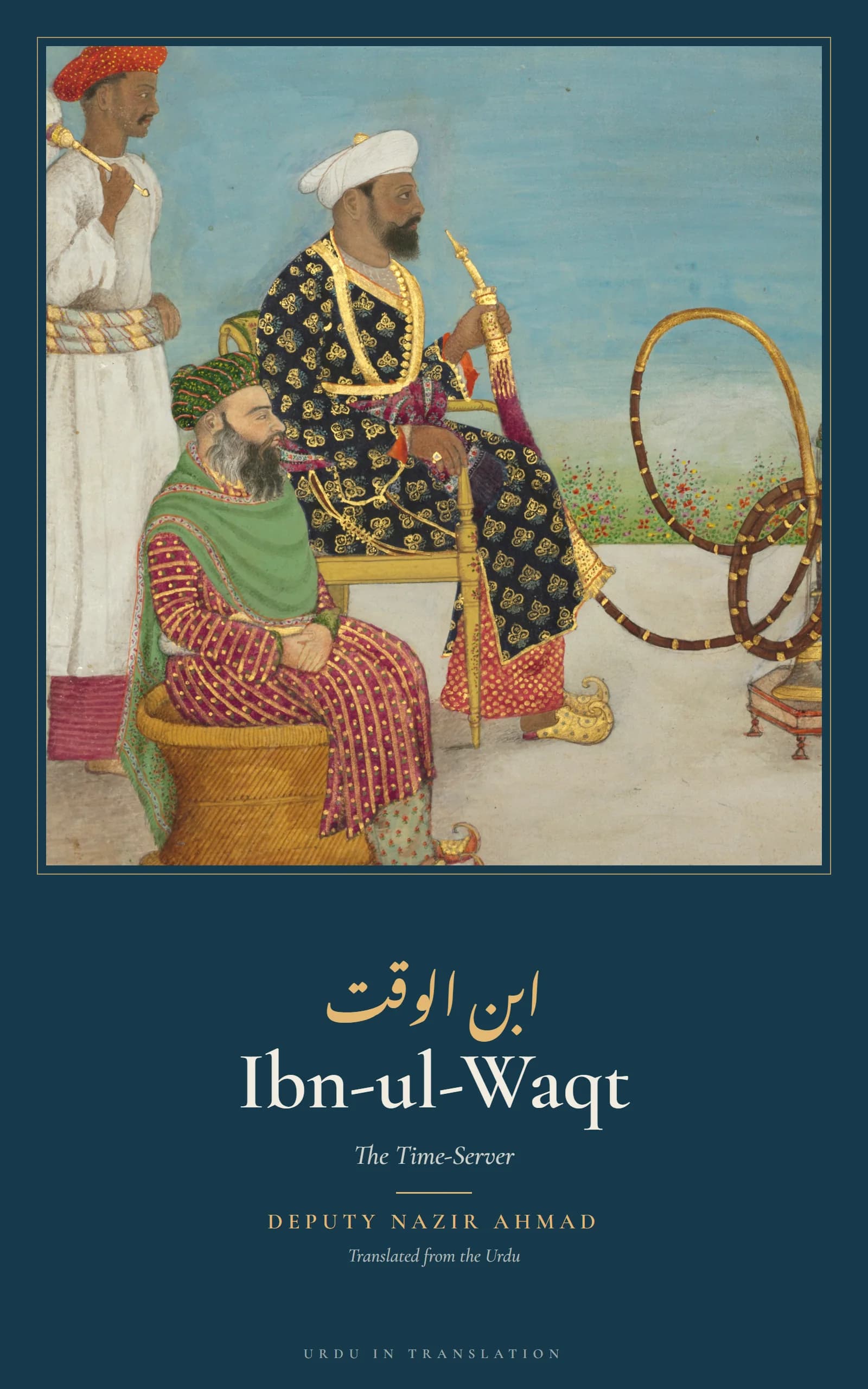
Ibn-ul-Waqt (ابن الوقت), published in 1888, is Deputy Nazir Ahmad's sharpest and funniest novel. Its title means "son of the moment": an opportunist who turns whichever way the wind blows. Its hero becomes an Englishman in everything but birth, and the novel follows the comedy, and the cost, of that transformation.
You can read Ibn-ul-Waqt in Urdu with a facing English translation; the first two chapters are free.
Plot summary
1857. Ibn-ul-Waqt, steward to a Mughal princess and a scholar of Arabic and Persian, finds a wounded Englishman, Mr Noble, during the uprising and hides him at great risk. When the British retake Delhi, Noble sees that his rescuer is rewarded with land and a government post.
Turning English. Encouraged by Noble, who wants to make him a model reformer, Ibn-ul-Waqt throws himself into English life: a bungalow, dinners with knives and forks, English dress, a hat, a dog, and a growing conviction that the rulers are superior in every way. He gives speeches, plans reforms and offends almost everyone: his own community, who think him a renegade, and the English officials, who think him presumptuous.
The fall. When Noble sails for England, Ibn-ul-Waqt loses his protector. He quarrels with the new Collector, runs into debt and finds himself at home in neither world. His family sends for his cousin, Hujjat-ul-Islam, whose long debates with him on reason, religion, destiny and politics bring the novel to its close.
Themes
Imitation and reform. The decades after 1857 saw a fierce argument among Indian Muslims about how far to adopt English education and manners, an argument led by Sir Syed Ahmad Khan. Many readers have seen Ibn-ul-Waqt as a satire on Sir Syed's circle, though Nazir Ahmad himself was a supporter of modern education. The novel mocks not reform but surface imitation.
Comedy of manners. The scenes at the dinner table, the after-dinner speech and the change of dress are among the funniest pages in Urdu prose.
Argument as drama. The closing debates read like a philosophical dialogue, and they show Nazir Ahmad's real interest: how to be modern without losing oneself.
Read it here
Questions and answers
What does Ibn-ul-Waqt mean?
Literally "son of the moment": a time-server or opportunist who changes with circumstances.
When was Ibn-ul-Waqt published?
In 1888.
Is Ibn-ul-Waqt about Sir Syed Ahmad Khan?
Many readers have seen the hero as a caricature of Sir Syed or his followers, but the novel is better read as a satire on blind imitation of English ways in general.
More guides
- Deputy Nazir Ahmad: Life and Novels · The Delhi scholar and official who wrote the first Urdu novels.
- Taubat-un-Nasuh by Nazir Ahmad: Summary, Characters and Themes · A Delhi father's conversion after a cholera dream, and the son who refuses to follow.
- Sir Syed's Essays from Tahzib-ul-Akhlaq: A Guide · The essays that launched the Aligarh movement and gave Urdu its modern prose.