Bagh-o-Bahar: The Tale of the Four Darvesh Explained
باغ و بہار
Updated
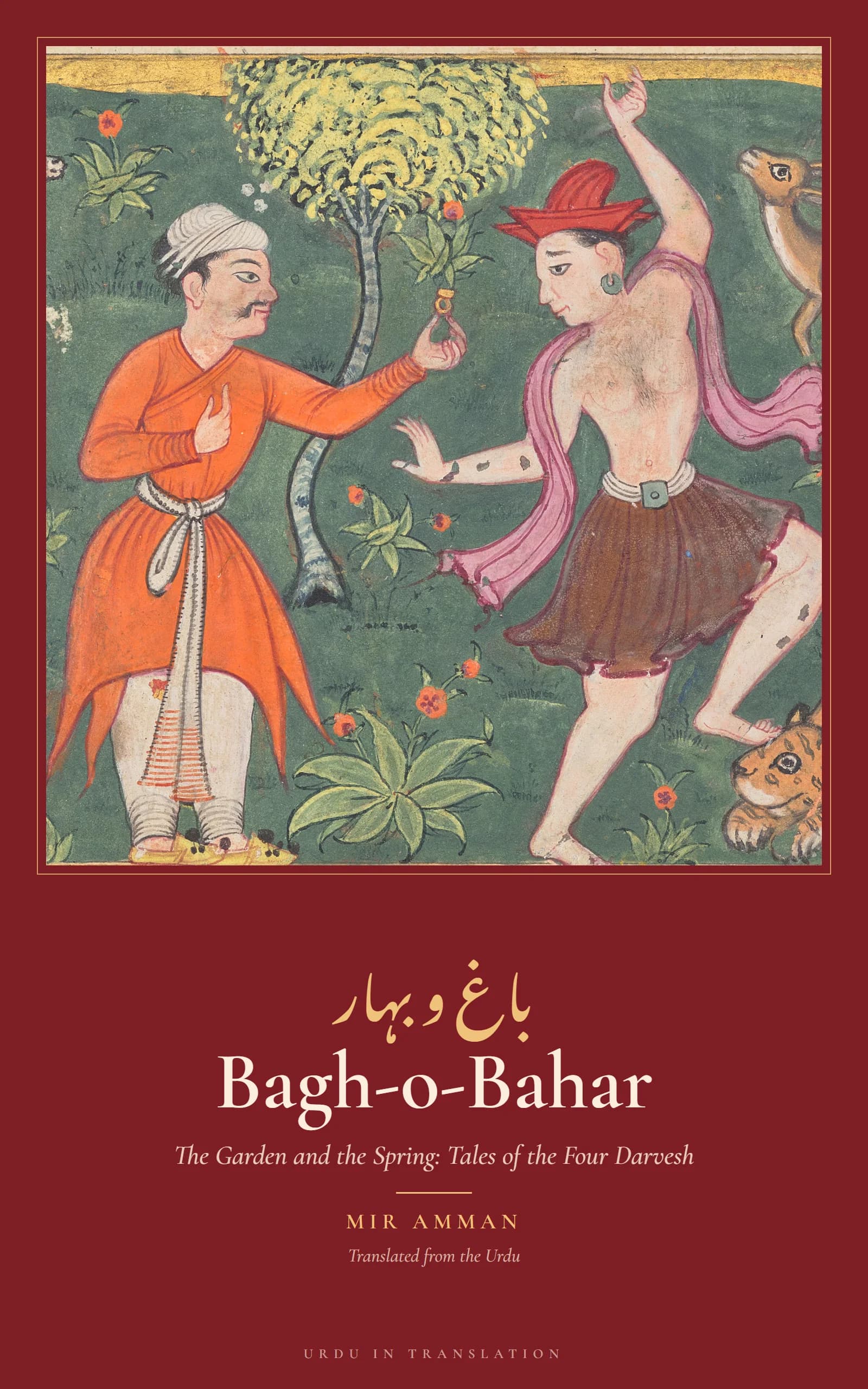
Bagh-o-Bahar (باغ و بہار, The Garden and the Spring) is Mir Amman Dehlavi's Urdu telling of Qissa-e-Chahar Darvesh, the Tale of the Four Dervishes. Completed in 1802 and published in 1804, it is one of the most famous works of Urdu prose: a book of interlocking adventures, written in the plain, lively Urdu of Delhi.
You can read Bagh-o-Bahar in Urdu with a facing English translation; the first two chapters are free.
The frame story
King Azad Bakht of Rum is rich and just, but he has no son, and in his despair he wanders at night into a graveyard. There he comes upon four dervishes sitting by a fire, each a prince or merchant's son who has lost everything for love. They agree to tell one another how they came to this state, and the king, hidden in the dark, listens.
Each dervish's story is a romance full of journeys, shipwrecks, jinns, faithless friends and faithful lovers. The king's own story, and the birth of the son he longs for, finally bring all five threads together.
Fort William College
Mir Amman wrote the book for Fort William College in Calcutta, founded by the East India Company to teach its young officers the languages of India. Under the Scottish scholar John Gilchrist the college commissioned books in simple, idiomatic Urdu prose. Mir Amman based his version on an earlier, ornate Urdu rendering by Mir Atta Husain Tahsin, Nau Tarz-e-Murassa, and rewrote it in the speech of Delhi. Tradition attributes the original tale to Amir Khusrau, though that is a legend rather than history.
The college's purpose was practical, but the result was literary: Bagh-o-Bahar became a model of clear Urdu prose and has been read in schools ever since.
Why read it today
It is a page-turner. The stories move fast, the dialogue is natural, and the Urdu is easier than most classical prose, which makes it one of the best books for an intermediate learner. Read it on this site with the English translation beside the Urdu and tap any word for its meaning. See also our guide to learning Urdu.
Read it here
Questions and answers
Who wrote Bagh-o-Bahar?
Mir Amman Dehlavi, a Delhi writer employed at Fort William College in Calcutta. He completed it in 1802 and it was published in 1804.
What is Qissa-e-Chahar Darvesh?
The Tale of the Four Dervishes, a Persian and Urdu story-cycle in which four dervishes tell a childless king the stories of their misfortunes. Bagh-o-Bahar is its most famous Urdu version.
What does Bagh-o-Bahar mean?
The Garden and the Spring. The title's letters also give the date of composition by the abjad system of letter-numbers.
More guides
- Mir Amman Dehlavi: The Author of Bagh-o-Bahar · The Delhi storyteller whose Bagh-o-Bahar became a model of Urdu prose.
- Classic Urdu Novels to Read in English Translation · From the first Urdu novel to Premchand: the classics, in order, with where to read them.
- How to Learn Urdu: A Practical Guide for Beginners · A step-by-step route from your first Urdu sounds to reading real literature.