Sir Syed's Essays from Tahzib-ul-Akhlaq: A Guide
مضامینِ سرسید
Updated
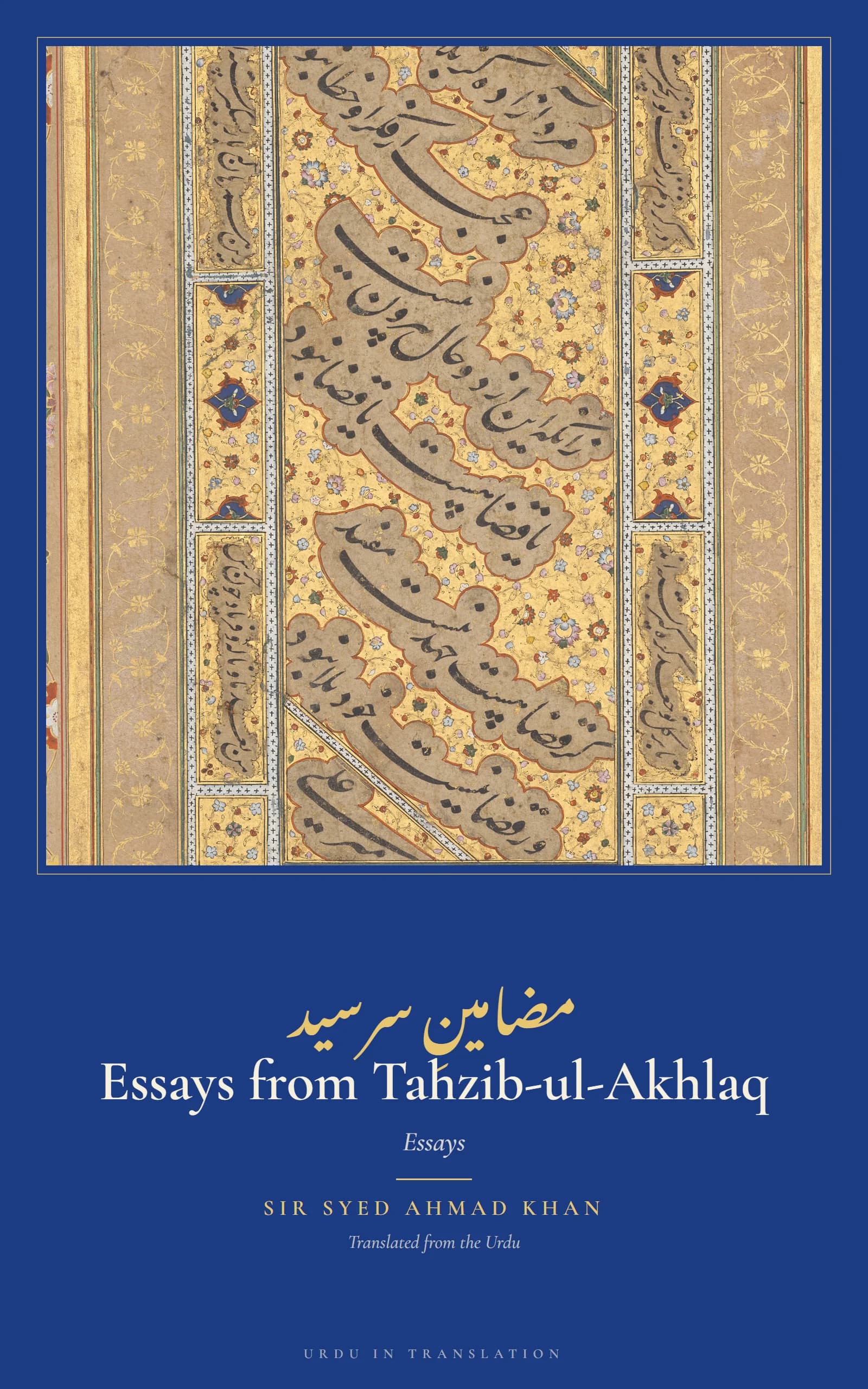
In 1870, back from a long visit to England, Sir Syed Ahmad Khan founded a journal, Tahzib-ul-Akhlaq (تہذیب الاخلاق, "The Refinement of Morals"). In its pages he and his circle argued for modern education, rational religion and social reform, and in doing so created a new kind of Urdu prose: plain, direct and persuasive. This collection brings together his own essays from the journal.
You can read Sir Syed's essays in Urdu with a facing English translation; the first two pieces are free.
What the essays are about
Custom and prejudice. In Custom and Convention and Prejudice Sir Syed attacks the habit of doing things because they have always been done, and of judging ideas by where they come from.
Character. Flattery, Hypocrisy, Idleness, On Thinking Oneself Perfect and Argument and Dispute are short moral essays in the manner of Addison and Steele, whose Spectator he admired.
Education and women. Education and Training, The Upbringing of Children and The Rights of Women set out the programme that led to the Muhammadan Anglo-Oriental College at Aligarh.
Hope. Hope, The Joy of Hope, Time Gone By and The Mirage of Life are more personal and reflective; The Story of Adam is an allegory.
Why they matter
After 1857 the Muslim elite of north India was defeated, impoverished and suspicious of everything English. Sir Syed set out to persuade them that modern learning was not a betrayal of faith. Tahzib-ul-Akhlaq was his voice, and its plain style became the model for later Urdu prose, from Hali to Nazir Ahmad, whose satire Ibn-ul-Waqt belongs to the same debate. Learn more in our guide to Sir Syed Ahmad Khan.
Read it here
Questions and answers
What is Tahzib-ul-Akhlaq?
An Urdu journal founded by Sir Syed Ahmad Khan in 1870. Its English title was The Muhammadan Social Reformer. It was the voice of the Aligarh movement.
What does Tahzib-ul-Akhlaq mean?
The Refinement (or Cultivation) of Morals.
More guides
- Sir Syed Ahmad Khan: Life, Works and the Aligarh Movement · The reformer who founded Aligarh and gave Urdu its modern prose.
- Altaf Hussain Hali: Poet, Critic and Reformer · Ghalib's pupil, Sir Syed's ally, and the founder of modern Urdu criticism.
- Ibn-ul-Waqt by Nazir Ahmad: Summary and Themes · The first great Urdu satire of colonial mimicry: knives, forks, hats and arguments.