Nazm
نظم
Nazm · 1905
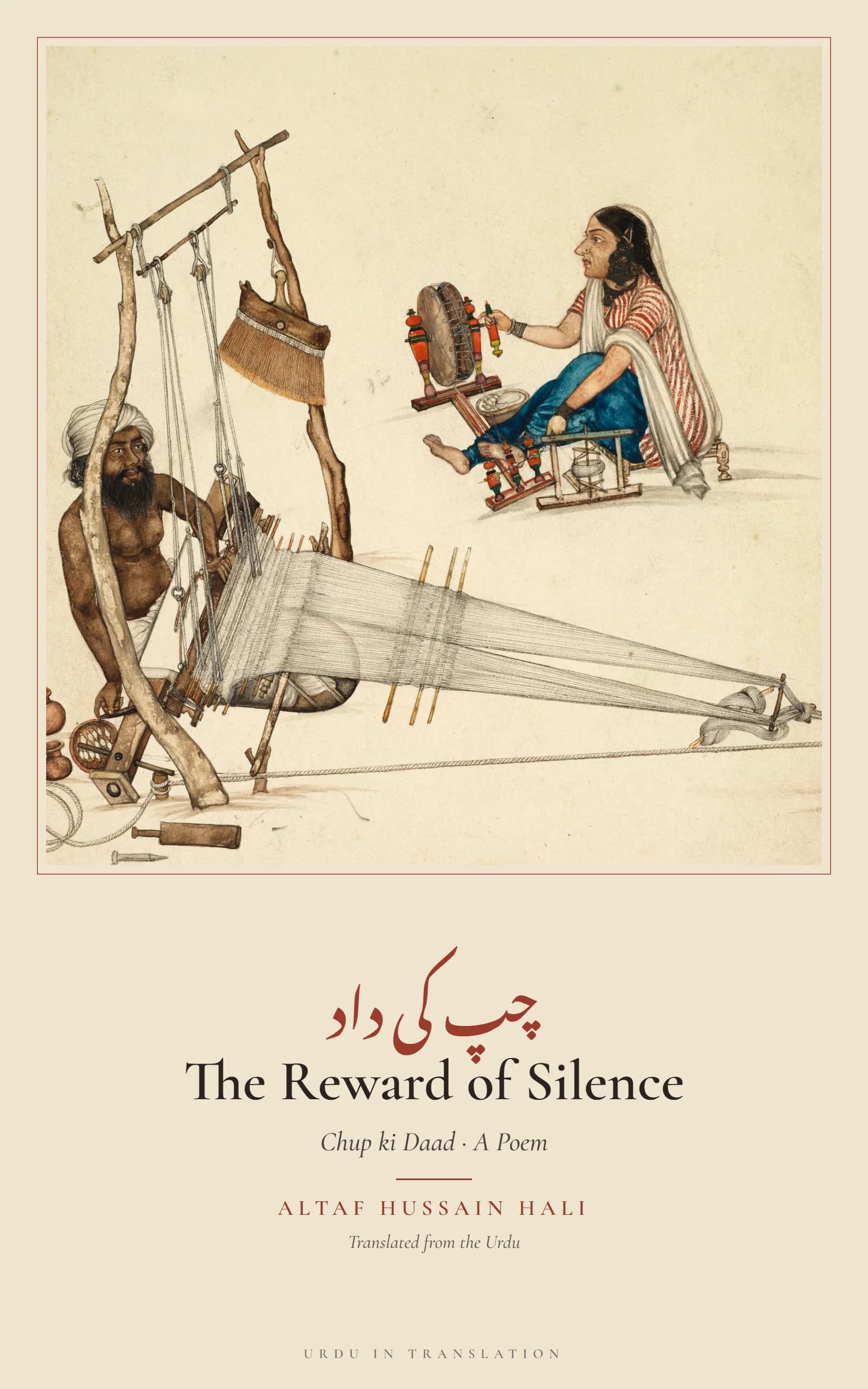
Deux premiers chapitres gratuitsLa Récompense du silence
چپ کی داد
Altaf Hussain Hali
Le poème de Hali, de 1905, adressé aux femmes de l'Inde : huit strophes sur ce que les femmes donnent au monde, sur ce qu'elles endurent dans la maison du père et dans celle de l'époux, sur les siècles d'injustice qu'on leur a fait subir en silence, et sur l'aube de leur droit au savoir. Écrit par le réformateur qui a donné à l'ourdou le Musaddas, il demeure dans cette langue le plaidoyer le plus émouvant pour l'instruction des femmes. Texte ourdou avec traduction en regard ; la notice sur le poète et la première strophe sont en lecture libre.
9 chapitresEnglishEspañolFrançaisالعربية中文Русский
Nazm
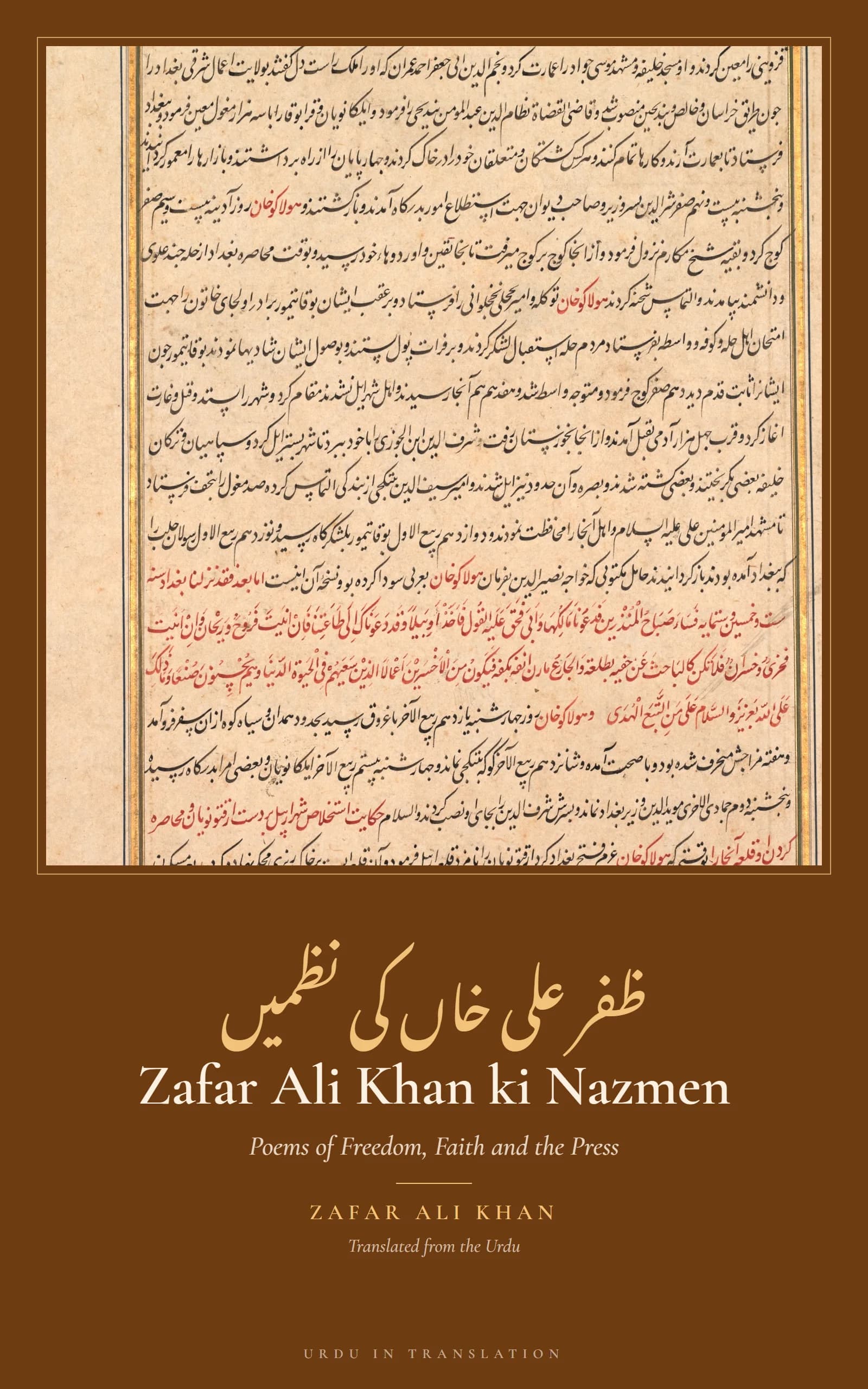
Deux premiers chapitres gratuitsZafar Ali Khan ki Nazmen (Poems of Zafar Ali Khan)
ظفر علی خاں کی نظمیں
Zafar Ali Khan
Sixteen poems by Maulana Zafar Ali Khan (1873-1956), editor of the Lahore newspaper Zamindar and the fighting poet of the Indian freedom movement, with "The Editor's Fate", a short comic play of 1913 about an Urdu editor ruined by the Press Act. Poems of India and freedom: "India", "Swaraj", "The Revolution of India", "Duty and Debt", Britain's "war with India", Cawnpore and Calcutta; and poems of faith, fellowship and letters: a hymn, praise of the Prophet and his four companions, two poems on Krishna, an address to the ghazal poets of the age, and a comic quarrel over a Punjabi word. Complete Urdu text with a facing line-by-line English translation, introduction and glossary. Cite as: Zafar Ali Khan, Zafar Ali Khan ki Nazmen, tr. urduintranslation.com (2026), https://www.urduintranslation.com/works/zafar-ali-khan-ki-nazmen. The first two chapters are free to read.
5 chapitresEnglishd’autres langues à venir
Nazm
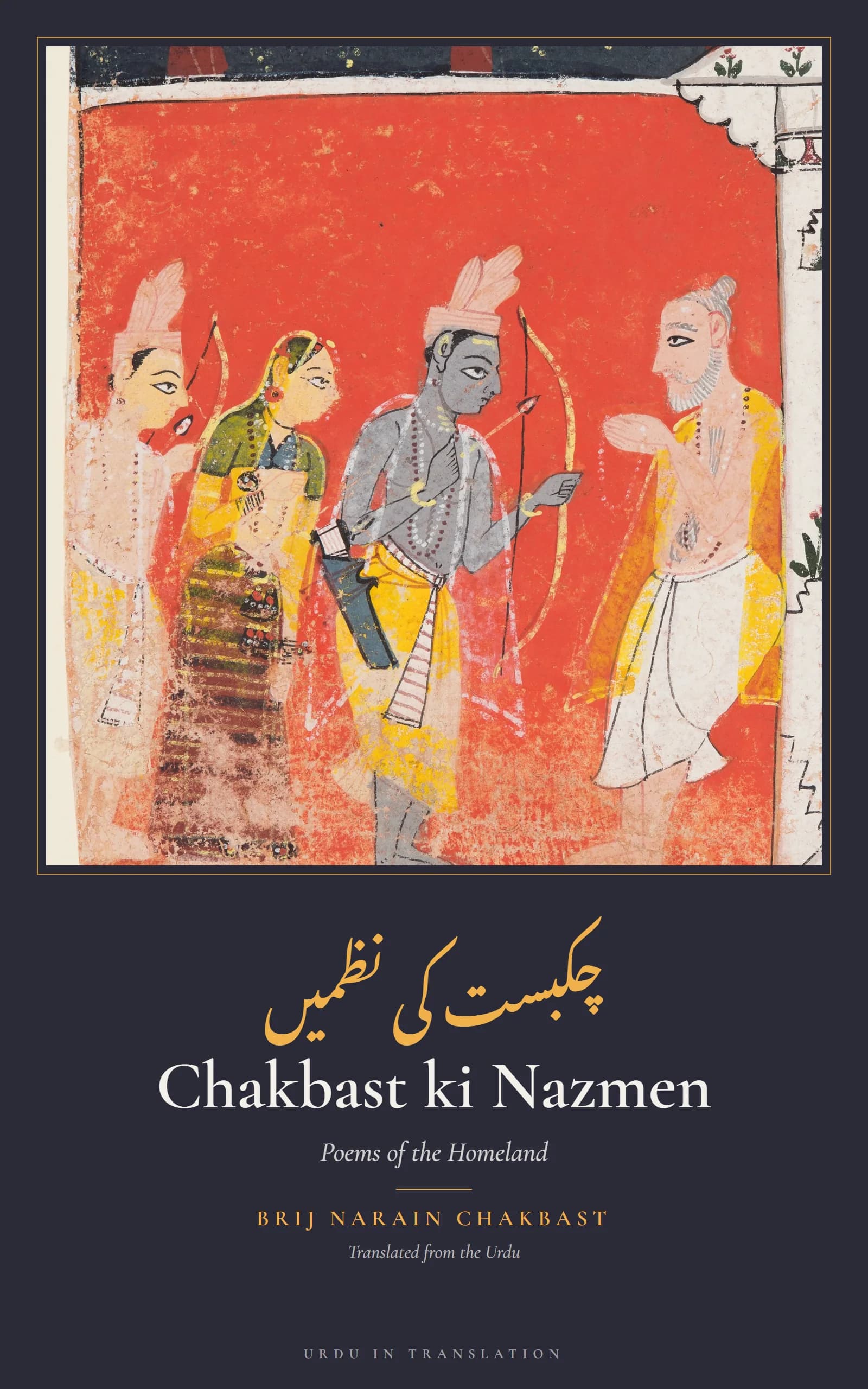
Deux premiers chapitres gratuitsChakbast ki Nazmen (Poems of Brij Narain Chakbast)
چکبست کی نظمیں
Brij Narain Chakbast
Twenty-four poems by Brij Narain Chakbast of Lucknow (1882-1926), the Kashmiri Pandit poet of Indian nationalism in Urdu. The nazms include "The Dust of Hind", a praise of India's past from Gautama to Akbar; "The Song of the Homeland", the Home Rule anthem with the refrain "we would not take even paradise in place of Home Rule"; "The Vedas"; his famous "A Scene from the Ramayana", in which the exiled Rama takes leave of his mother in the stanzas of the Lucknow marsiya; and his elegies on Tilak and Gokhale. With twelve ghazals. Complete Urdu text with a facing line-by-line English translation, introduction and glossary. Cite as: Brij Narain Chakbast, Chakbast ki Nazmen, tr. urduintranslation.com (2026), https://www.urduintranslation.com/works/chakbast-ki-nazmen. The first two chapters are free to read.
7 chapitresEnglishd’autres langues à venir
Nazm
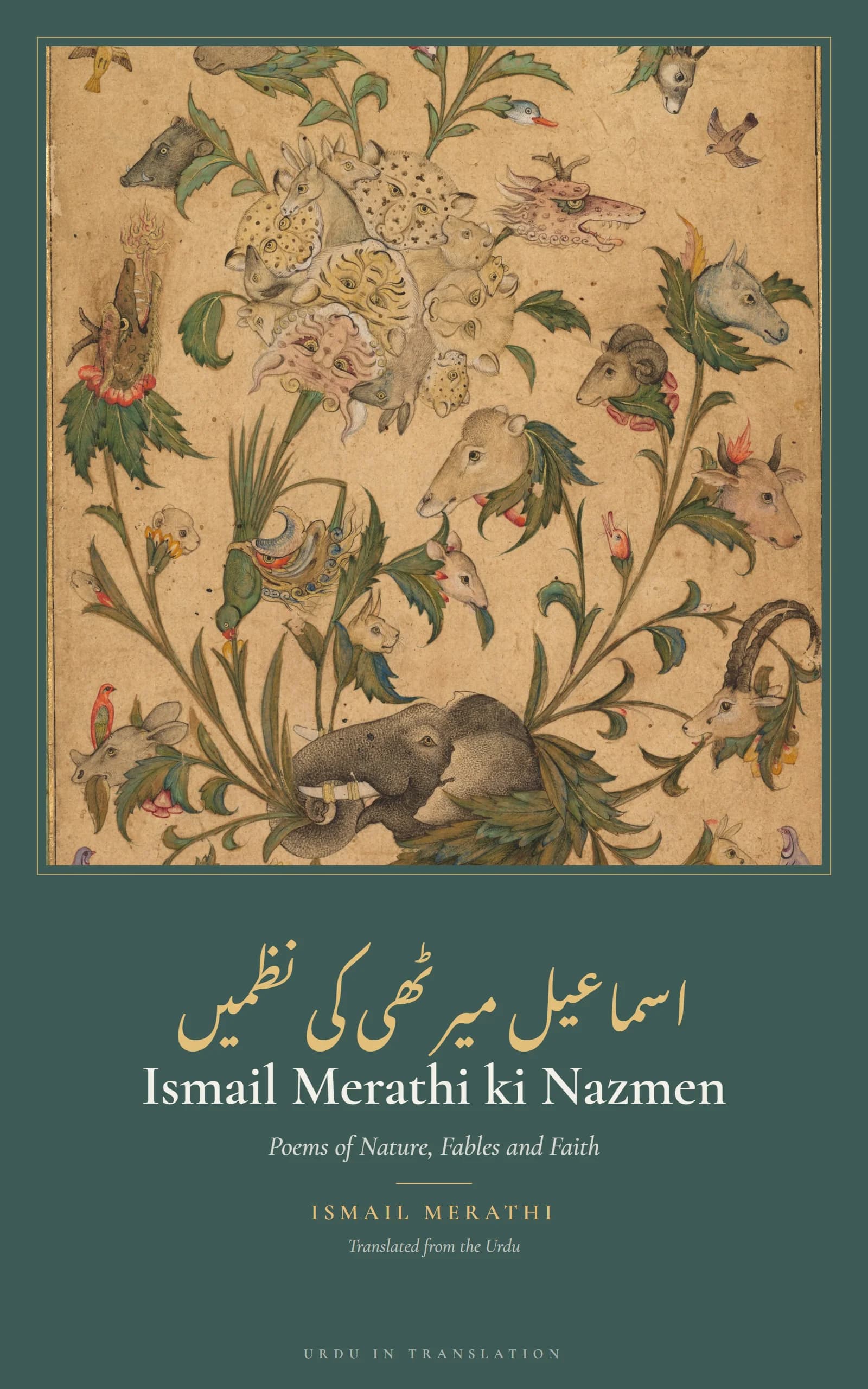
Deux premiers chapitres gratuitsIsmail Merathi ki Nazmen (Poems of Ismail Merathi)
اسماعیل میرٹھی کی نظمیں
Ismail Merathi
Poems by Muhammad Ismail Merathi (1844-1917), the schoolmaster-poet whose Urdu readers taught generations of children in India and Pakistan to read. Here are the classroom favourites, "Our Cow", "The Water Mill", "The Tortoise and the Hare", "The First Drop of Rain" and "Speak the Truth"; nature poems on sunset, the hot season and the monsoon; "The Sparrow's Chicks", one of the first Urdu poems in blank verse; a satire on Indians who aped the English; a meditation on the empty Mughal palace in the Agra Fort; and a selection of his Sufi quatrains and ghazals on the oneness of being and the state of his community. Complete Urdu text with a facing line-by-line English translation, introduction and glossary. Cite as: Ismail Merathi, Ismail Merathi ki Nazmen, tr. urduintranslation.com (2026), https://www.urduintranslation.com/works/ismail-merathi-ki-nazmen. The first two chapters are free to read.
7 chapitresEnglishd’autres langues à venir
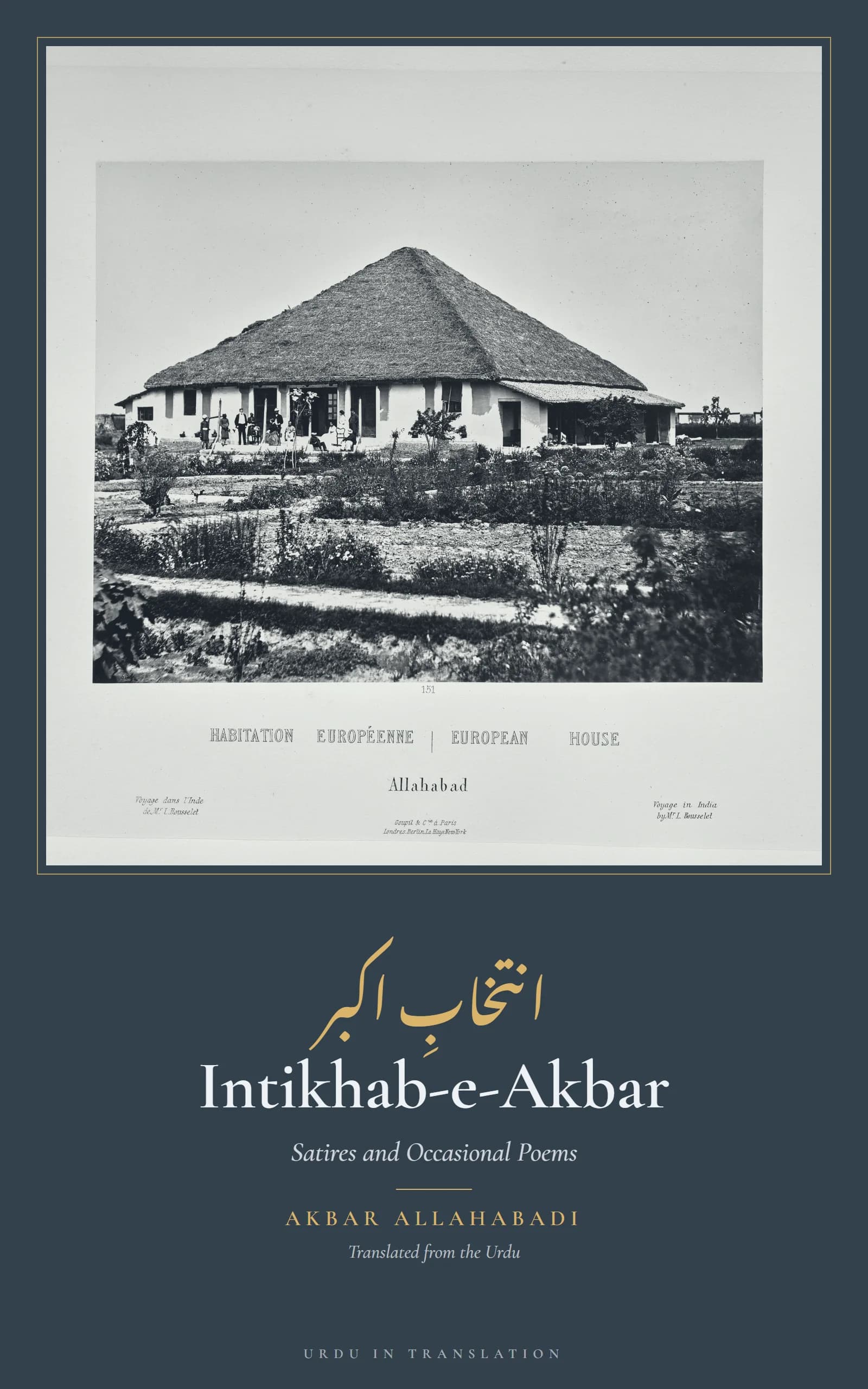
Nazm
Deux premiers chapitres gratuitsIntikhab-e-Akbar: Satires and Occasional Poems
انتخابِ اکبر: پیش رو یعنی قطعات
Akbar Allahabadi · sur Poetry
Akbar Allahabadi (1846–1921), judge, wit and the great comic poet of Urdu, wrote the sharpest verse commentary on India's meeting with the West: on the "New Light" of English education, English clothes and words, Sir Sayyid and the Aligarh college, Westernised young men and their English brides, purdah, the railway and the telegraph, and the Viceroy's durbars. This book gives the complete section "Pesh-rau" ("The Vanguard") of his collected poems, sixty pieces including "A Glimpse of the Delhi Durbar", "Lightning in the Church", the purdah poem of 1891, his answer to Southey's "Cataract of Lodore", "The Curzon Sabha" and the national poem written for Mohsin-ul-Mulk, with his parodies of Hafiz and Sa'di. Urdu text from Kulliyat-e-Akbar, Part One (4th ed., Standard Press, Allahabad, 1914), with a facing line-by-line English translation, notes on the puns and Persian quotations, an introduction and a glossary. A core text for courses on Urdu poetry and on colonialism and modernity in South Asia. Cite as: Akbar Allahabadi, Intikhab-e-Akbar: Pesh-rau, tr. urduintranslation.com (2026). The first chapter is free to read.
9 chapitresEnglishd’autres langues à venir
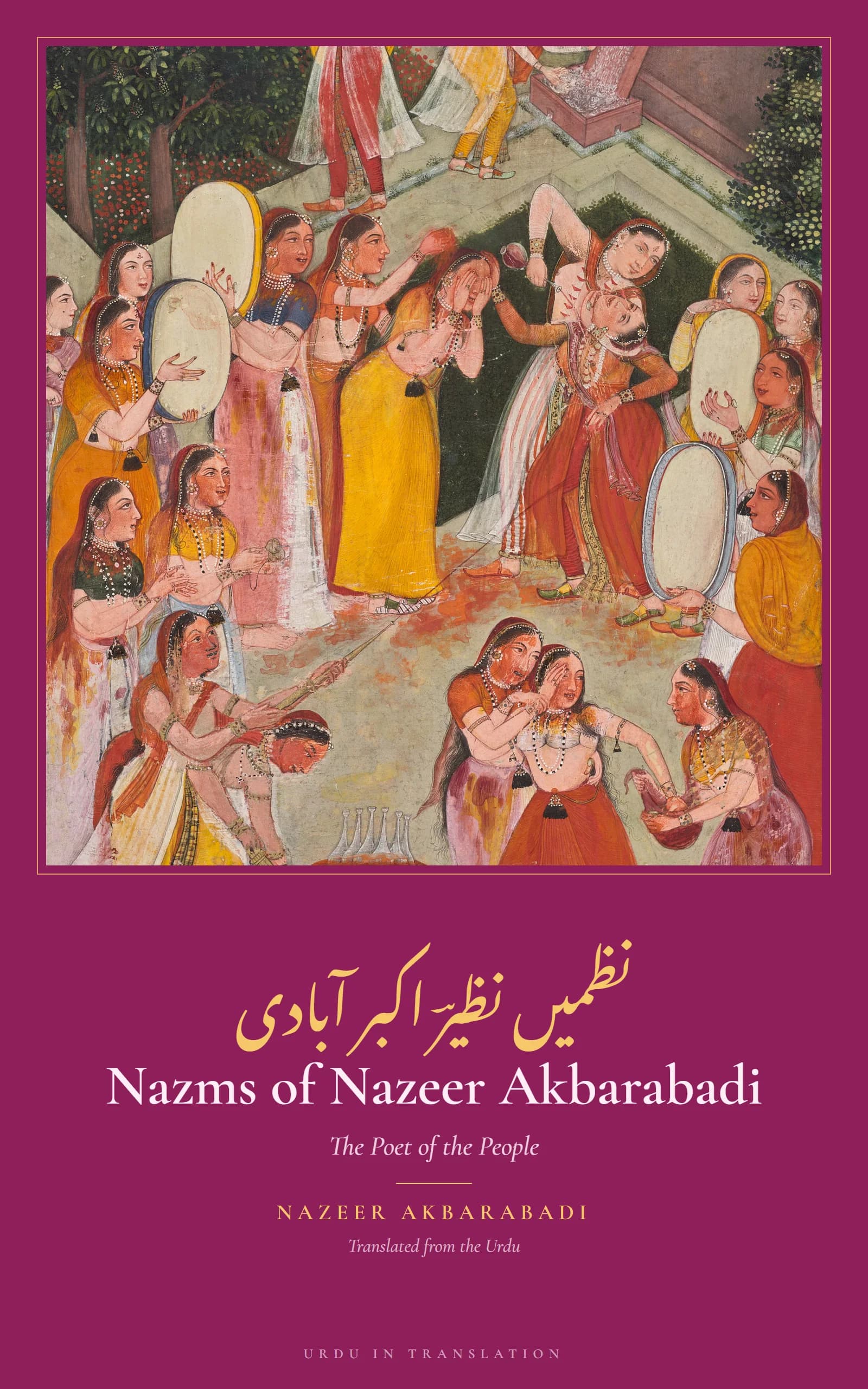
Nazm
Deux premiers chapitres gratuitsLes nazms de Nazir Akbarabadi : le poète du peuple
نظمیں نظیرؔ اکبر آبادی
Nazeer Akbarabadi
Nazir Akbarabadi (v. 1735–1830), d'Agra, n'écrivit pas pour la cour mais pour le bazar, et le bazar n'a jamais cessé de le chanter. Tandis que ses contemporains polissaient le ghazal, il fit de longs poèmes à refrain de tout ce que savait la rue : le marchand banjara dont la mort emporte la pompe, le pain, l'argent et la flatterie, la pauvreté qui enterre les morts sans linceul, les pluies et l'hiver, et les fêtes de toutes les religions de l'Inde : Holi, Diwali, Rakhi, l'Aïd, Chab-é-Barat et Gourou Nanak. Cette sélection de vingt-deux nazms suit le cursus d'ourdou de la HEC. Quelques strophes grivoises ont été omises (chaque omission figure dans les notes du livre). Texte ourdou avec traduction en regard, strophe par strophe ; le premier chapitre est en lecture libre.
5 chapitresEnglishEspañolFrançaisالعربية中文Русский
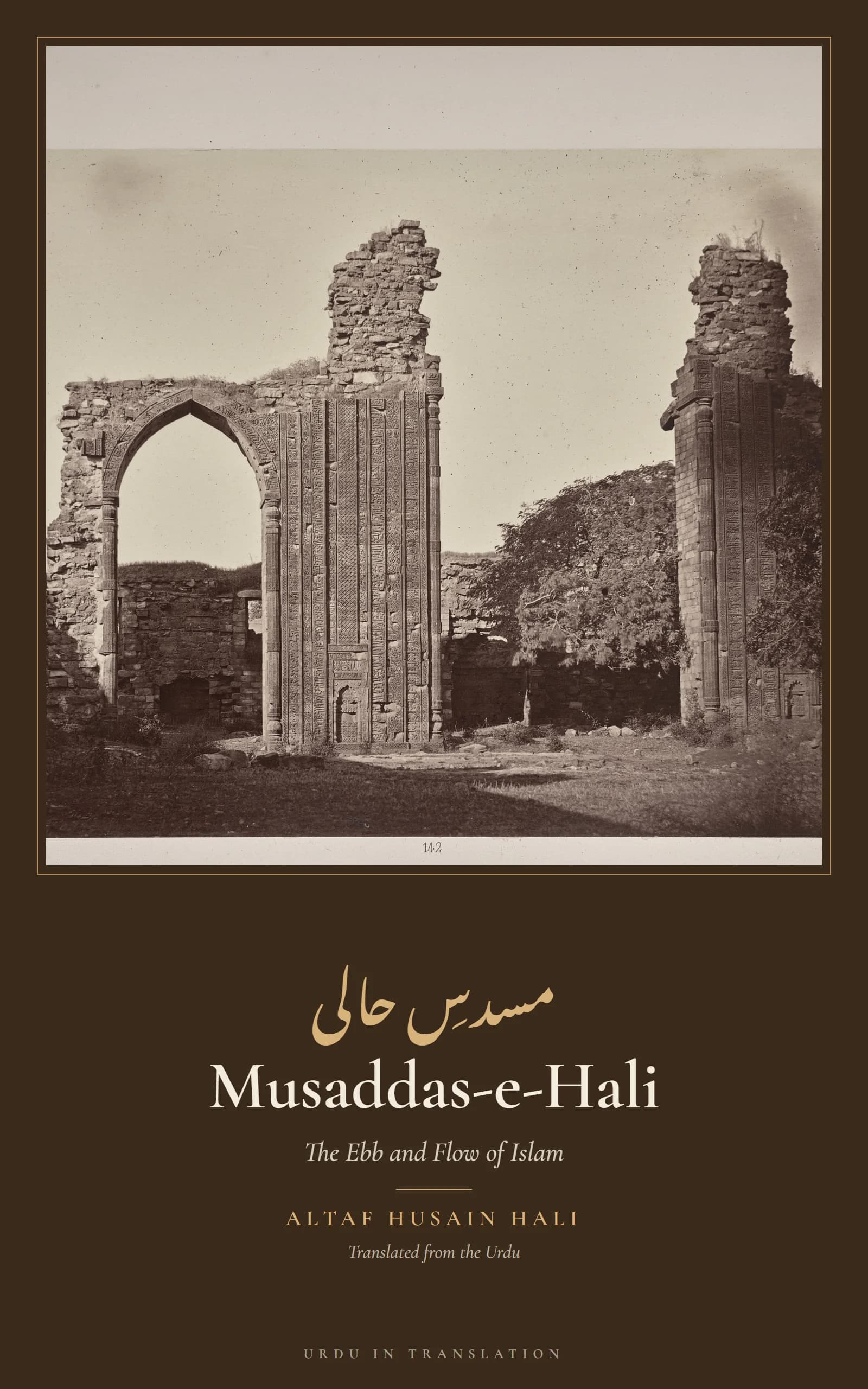
Nazm · 1879
Deux premiers chapitres gratuitsMusaddas-e-Hali : Le flux et le reflux de l'islam
مسدسِ حالی: مد و جزرِ اسلام
Altaf Husain Hali
Le poème qui a changé la poésie ourdoue. En 1879, à l'instigation de Sir Syed Ahmad Khan, Altaf Husain Hali (1837–1914), de Panipat, mit de côté le ghazal et écrivit un long poème en simples strophes de six vers sur l'ascension et la chute des musulmans : l'Arabie d'avant l'islam, l'enseignement du Prophète, les siècles de savoir de Bagdad à Cordoue, puis le déclin, dépeint sans pitié d'après l'Inde qu'il voyait autour de lui, ses nobles oisifs, ses clercs querelleurs, ses poètes mendiants et ses fils gâchés. Sir Syed disait que c'était la seule œuvre de sa vie sur laquelle il espérait être jugé. En 1886, Hali ajouta le Zamima, un supplément d'espérance : signes de réveil, dignité du travail, puissance du savoir, et appel à tirer soi-même son propre chariot. Cette édition donne les deux préfaces, le Musaddas, le Zamima et la requête finale au Prophète, d'après la lithographie de la Taj Company (exemplaire de l'Université de Toronto). Texte ourdou avec traduction en regard, strophe par strophe ; le premier chapitre est en lecture libre.
19 chapitresEnglishEspañolFrançaisالعربية中文Русский
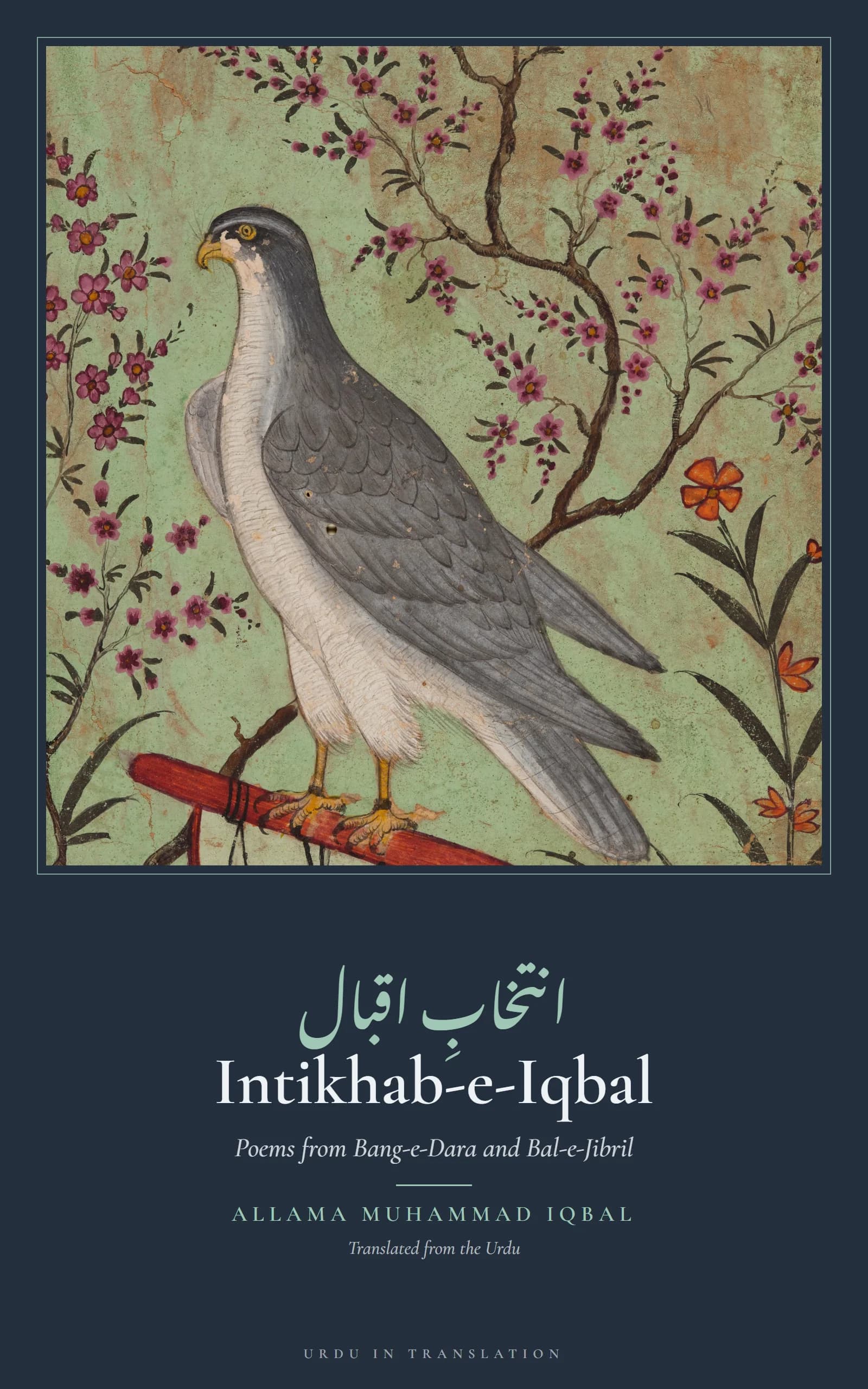
Nazm · 1924–1935
Deux premiers chapitres gratuitsIntikhab-e-Iqbal : poèmes de Bang-e-Dara et de Bal-e-Jibril
انتخابِ اقبال
Allama Muhammad Iqbal
Muhammad Iqbal (1877–1938), le poète-philosophe de Sialkot et de Lahore, a écrit les chants que l'Asie du Sud chante encore, « Meilleur que tout le monde est notre Hindoustan », « Mon souhait vient à mes lèvres comme une prière », puis les poèmes qui ont disputé avec Dieu et reçu réponse : Shikwa (La plainte) et Jawab-e-Shikwa (La réponse). Son livre ourdou plus tardif, Bal-e-Jibril (L'aile de Gabriel, 1935), tourne le ghazal et le nazm vers le soi (khudi), l'amour et l'action, et se tient dans la mosquée de Cordoue pour demander ce qui survit au temps. Cette sélection suit le cours sur Iqbal de la licence d'ourdou de la HEC : nazms et ghazals de jeunesse de Bang-e-Dara (1924), l'élégie pour sa mère, Shikwa, Jawab-e-Shikwa et Tulu-e-Islam, puis ghazals et nazms de Bal-e-Jibril. Texte ourdou avec traduction en regard, distique par distique ; le premier chapitre est en lecture libre.
7 chapitresEnglishEspañolFrançaisالعربية中文Русский