Writings of 1857 by Khwaja Hasan Nizami: A Guide
۱۸۵۷ء کی تحریریں
Updated
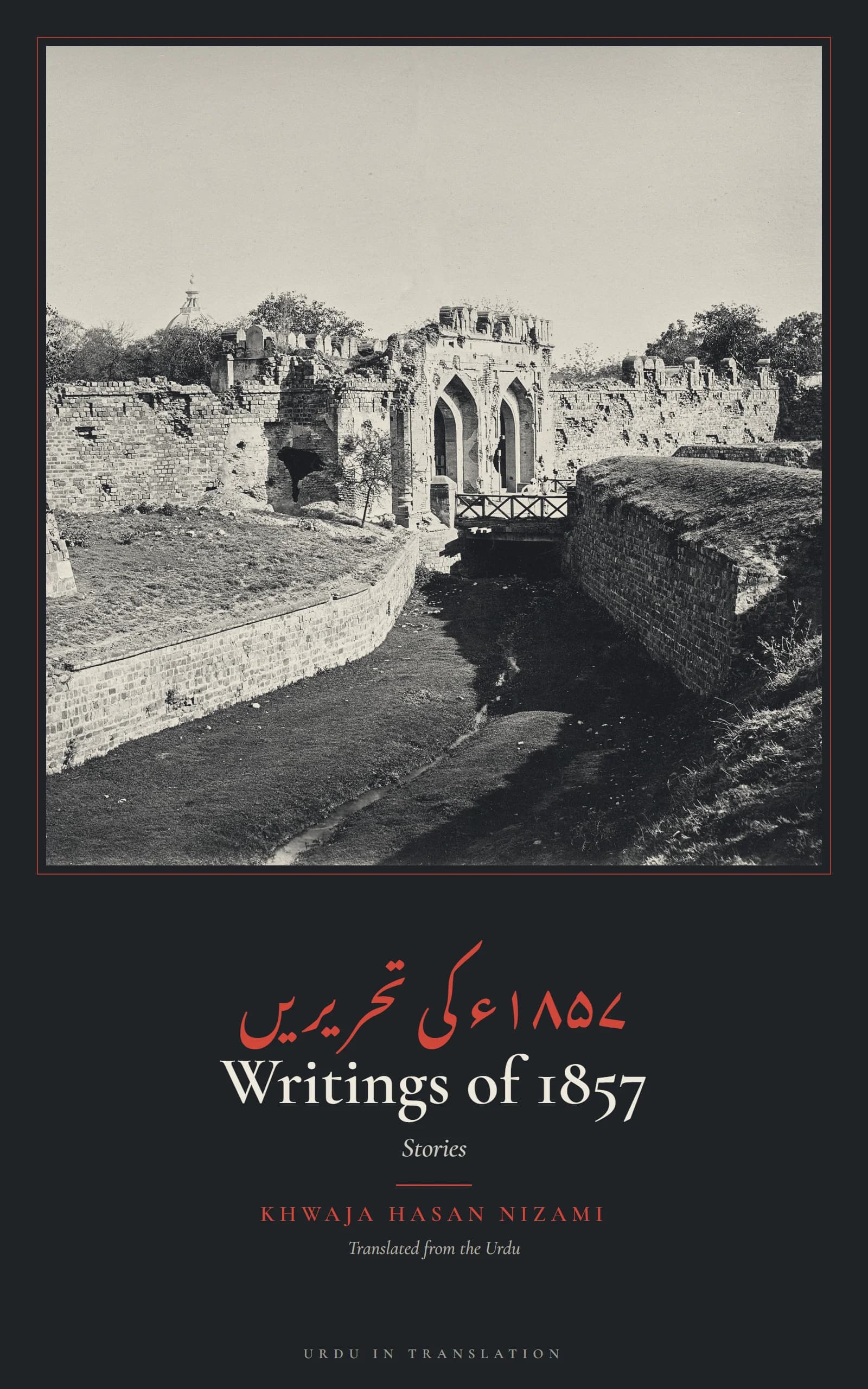
Khwaja Hasan Nizami's Tears of the Begums is famous. Less well known are the many other pieces he wrote about 1857 and its aftermath for newspapers and booklets. Writings of 1857 gathers eleven of them, translated in full for the first time.
You can read Writings of 1857 in Urdu with a facing English translation; the first two pieces are free.
What is in it
The Dervish Emperor shows Bahadur Shah Zafar, the last Mughal emperor and a Sufi poet, on the night he left the Red Fort, handing over the relics in his keeping. Bahadur Shah's Letter of Blessing imagines a letter in the emperor's voice to the Prince of Wales.
Most of the other pieces follow descendants of the royal house into the working poverty of colonial Delhi: Pir Ji the Grass-Cutter, The Barrow Prince, a deaf prince who hauls bricks and has to face a magistrate, The Prince as Sweeper in a newspaper office, and Two Princes in Jail. The Fight of the Woman in Green recalls a woman who fought in the uprising.
Why read it
Hasan Nizami wrote close enough to 1857 to meet its survivors and their children. These sketches are short, unsentimental at their best, and full of detail about how a fallen aristocracy lived among the people of the city. Read them alongside Tears of the Begums and Ruswa's Umrao Jan Ada, which shows 1857 from Lucknow.
Read it here
Questions and answers
Who was the Dervish Emperor?
Bahadur Shah Zafar (1775–1862), the last Mughal emperor, a poet and Sufi, exiled by the British to Rangoon after 1857.
How is this book related to Tears of the Begums?
Both are by Khwaja Hasan Nizami and about the fate of the Mughal family after 1857. These eleven pieces were never included in Tears of the Begums.
More guides
- Tears of the Begums (Begamat ke Aansoo): Stories of 1857 · What became of the last Mughal princes and princesses after Delhi fell in 1857.
- Khwaja Hasan Nizami: The Sufi Writer of Delhi · The Sufi of Nizamuddin who recorded the fate of the Mughal family after 1857.