Tears of the Begums (Begamat ke Aansoo): Stories of 1857
بیگمات کے آنسو
Updated
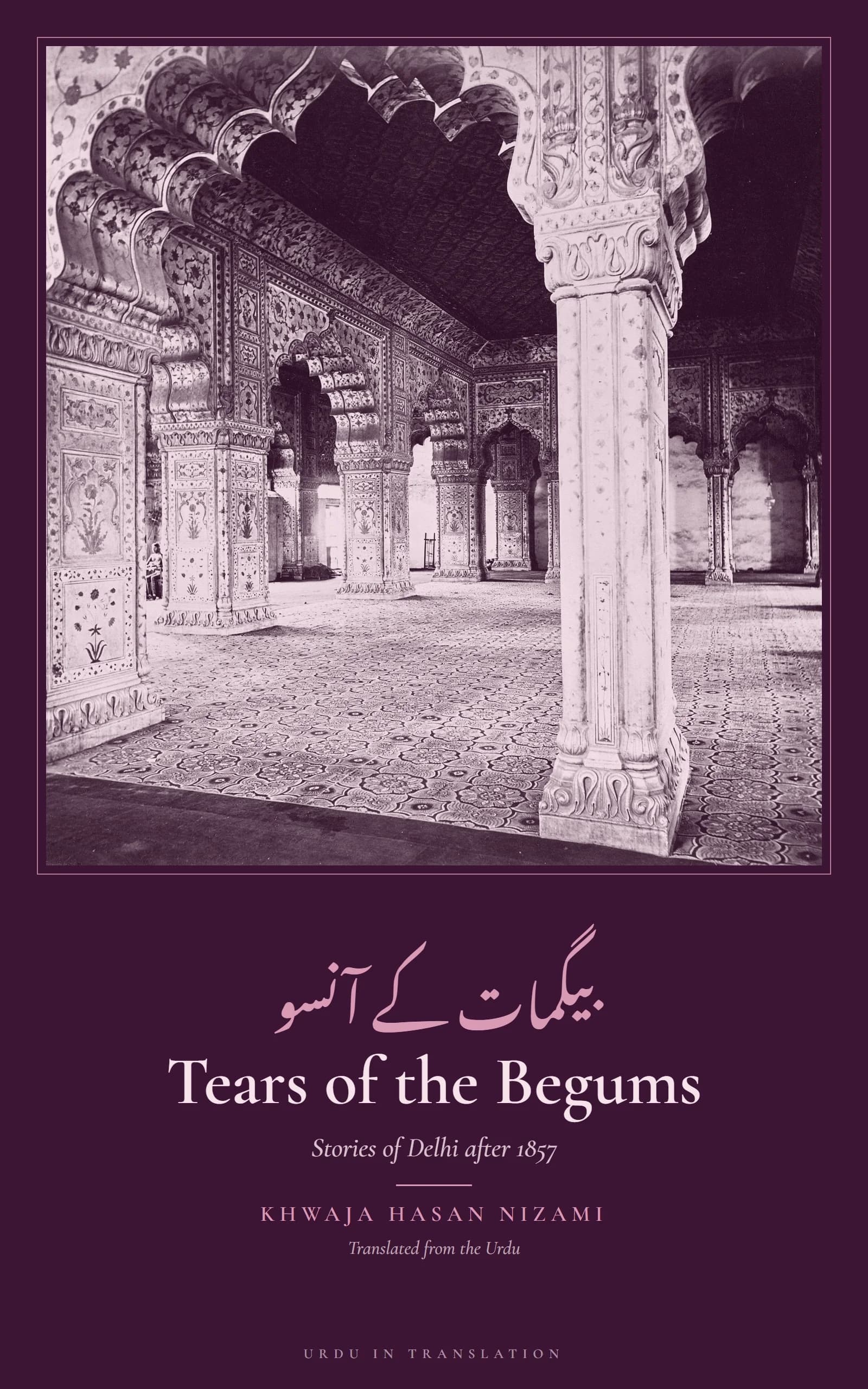
Begamat ke Aansoo (بیگمات کے آنسو, Tears of the Begums) by Khwaja Hasan Nizami is one of the most widely read books in Urdu prose. It tells what happened to the princes and princesses of the Mughal house after the British took Delhi in September 1857: driven out of the Red Fort, they scattered into poverty, exile and anonymity.
You can read Tears of the Begums in Urdu with a facing English translation; the preface and the first story are free.
What the book contains
Hasan Nizami lived in Delhi among the survivors and their children, and he wrote down their stories in short, vivid pieces: a prince who works as a butler in a hotel, The Prince Turned Butler; the daughter of Mirza Mughal; princesses begging in the bazaar; a mother giving birth in flight; an orphan prince's Eid; and the story of a daughter of the last emperor, Bahadur Shah Zafar. The book closes with the author's 1930 afterword, Everyone's Tears.
The stories mix memory, report and the author's own commentary. They are not history in the academic sense, but they preserve the voices and the feelings of people the histories forgot.
Style
Hasan Nizami's Urdu is simple, rhythmic and intensely emotional. He was a Sufi of the Nizamuddin shrine, and his writing has the cadence of a storyteller addressing listeners. The book was reprinted again and again in his lifetime, and readers still turn to it as the most moving account of 1857 from the losing side.
The companion volume
Hasan Nizami wrote many more pieces about 1857 that were never added to this book. Eleven of them are collected on this site as Writings of 1857. See also our guide to Khwaja Hasan Nizami.
Read it here
Questions and answers
Who wrote Begamat ke Aansoo?
Khwaja Hasan Nizami (1878–1955), a Sufi writer of Delhi.
Are the stories in Tears of the Begums true?
They are based on the lives of real members of the Mughal family and their descendants, as told to the author, though shaped by his storytelling.
Where can I read Begamat ke Aansoo in English?
On this site, in full, with the Urdu text and a facing English translation.
More guides
- Khwaja Hasan Nizami: The Sufi Writer of Delhi · The Sufi of Nizamuddin who recorded the fate of the Mughal family after 1857.
- Writings of 1857 by Khwaja Hasan Nizami: A Guide · Eleven more pieces on the fall of Mughal Delhi, never gathered into Tears of the Begums.
- Umrao Jan Ada: Summary, Characters and Themes · Ruswa's 1899 novel of a Lucknow courtesan, the most celebrated novel in Urdu.