Umrao Jan Ada: Summary, Characters and Themes
امراؤ جان ادا
Updated
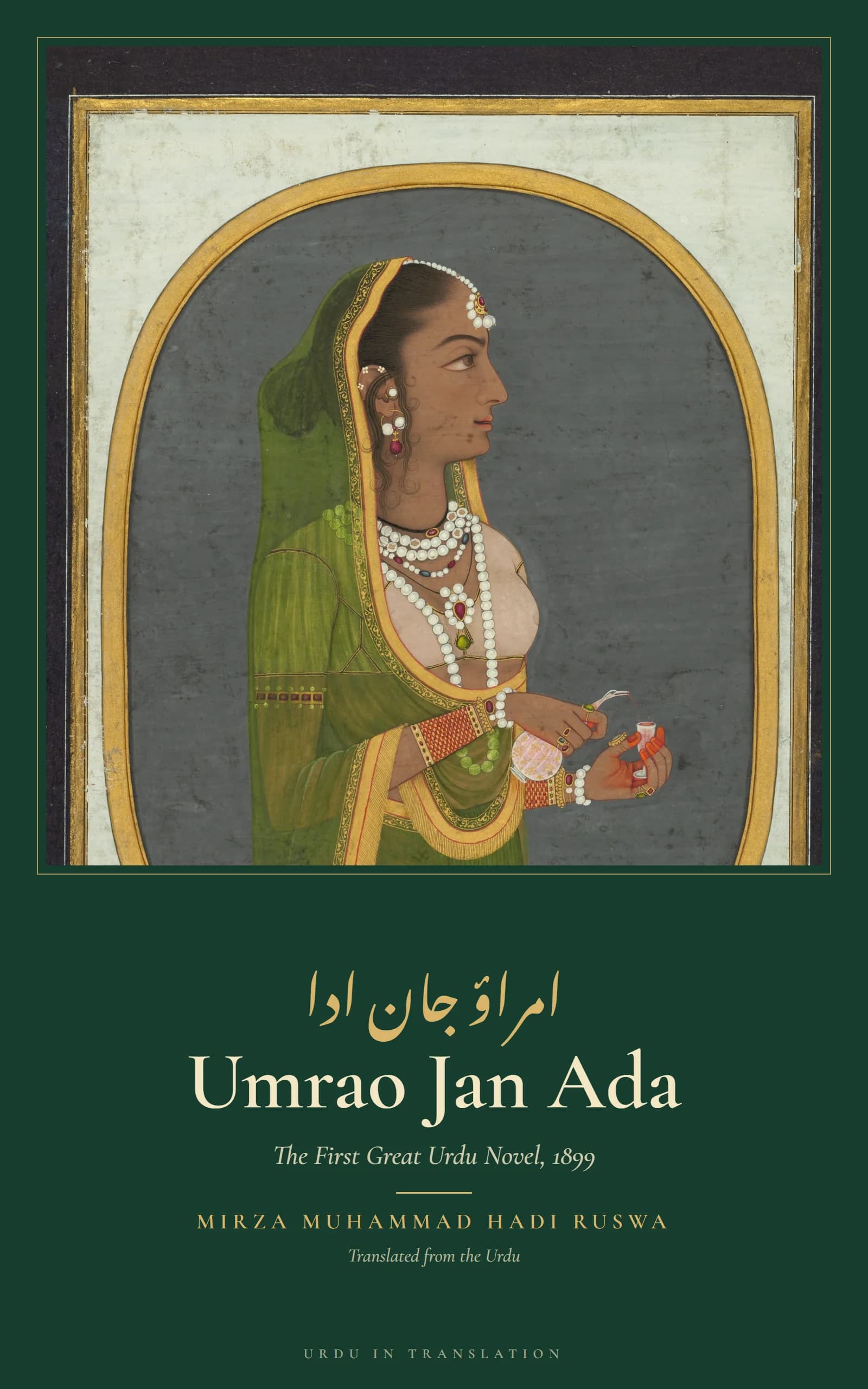
Umrao Jan Ada (امراؤ جان ادا) by Mirza Muhammad Hadi Ruswa, published in 1899, is the best-loved novel in Urdu. It is the life of a courtesan of nineteenth-century Lucknow, told by herself: a girl stolen from her family, trained in music, dance and poetry, admired by nawabs, carried off by a bandit, caught up in the rebellion of 1857, and finally returned, as a stranger, to the town she was taken from.
You can read Umrao Jan Ada in Urdu with a facing English translation on this site. The first two chapters are free.
How the novel is told
The book opens at a mushaira, an evening of poetry, in Lucknow. A woman's voice from a neighbouring room caps a verse, and the poets discover that their neighbour is Umrao Jan, once the most famous courtesan of the city, who writes under the pen-name Ada. Ruswa, who narrates the frame, persuades her to tell him her life. The rest of the novel is her account, interrupted now and then by Ruswa's questions and her sharp replies.
This device matters. Umrao is not a figure seen from outside: she judges her own past, defends herself, mocks men's vanity and admits her mistakes. Critics often call the book the first true novel in Urdu because of this rounded, self-aware narrator.
Plot summary
Faizabad. Umrao begins life as Amiran, the daughter of a modest family in Faizabad. Her father has made an enemy of a man named Dilawar Khan, who takes his revenge by kidnapping the little girl. With another stolen child, Ramdei, she is carried to Lucknow and sold.
Khanum Jan's house. Amiran is bought by Khanum Jan, who runs one of the great courtesans' houses of Lucknow. She is renamed Umrao, taught by a maulvi to read and write Urdu and Persian, and trained by ustads in classical music and dance. She begins to compose poetry. Her first lover is the charming, unreliable Gauhar Mirza; later patrons include the gentle Nawab Sultan.
Faiz Ali. Restless in Khanum's house, Umrao runs away with Faiz Ali, a generous man who turns out to be a bandit. The adventure ends in his capture, and Umrao finds herself alone, first in Kanpur and then in the turmoil of 1857, when the British retake Lucknow and the world she grew up in is scattered.
The return. In Faizabad she performs, by chance, in the very neighbourhood she was taken from, and meets her mother again. The reunion is heartbreaking: her brother regards her as a disgrace to the family, and she cannot go home. Back in Lucknow she meets old acquaintances in new circumstances, including Ramdei, whose life has taken a very different turn, and she sees justice done at last to the man who stole her childhood.
Main characters
Umrao Jan (Amiran): the narrator, a courtesan and poet, intelligent, proud and unsentimental about her own story.
Mirza Ruswa: the author as a character, Umrao's friend and listener, who draws the story out of her.
Khanum Jan: the formidable owner of the house where Umrao is raised.
Gauhar Mirza: Umrao's first love, witty and faithless.
Nawab Sultan: a cultivated young nobleman who truly cares for her.
Faiz Ali: the bandit with whom she elopes.
Dilawar Khan: the man who kidnaps her as a child.
Ramdei: the girl abducted alongside her, whose fate mirrors and contrasts with Umrao's.
Themes
A vanished city. Lucknow before 1857 was a capital of manners, music and poetry. Ruswa wrote forty years later, when that culture was gone, and the novel is full of exact detail: the etiquette of the kotha, the gatherings of poets, the food, the dress, the talk.
Women and freedom. Umrao has more education and more say over her life than most respectable women of her time, yet she can never belong to a family. The novel lets her weigh that bargain herself.
Fate and choice. Umrao blames fortune for some of what happened to her and herself for the rest. Her clear-eyed moral voice is what keeps the book from being only a romance.
Films and adaptations
The novel is widely known through film. Muzaffar Ali's Umrao Jaan (1981), with Rekha in the title role and ghazals sung by Asha Bhosle, is a classic of Indian cinema; J. P. Dutta made another version in 2006 with Aishwarya Rai. Pakistani film and television have adapted it too. The films keep the romance but leave out much of Umrao's humour and judgement, which is one reason to read the book itself.
Read it here
Questions and answers
Who wrote Umrao Jan Ada?
Mirza Muhammad Hadi Ruswa (1857–1931), a Lucknow poet, novelist and scholar. The novel was published in 1899.
Is Umrao Jan Ada a true story?
Ruswa presents it as the true story of a real woman, and readers have long debated whether Umrao Jan existed. Most scholars treat her as a fictional character drawn from the real life of Lucknow's courtesans.
Where can I read Umrao Jan Ada in English?
On this site you can read the Urdu text with a facing English translation, chapter by chapter, with audio, Roman Urdu and Hindi script. The first two chapters are free.
What does 'Ada' mean in Umrao Jan Ada?
Ada (ادا) is Umrao's takhallus, the pen-name she uses as a poet. The word means grace or charm of manner.
More guides
- Mirza Hadi Ruswa: Life and Works of the Author of Umrao Jan Ada · The Lucknow scholar, poet and novelist behind the most celebrated Urdu novel.
- Classic Urdu Novels to Read in English Translation · From the first Urdu novel to Premchand: the classics, in order, with where to read them.
- Godaan by Premchand: Summary, Characters and Themes · Premchand's last novel: a farmer, his wife and their hope of owning a cow.