How to Learn Urdu: A Practical Guide for Beginners
اردو کیسے سیکھیں
Updated
Urdu is spoken by well over two hundred million people as a first or second language, across Pakistan, India and the diaspora, and it carries one of the richest literary traditions in Asia. It is also friendlier to beginners than it looks. This guide sets out a practical order of learning, and links to the free lessons in our Beginning Urdu course.
1. Start with the sounds
Most Urdu consonants are close to English ones, but a handful are new: the aspirated pairs (k and kh, p and ph), the retroflex ṭ, ḍ and ṛ made with the tongue curled back, and the guttural q, kh and gh from Arabic and Persian. Getting these right early saves you from being misunderstood later. Our first lesson, Sounds Urdu Shares with English, begins with the easy ones and has audio for every word.
2. Use Roman Urdu as a bridge, not a destination
Roman Urdu, Urdu written in Latin letters, lets you start speaking and reading in your first week. Use a consistent system, such as our transliteration key, so that long and short vowels and the special consonants are always marked. But begin the real script soon: Roman spellings in the wild are inconsistent, and all literature, signage and serious media use Urdu script.
3. Learn the script in families
Urdu is written right to left in the Perso-Arabic alphabet, usually in the flowing Nastaliq style. The alphabet looks long, but many letters share a basic shape and differ only in their dots: ب پ ت ٹ ث are one shape with different dots. Learn the letters in these families, then learn how each one joins to its neighbours. Short vowels are usually not written, so vocabulary and script grow together.
4. Grammar you need first
The basic sentence order is subject, object, verb: main chāy pītā hūñ, I tea drink am, "I drink tea." Nouns are masculine or feminine, and verbs and adjectives agree with them. Instead of prepositions Urdu uses postpositions that follow the noun: ghar meñ, "in the house" (house in). Learn the verb honā (to be), the present habitual, and the postpositions kā/kī/ke, ko, meñ, se and par, and you can understand a surprising amount.
5. Read real books with help
Graded material is useful, but nothing motivates like a real story. Every book in our library has the Urdu text with a facing English translation, audio narration, Roman Urdu and Hindi script, and a dictionary: tap any word for its meaning. Good first books are Bagh-o-Bahar, whose prose is lively and direct, and Premchand's Godaan, written in everyday Hindustani. Read a paragraph in English, then in Urdu while listening, then aloud yourself.
6. If you know Hindi
Spoken Urdu and spoken Hindi are largely the same language, so a Hindi speaker mainly needs the script and some Persian and Arabic vocabulary. See Urdu and Hindi: what is the difference?
Read it here
Dastan · 1804
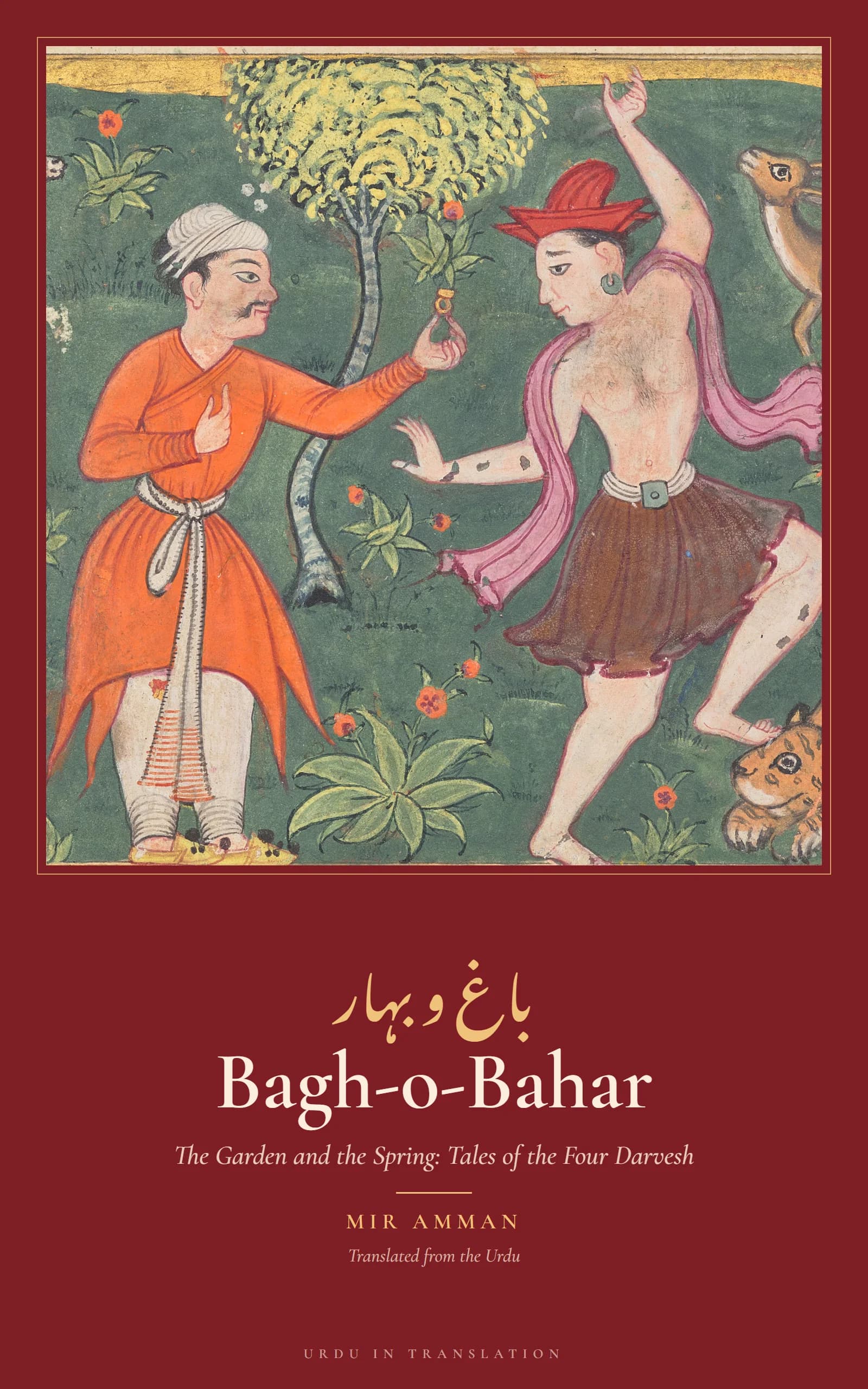
First two chapters freeBagh-o-Bahar (The Garden and the Spring): Tales of the Four Darvesh
باغ و بہار
Mir Amman
The classic of Urdu prose, written in 1801 at Fort William College, Calcutta, for John Gilchrist. Mir Amman retold the Persian Tale of the Four Darvesh in the plain spoken Urdu of Delhi, and for two centuries the book has been where learners of the language begin. Azad Bakht, emperor of Constantinople, has no heir; wandering in disguise one stormy night among the tombs, he finds four darvesh, each a prince or a merchant's son ruined by love, and listens to their stories: the merchant of Yemen and the wounded princess in the chest, the prince of Persia and the sorrowing lady of Basra, the prince of Ajam who follows a black deer, the prince of China and his wicked uncle. Within them nest the tales of Hatim Tai and of the emperor himself. Urdu text with a facing English translation; the first two chapters are free to read.
25 chaptersEnglishEspañolFrançaisالعربية中文Русский
Novel · 1936
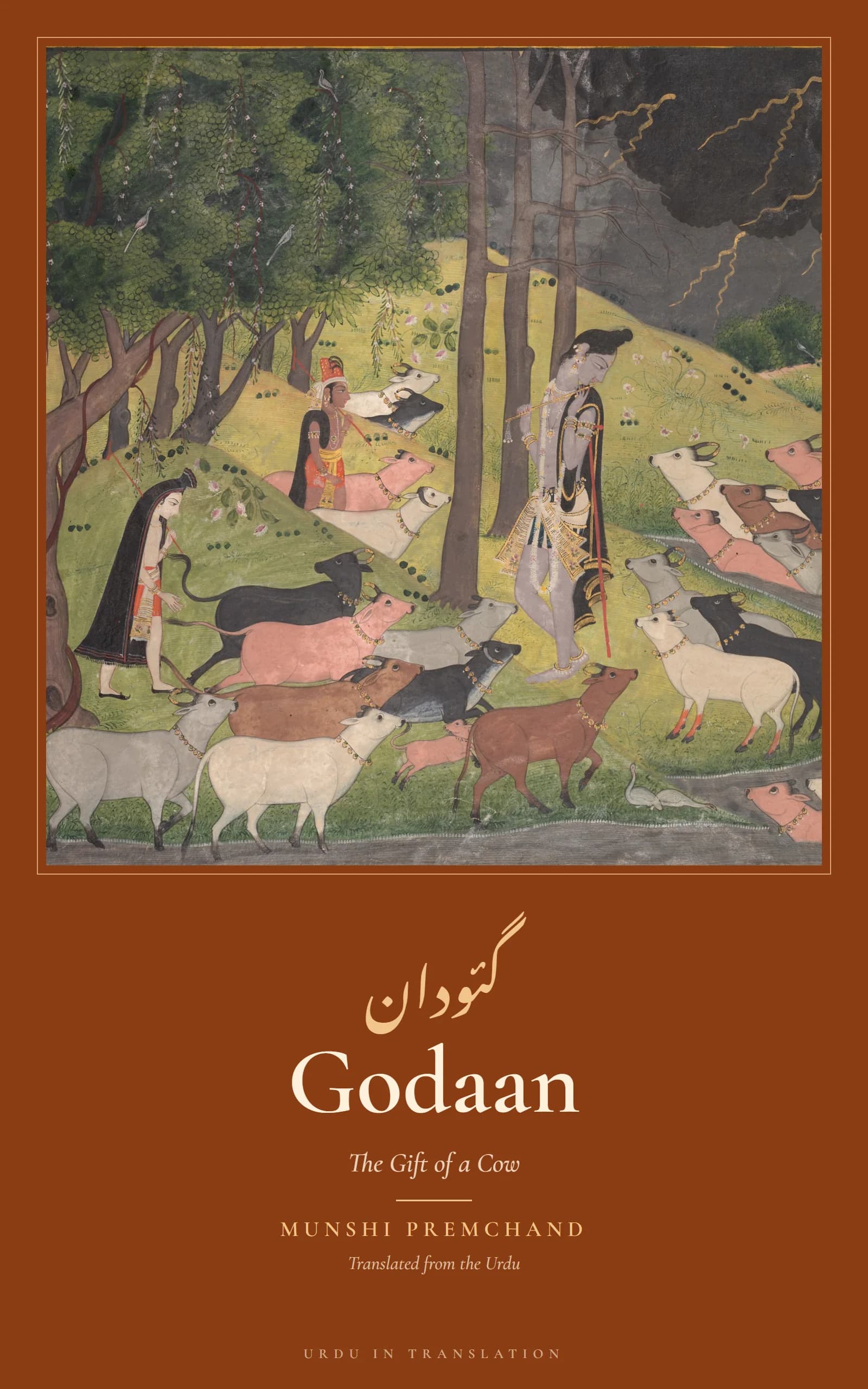
First two chapters freeGodaan (The Gift of a Cow)
گئودان
Munshi Premchand
Premchand's last completed novel (1936), and the greatest novel of Indian village life. Hori, a farmer with five bighas of land, a sharp-tongued, loyal wife named Dhaniya and a mountain of debts, wants only one thing: a cow tied at his door. Around his small hope Premchand builds a whole society: the landlord Rai Sahib with his theatricals and his worries, the moneylenders and priests of the village, and the city of Lucknow with its mill-owners, doctors, editors and philosophers. Tender, comic and unsparing, it is the classic of Hindustani realism. Urdu text with a facing English translation; the first two chapters are free to read.
36 chaptersEnglishEspañolFrançaisالعربية中文Русский
Questions and answers
Is Urdu hard to learn?
Urdu grammar is regular and its sounds are manageable for English speakers. The script takes a few weeks of steady practice. Most learners can hold simple conversations within a few months of regular study.
How long does it take to learn Urdu?
With daily practice, many learners read the script within a month and handle everyday conversation within six months to a year. Reading literature comfortably takes longer, and reading with a facing translation speeds it up.
Should I learn Roman Urdu or the Urdu script?
Start with Roman Urdu for speaking in the first weeks, but learn the Urdu script early. Literature, news and signs all use the script.
Can I learn Urdu for free?
Yes. The opening lessons of our Beginning Urdu course are free, with audio for every word, and the first two chapters of every book in the library are free to read.
More guides
- The Urdu Alphabet: All the Letters, Names and Sounds · Every letter of the Urdu alphabet with its name and sound, and how to learn them.
- Urdu Greetings and Phrases: How to Say Hello, Thank You and Goodbye · Hello, how are you, my name is, thank you and goodbye, with the etiquette behind them.
- Basic Urdu Grammar for Beginners: The Rules That Matter Most · Word order, gender, postpositions and the other rules that unlock Urdu sentences.
- Urdu and Hindi: What Is the Difference? · One spoken language, two scripts and two literary vocabularies, explained with examples.