Mir Amman Dehlavi: The Author of Bagh-o-Bahar
میر امن دہلوی
Updated
Mir Amman Dehlavi (میر امن دہلوی) is the author of Bagh-o-Bahar, the Urdu Tale of the Four Dervishes, one of the most widely read books of Urdu prose. Almost everything we know of his life comes from the preface he wrote for it.
Life
Mir Amman came from a family that had served the Mughal court in Delhi for generations. In the disorder of the eighteenth century, as the empire collapsed, the family lost its lands and position, and he left Delhi to seek a living, first in Patna and later in Calcutta.
In Calcutta he was introduced to John Gilchrist, head of the Hindustani department at the new Fort William College, which the East India Company had founded to train its officers. Gilchrist wanted readable books in the everyday Urdu of Delhi, and Mir Amman, a native speaker of that idiom, was engaged to write one.
Works
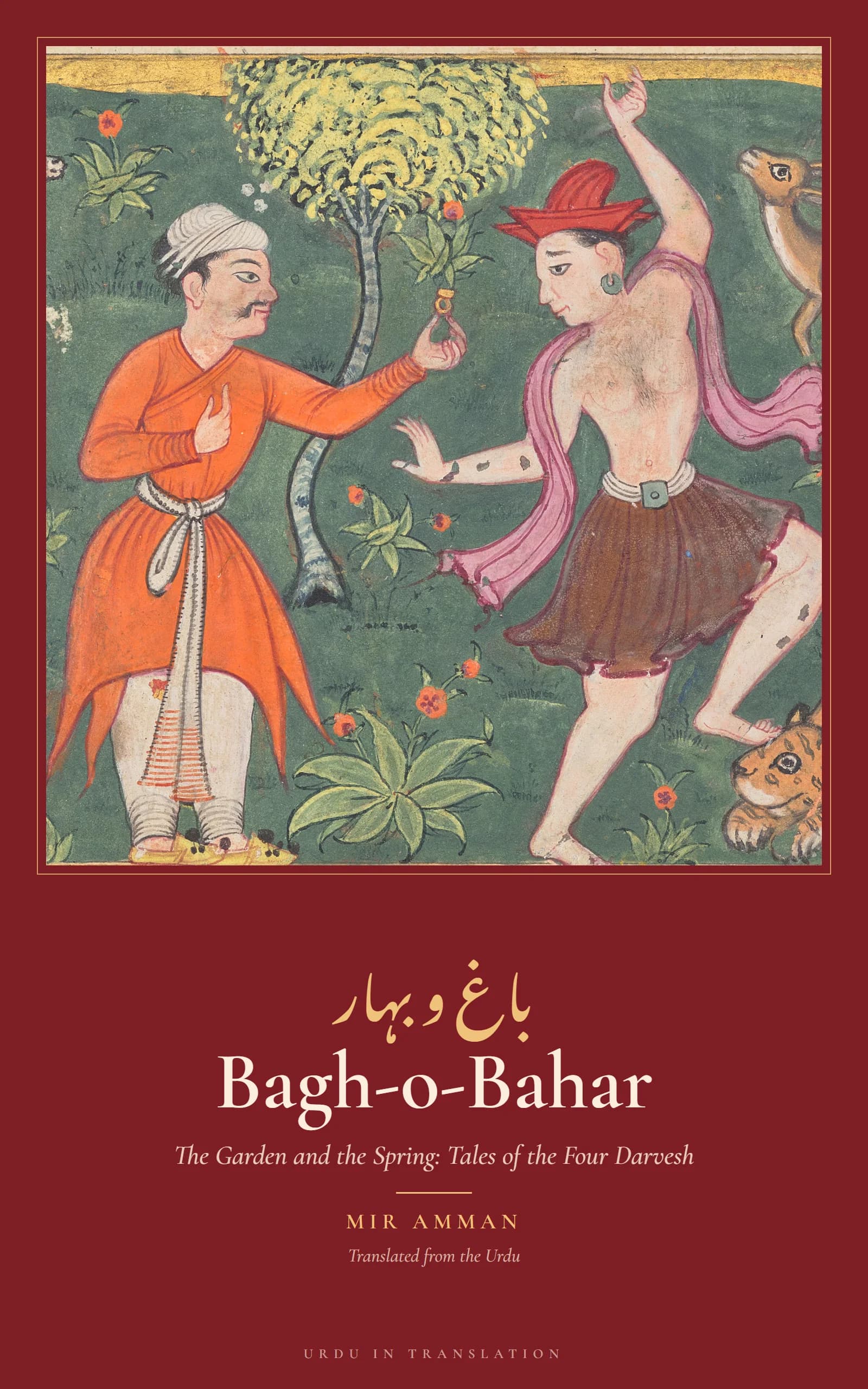
Bagh-o-Bahar (completed 1802, printed 1804): his retelling of Qissa-e-Chahar Darvesh in the plain speech of Delhi. Read it here.
Ganj-e-Khubi: an Urdu version of the Persian book of ethics Akhlaq-e-Muhsini.
Why he matters
Mir Amman showed that Urdu prose could be as natural as speech. In his preface he says he wrote the story the way people of Delhi actually talk, and that choice made Bagh-o-Bahar a model for generations of readers and writers. His Fort William colleague Mazhar Ali Khan Vila did the same for the Baital Pachisi.
Read it here
Questions and answers
Who was Mir Amman?
A writer from Delhi who worked at Fort William College, Calcutta, and wrote Bagh-o-Bahar, completed in 1802.
What is Mir Amman famous for?
Bagh-o-Bahar, his Urdu version of the Tale of the Four Dervishes, celebrated for its simple, idiomatic Delhi prose.
More guides
- Bagh-o-Bahar: The Tale of the Four Darvesh Explained · The classic Urdu dastan of King Azad Bakht and the four wandering dervishes.
- Mazhar Ali Khan Vila: The Translator of Baital Pachisi · The Delhi poet who gave Urdu its Baital Pachisi at Fort William College.