Munshi Premchand: Life, Works and Where to Start
منشی پریم چند
Updated
Munshi Premchand (منشی پریم چند, 1880–1936) is the founding master of the modern novel and short story in both Urdu and Hindi. He wrote about farmers, clerks, widows, labourers and petty officials with a realism and a sympathy that no writer in the language had attempted before him.
On this site you can read Premchand's novels in Urdu with English translation.
Life
Premchand was born Dhanpat Rai Srivastava on 31 July 1880 in Lamhi, a village near Varanasi. His father was a post-office clerk; his mother died when he was a child. He studied Urdu and Persian with a maulvi before going to school, and the Urdu dastan tradition, especially Tilism-e-Hoshruba, was among his first loves as a reader.
He worked for years as a schoolteacher and school inspector. His first writings were in Urdu under the name Nawab Rai. His first collection of patriotic stories, Soz-e-Watan (1907), was seized by the British authorities and copies were burned; after that he wrote as Premchand. In 1921, answering Gandhi's call for non-cooperation, he left government service to write, edit and publish.
In April 1936 he presided over the first conference of the Progressive Writers' Association in Lucknow, where he said that literature must stir its readers to change the world. He died in Varanasi on 8 October 1936.
Major novels
Bazar-e-Husn / Sevasadan (1919): a young wife driven into a courtesan's life, and the society that judges her.
Nirmala (1927): a girl married to a much older widower, and the tragedy of the household.
Gaban (1931): a clerk's embezzlement and its consequences. See our guide to Gaban or read it here.
Karmabhoomi (1932) and Rangbhoomi / Chaugan-e-Hasti (1925): large novels of the national movement.
Godaan (1936): his masterpiece, the life of the farmer Hori. See our guide to Godaan or read it here.
Famous short stories
Premchand wrote some three hundred stories. Among the best known are Kafan (The Shroud), Idgah, Shatranj ke Khiladi (The Chess Players, filmed by Satyajit Ray), Poos ki Raat (A Winter Night), Namak ka Daroga (The Salt Inspector) and Bade Bhai Sahab (Elder Brother).
Urdu writer or Hindi writer?
Both. Premchand began in Urdu, moved increasingly to Hindi for publication from the 1910s, and kept writing and revising in both. His language is the everyday Hindustani that underlies both standards, which is why his books read naturally in Urdu script and in Devanagari. See our guide to the difference between Urdu and Hindi.
Where to start
If you want one book, read Godaan. If you prefer a tighter, faster story, start with Gaban. Both can be read here in Urdu with a facing English translation, with audio for every chapter, so they also make excellent reading for learners of Urdu.
Read it here
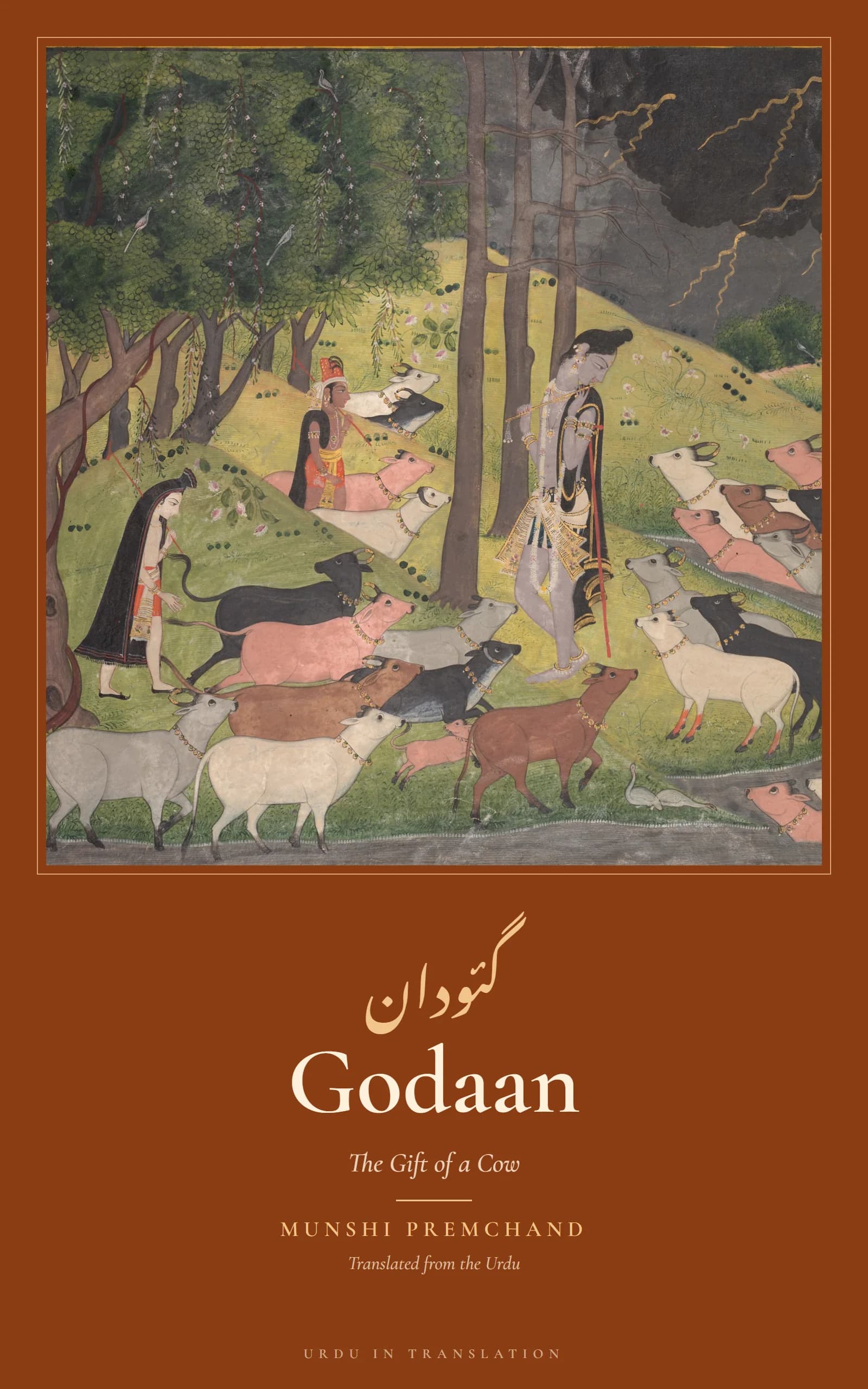
Roman · 1936
Deux premiers chapitres gratuitsGodaan (Le Don d'une vache)
گئودان
Munshi Premchand
Le dernier roman achevé de Premchand (1936), et le plus grand roman de la vie villageoise indienne. Hori, paysan possédant cinq bighas de terre, une épouse fidèle à la langue acérée nommée Dhaniya et une montagne de dettes, ne désire qu'une chose : une vache attachée à sa porte. Autour de ce modeste espoir, Premchand bâtit toute une société : le zamindar Rai Sahib avec son théâtre et ses soucis, les prêteurs et les prêtres du village, et la ville de Lucknow avec ses industriels, ses médecins, ses journalistes et ses philosophes. Tendre, comique et impitoyable, c'est le classique du réalisme hindoustani. Texte ourdou avec traduction anglaise en regard ; les deux premiers chapitres sont en lecture libre.
36 chapitresEnglishEspañolFrançaisالعربية中文Русский
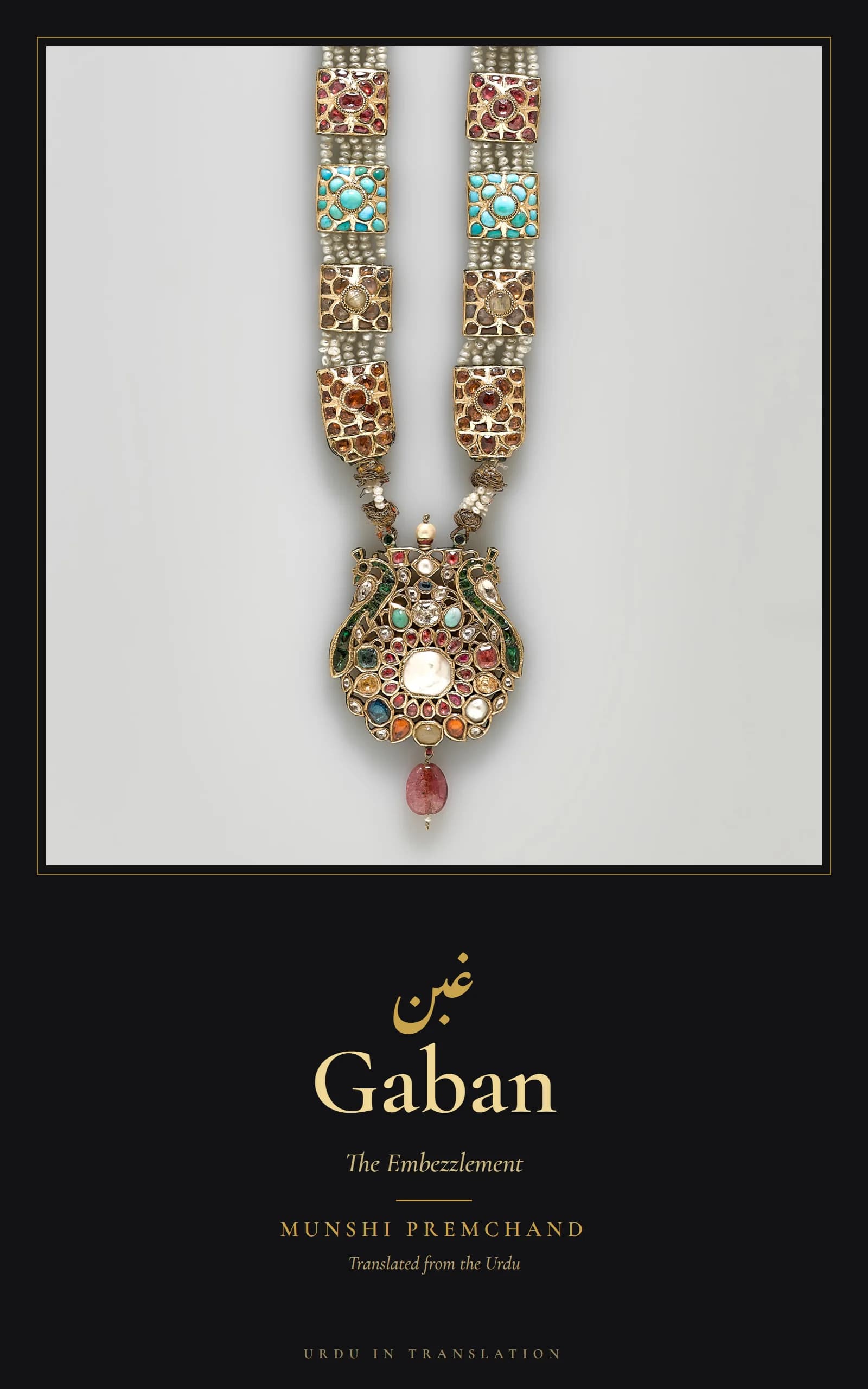
Roman · 1931
Deux premiers chapitres gratuitsGaban (Le Détournement)
غبن
Munshi Premchand
Roman de Premchand paru en 1931. Jalpa, une fille de village, grandit en ne désirant qu'une chose : un chandan-haar, le collier d'or qu'elle a vu dans la boîte d'un colporteur près de la balançoire. Son mari Ramanath, commis au bureau municipal d'Allahabad et faible devant le paraître, emprunte, ment et finit par puiser dans les deniers publics pour la couvrir de bijoux. S'ensuit une histoire de dettes, de fuite, d'indicateurs de police et de la lente découverte, par une femme, de sa propre force. L'un des grands romans sociaux de la littérature ourdoue et hindie. Texte ourdou avec traduction anglaise en regard ; les deux premiers chapitres sont en lecture libre.
52 chapitresEnglishEspañolFrançaisالعربية中文Русский
Questions and answers
What was Premchand's real name?
Dhanpat Rai Srivastava. He first wrote as Nawab Rai and took the name Premchand after 1908.
Did Premchand write in Urdu or Hindi?
In both. He began his career in Urdu and later published mainly in Hindi, but his language is the shared Hindustani of north India.
What is Premchand's best novel?
Godaan (1936) is generally considered his masterpiece.
More guides
- Godaan by Premchand: Summary, Characters and Themes · Premchand's last novel: a farmer, his wife and their hope of owning a cow.
- Gaban by Premchand: Summary, Characters and Themes · A young husband's lie about money, and a wife who makes him face the truth.
- Classic Urdu Novels to Read in English Translation · From the first Urdu novel to Premchand: the classics, in order, with where to read them.