Afsana (nouvelle)
افسانہ
Afsana (nouvelle) · 1922
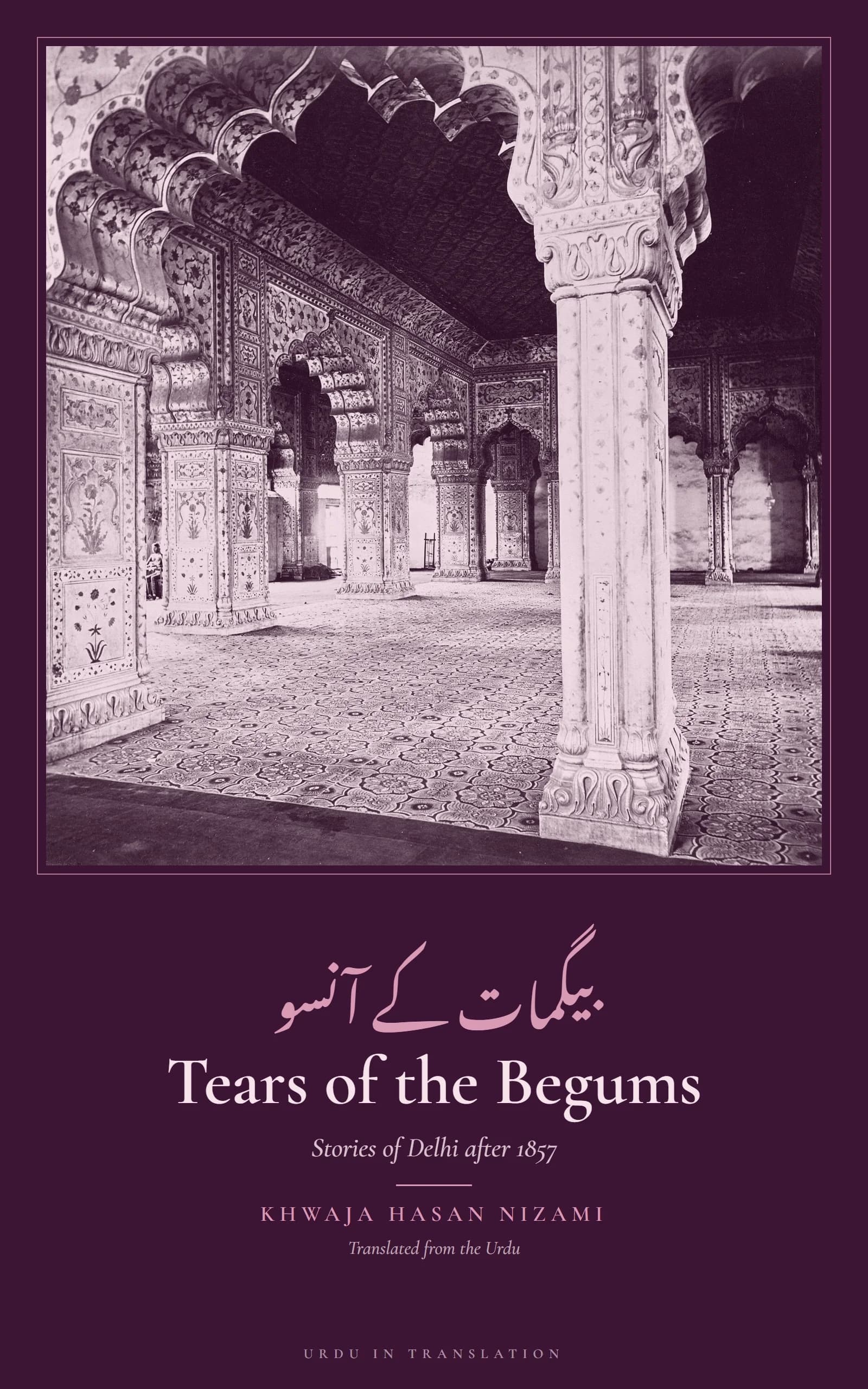
Deux premiers chapitres gratuitsLes Larmes des bégums
بیگمات کے آنسو
Khwaja Hasan Nizami
Récits de la Révolte de 1857. Khwaja Hasan Nizami a rassemblé les derniers princes et princesses de la maison moghole, chassés du Fort Rouge dans une Delhi en flammes, et leur a laissé raconter ce qu'il advint d'eux : un prince devenu maître d'hôtel, des princesses mendiant dans les bazars, une fille de Bahadur Shah. Réédité maintes fois du vivant de l'auteur, c'est la prose ourdoue dans ce qu'elle a de plus tendre. Traduit ici intégralement, avec la postface de l'auteur de 1930 ; la préface et le premier récit sont en lecture libre.
19 chapitresEnglishEspañolFrançaisالعربية中文Русский
Afsana (nouvelle)
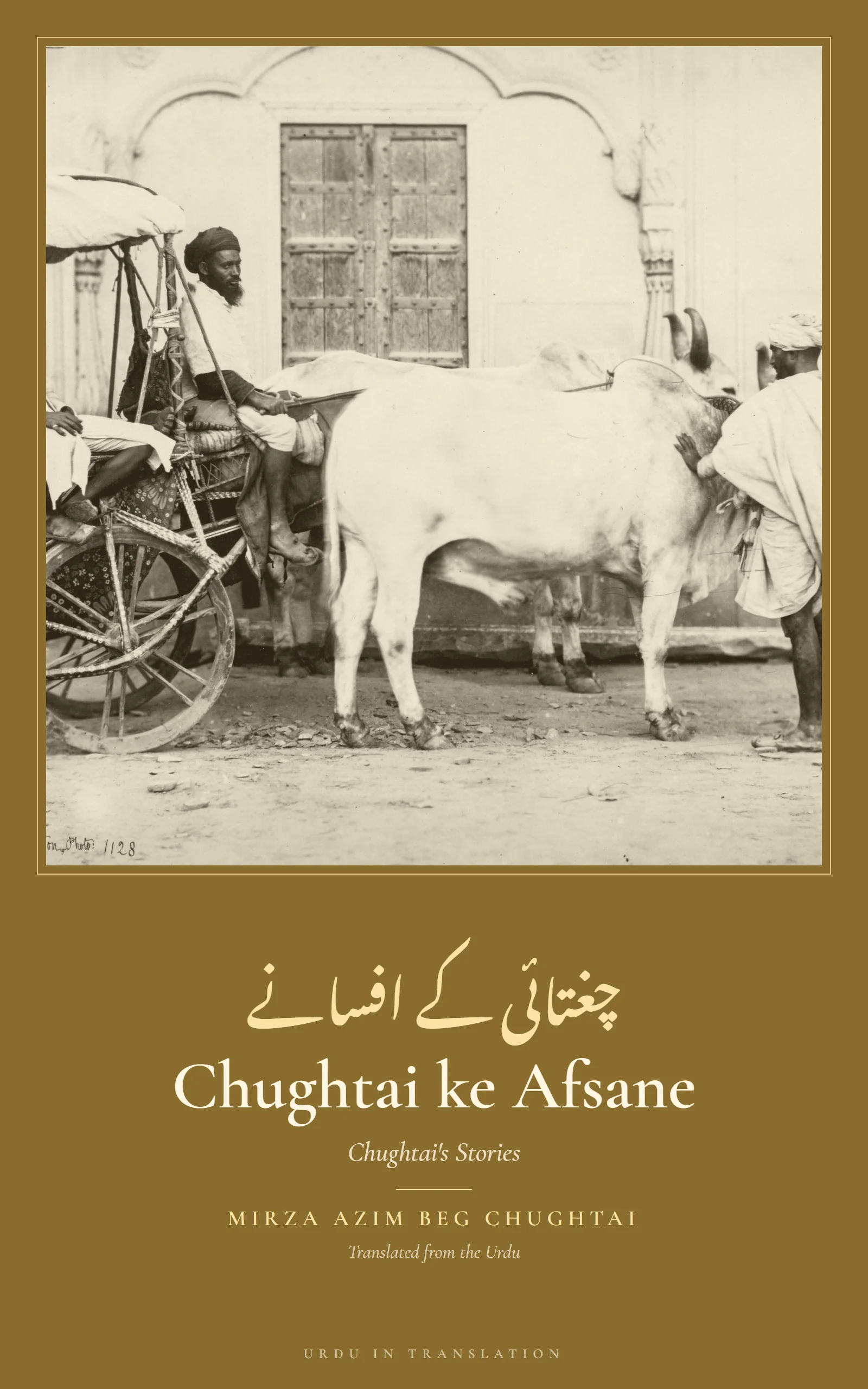
Deux premiers chapitres gratuitsChughtai ke Afsane (Chughtai's Stories)
چغتائی کے افسانے
Mirza Azim Beg Chughtai
Seven comic pieces by Mirza Azim Beg Chughtai (1895-1941), the best-loved Urdu humorist between the wars and elder brother of Ismat Chughtai. A young law graduate who loathes betel-chewers insults a fellow passenger on the train to Agra and discovers that the man is his examiner; a grazed hand, bandaged for fear of tetanus, draws so many questions that its owner starts inventing crocodiles and cobras; a new telephone becomes a weapon against a shoe shop that half the town rings to ask the price of boots; a schoolboy eleven, more interested in the refreshment tent than the game, beats a regiment of Highlanders by sheer cheek; and a set of sketches of bullocks. With two essays in which Chughtai mocks the self-styled story-writers of his day and explains, half in jest, how he wrote his own stories. Complete Urdu text with a facing English translation, introduction and glossary. Cite as: Mirza Azim Beg Chughtai, Chughtai ke Afsane, tr. urduintranslation.com (2026), https://www.urduintranslation.com/works/chughtai-ke-afsane. The first two chapters are free to read.
9 chapitresEnglishd’autres langues à venir
Afsana (nouvelle)
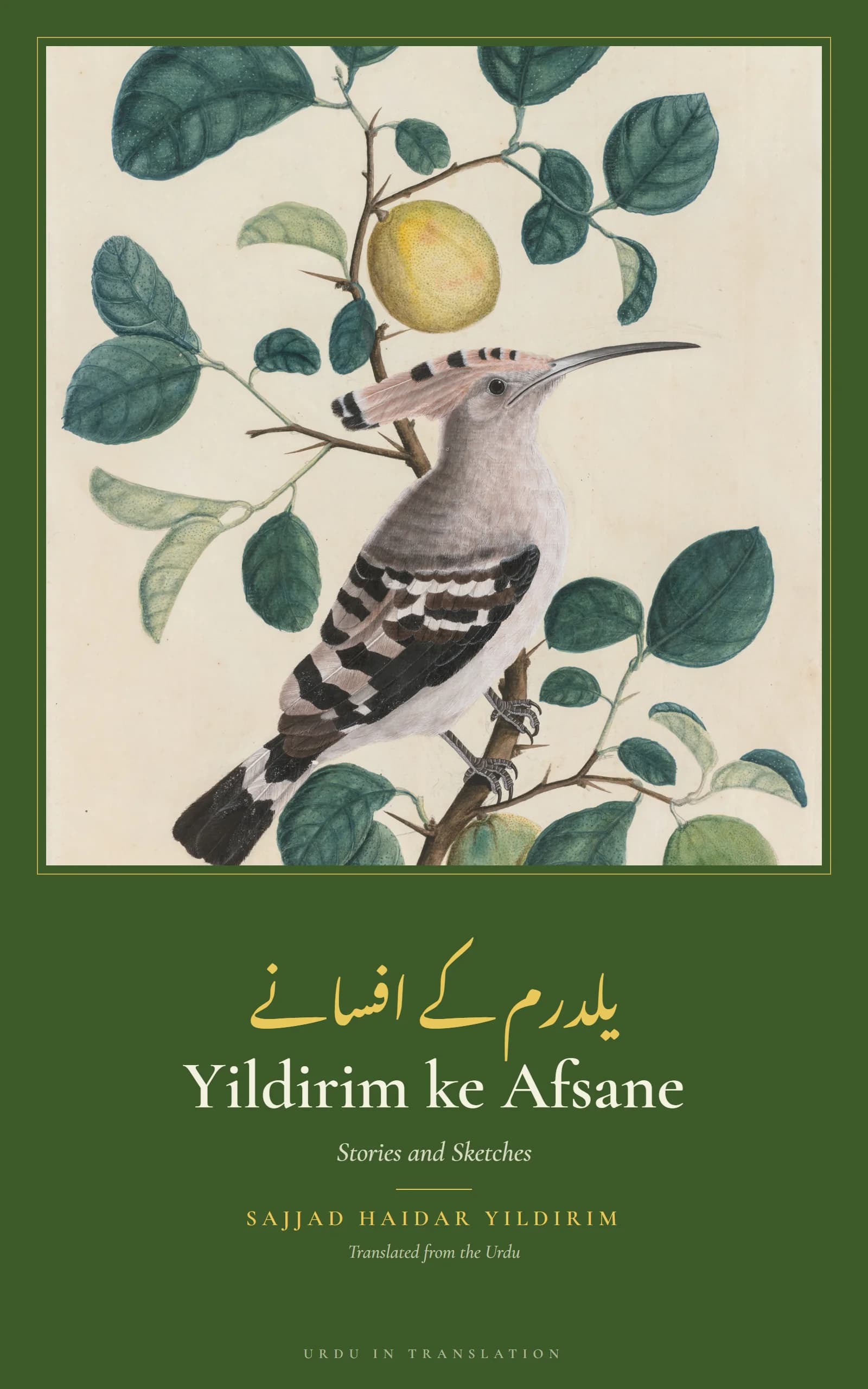
Deux premiers chapitres gratuitsYildirim ke Afsane (Stories and Sketches of Sajjad Haidar Yildirim)
یلدرم کے افسانے
Sajjad Haidar Yildirim
Ten stories, sketches and comic essays by Sajjad Haidar Yildirim (1880-1943), the Aligarh writer who learnt Turkish, brought the romantic short story into Urdu, and was the father of Qurratulain Hyder. A heart writes its autobiography; a cock sparrow mocks the hypocrisy of human lovers; a writer begs to be saved from his friends; a girl raised on an island of flowers, kept from all knowledge of men, grows weary of paradise. A doctor marries the lady doctor all Hyderabad slanders; a betrayed wife walks into the house of the courtesan who has taken her husband; and two school friends, unhappily married in 1925, one to a belching lover of theatre songs and one to a silent engineer who plays cards, write each other letters on what marriage ought to be. Complete Urdu text from Wikisource with a facing English translation, introduction and glossary. Cite as: Sajjad Haidar Yildirim, Yildirim ke Afsane, tr. urduintranslation.com (2026), https://www.urduintranslation.com/works/yildirim-ke-afsane. The first two chapters are free to read.
13 chapitresEnglishd’autres langues à venir
Afsana (nouvelle)
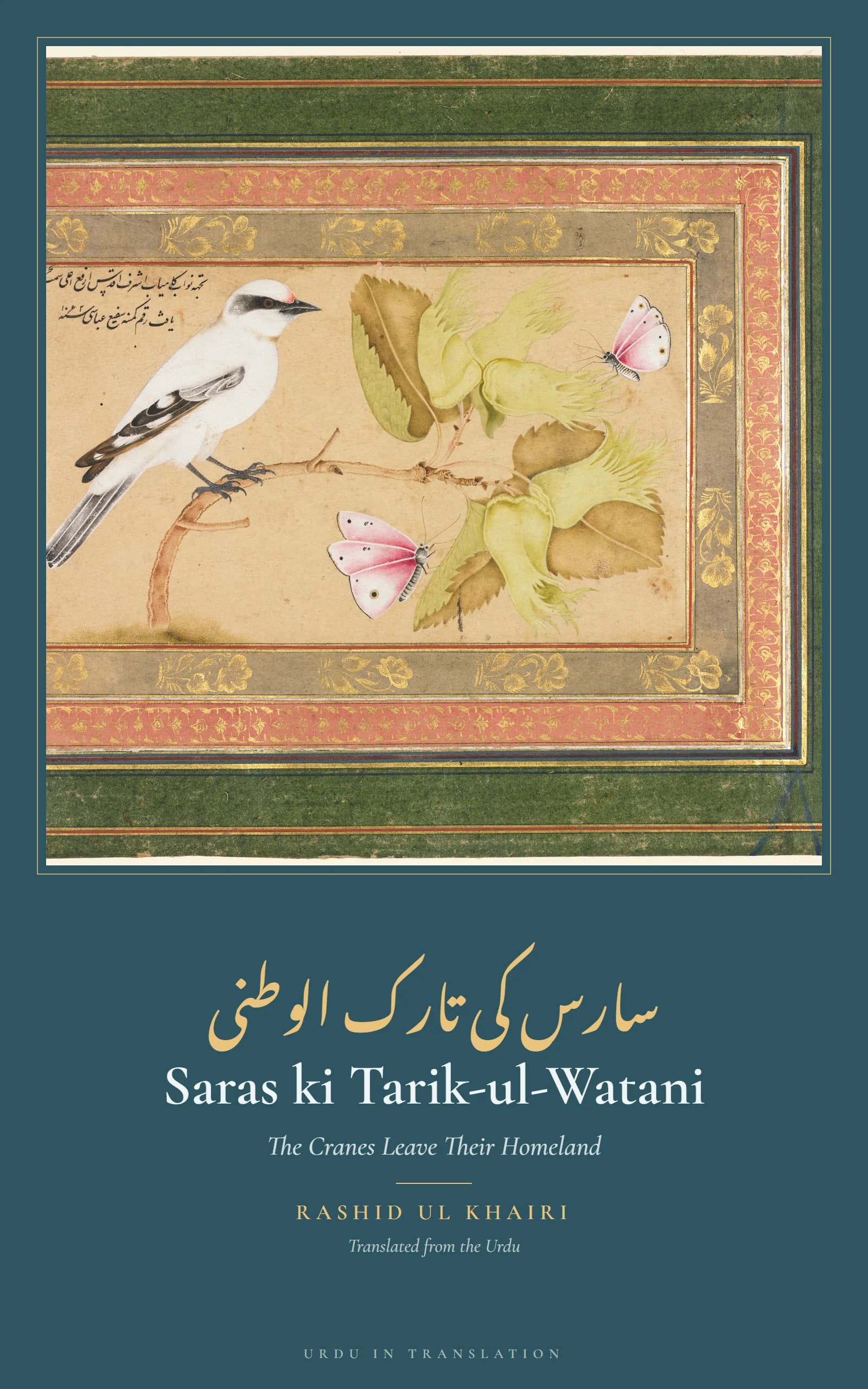
Deux premiers chapitres gratuitsSaras ki Tarik-ul-Watani (The Cranes Leave Their Homeland): An Allegory
سارس کی تارک الوطنی
Rashid ul Khairi
A pair of sarus cranes, the Indian birds famous for lifelong faithfulness, decide to leave their homeland for ever because man has come too near. The female pleads for man, the maker of fields and orchards; the male answers with what he has seen of him: a prince who stabs the wife he once adored, a rich woman who forbids her wet nurse to suckle her own baby, and a pious-looking elder brother who swears an oath on God and then has his younger brother exiled for a village. Called 'the first symbolic story in the Urdu language', this allegory by Rashid ul Khairi (1868-1936), 'the painter of sorrow', turns the 'noblest of creatures' into the basest. Complete Urdu text (Urdu Wikisource) with a facing English translation, introduction and glossary. Cite as: Rashid ul Khairi, Saras ki Tarik-ul-Watani, tr. urduintranslation.com (2026), https://www.urduintranslation.com/works/saras-ki-tarik-ul-watani. The first two chapters are free to read.
4 chapitresEnglishd’autres langues à venir
Afsana (nouvelle)
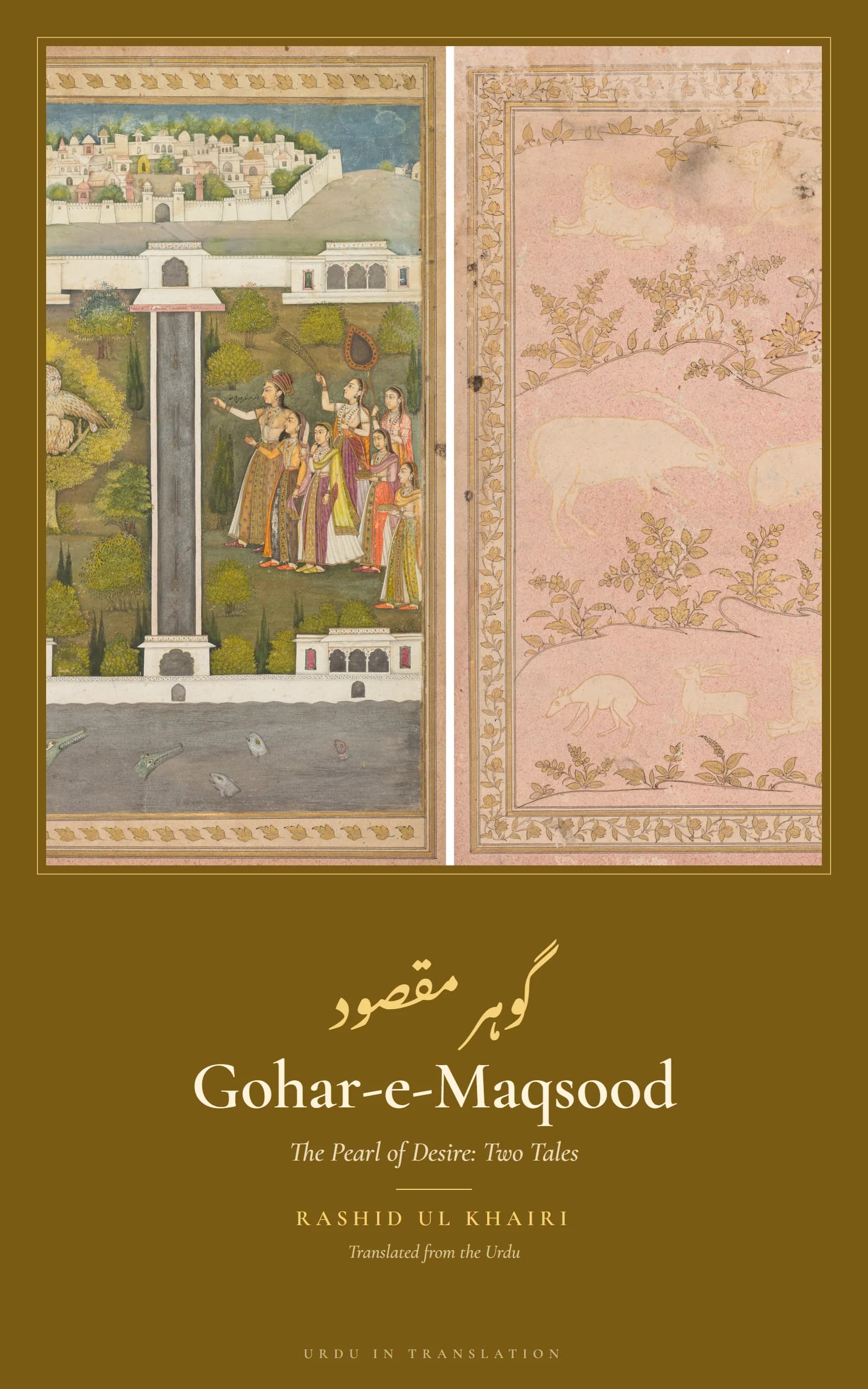
Deux premiers chapitres gratuitsGohar-e-Maqsood (The Pearl of Desire): Two Tales
گوہر مقصود
Rashid ul Khairi
Two tales by Rashid ul Khairi (1868-1936), 'the painter of sorrow', published in Lahore in 1918. In 'The Fairy of Khayalistan' a fairy banished from the Land of Imagination may return only if she brings the king the best thing in the world; year after year, when the wall of fairyland opens at Nauroz, she brings what she has found among men: a reformer's first drop of blood, a divorced young wife's last breath, a mother's tear, the flood that drowned a woman who would not break purdah, a slighted little girl's tear, and at last the dying breath of a faithful wife. In 'In Search of the Ruby' a young Delhi widow loses her only surviving son at a family celebration and searches for him for twelve years, through suspicion, nightmare and the forests of the Vindhyachal, until he finds her at the altar of a goddess. Complete Urdu text (Urdu Wikisource, checked against the 1918 Dar-ul-Isha'at Punjab edition, archive.org dli.ernet.409249) with a facing English translation, introduction and glossary. Cite as: Rashid ul Khairi, Gohar-e-Maqsood, tr. urduintranslation.com (2026), https://www.urduintranslation.com/works/gohar-e-maqsood. The first two chapters are free to read.
7 chapitresEnglishd’autres langues à venir
Afsana (nouvelle)
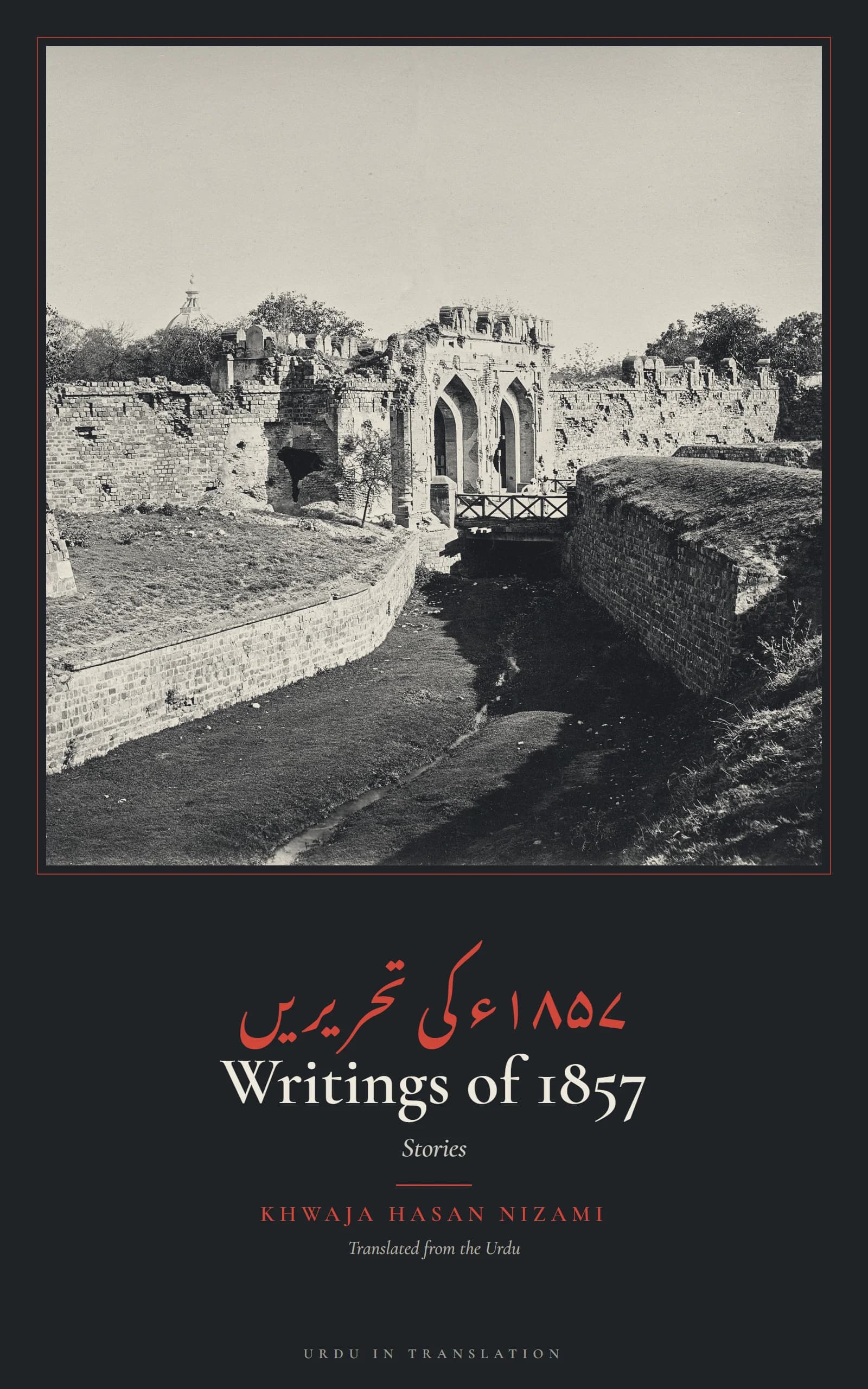
Deux premiers chapitres gratuitsÉcrits de 1857
۱۸۵۷ء کی تحریریں
Khwaja Hasan Nizami
Le complément des Larmes des bégums : onze autres textes de Khwaja Hasan Nizami sur la chute de la Delhi moghole, qui ne furent jamais réunis dans le célèbre recueil. L'empereur derviche Bahadur Shah remettant ses reliques la nuit où il quitta le Fort ; une lettre de bénédiction écrite en son nom au prince de Galles ; un prince sourd qui transporte des briques sur une charrette et comparaît devant un magistrat ; un pir qui fauche l'herbe pour vivre ; un prince qui balaie les bureaux d'un journal ; deux princes en prison ; le combat de la femme en vert. Traduit intégralement ; les deux premiers textes sont en lecture libre.
11 chapitresEnglishEspañolFrançaisالعربية中文Русский