Deputy Nazir Ahmad
ڈپٹی نذیر احمد
Life1830–1912
Nazir Ahmad was born in 1830 in a village of Bijnor district and came to Delhi as a boy to study in the mosque schools. He then studied at Delhi College, where he learned Arabic and came into contact with Western learning. He survived the upheaval of 1857 in Delhi.
After the uprising he rose through government service and became a deputy collector, which gave him the title "Deputy" by which he is still known. He helped translate the Indian Penal Code into Urdu. Later he served the state of Hyderabad, and he retired to Delhi, where he devoted himself to writing, lecturing and a celebrated Urdu translation of the Qur'an. He died in Delhi in 1912.
Œuvres de Deputy Nazir Ahmad
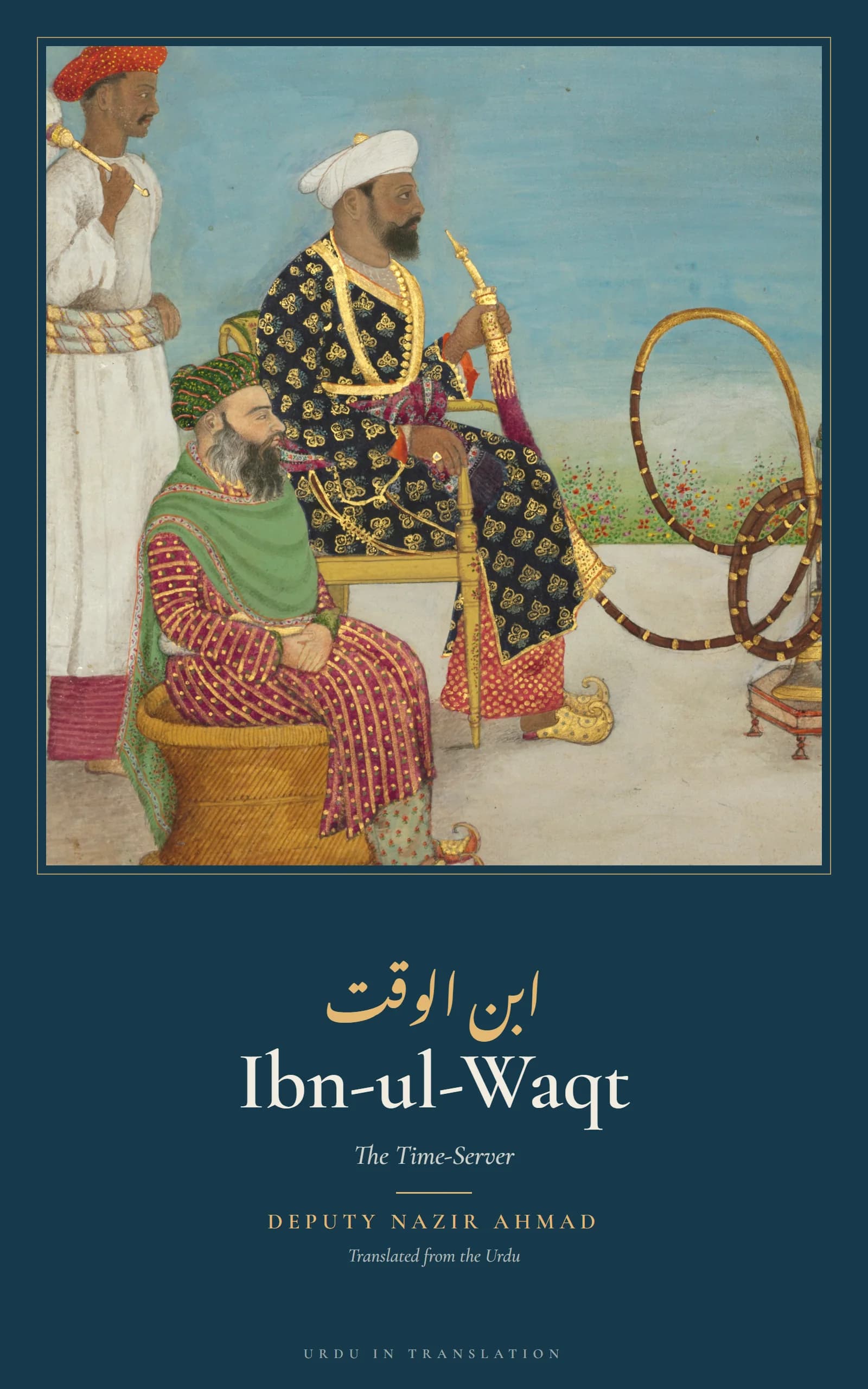
Roman · 1888
Deux premiers chapitres gratuitsIbn-ul-Waqt (L'Opportuniste)
ابن الوقت
Deputy Nazir Ahmad
Le roman comique de Nazir Ahmad, paru en 1888. Pendant le soulèvement de 1857, Ibn-ul-Waqt, intendant d'une princesse moghole et lettré versé dans l'arabe et le persan, cache un Anglais blessé, Mr Noble. Quand Delhi tombe, sa récompense est une place dans la société anglaise, et il s'y jette tout entier : un bungalow, une table avec couteaux et fourchettes, un chapeau, un chien, et la conviction nouvelle que les gouvernants valent mieux que les gouvernés en toute chose. Son cousin Hujjat-ul-Islam est envoyé pour le ramener à la raison. Écrit à l'époque de Sir Syed, c'est la première grande satire ourdoue du mimétisme colonial, et elle reste très drôle. Texte ourdou avec traduction en regard ; les deux premiers chapitres sont en lecture libre.
28 chapitresEnglishEspañolFrançaisالعربية中文Русский
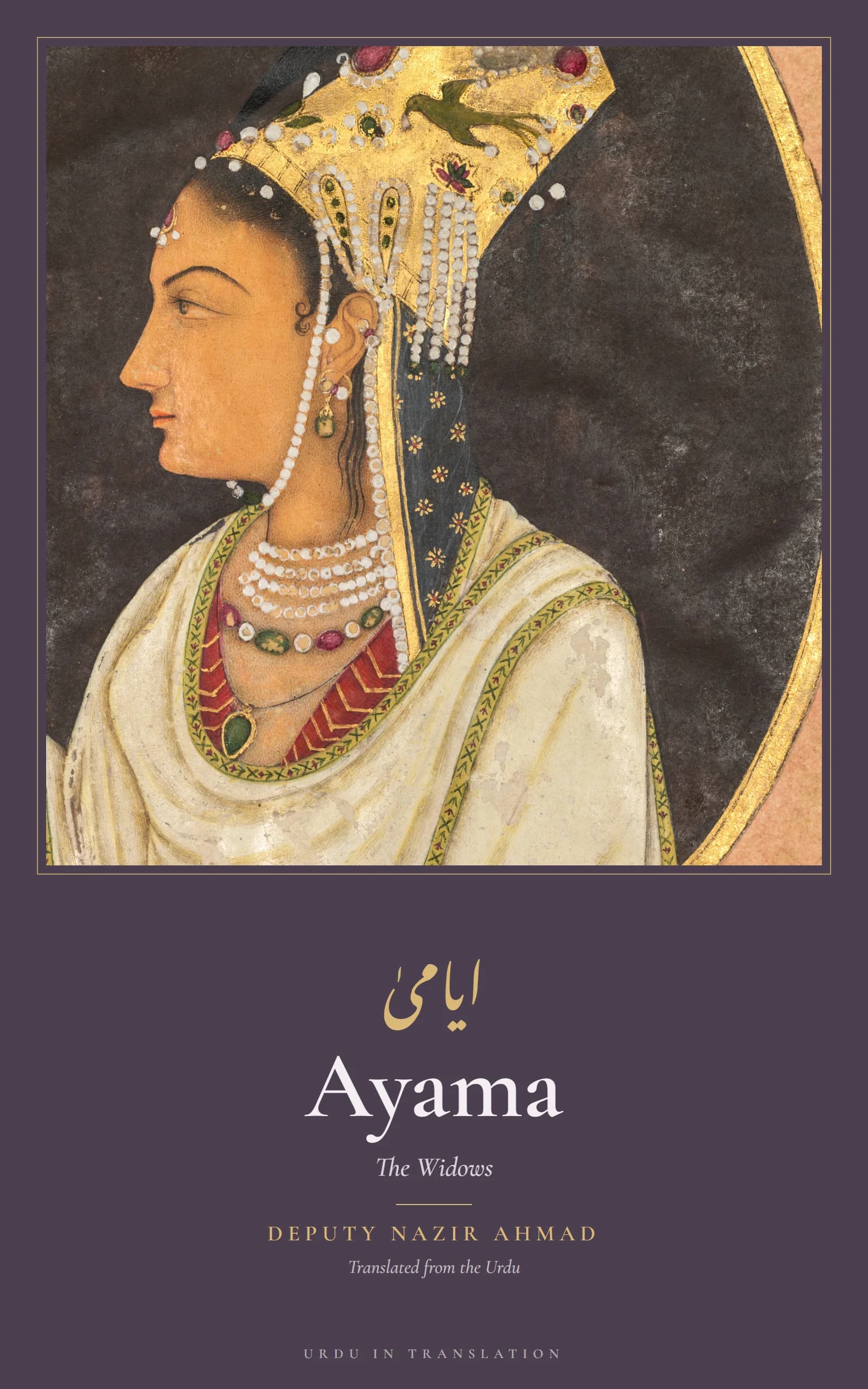
Roman
Deux premiers chapitres gratuitsAyama: The Widows
ایامیٰ
Deputy Nazir Ahmad · sur Novel
Deputy Nazir Ahmad's Ayama ("The Widows", 1891) is the classic Urdu novel on the remarriage of widows. Azadi Begam, a girl of a good Delhi family raised between a sceptical father and a devout mother, marries the young scholar Maulvi Mustajab, weans him from the narrow life of a mosque maulvi, and is left a young, childless widow when he dies in the service of Bhopal. Held back by custom from marrying again, she lives through mourning, sermons on patience, loneliness, thoughts of suicide and the schemes of go-betweens, and in her last illness examines her life in a long dialogue with herself. On her deathbed she calls the men of her family and neighbourhood together and, from behind the curtain, makes them her bequest: a speech on the sufferings of widows and on the Qur'anic command to see them married. A key text for the Urdu novel, Muslim social reform, women's lives and the widow-remarriage debate in nineteenth-century India. Complete Urdu text from the 1891 first edition, with the author's footnotes, a facing English translation, an introduction and a glossary. Cite as: Nazir Ahmad, Ayama, tr. urduintranslation.com (2026). The first chapter is free to read.
21 chapitresEnglishd’autres langues à venir
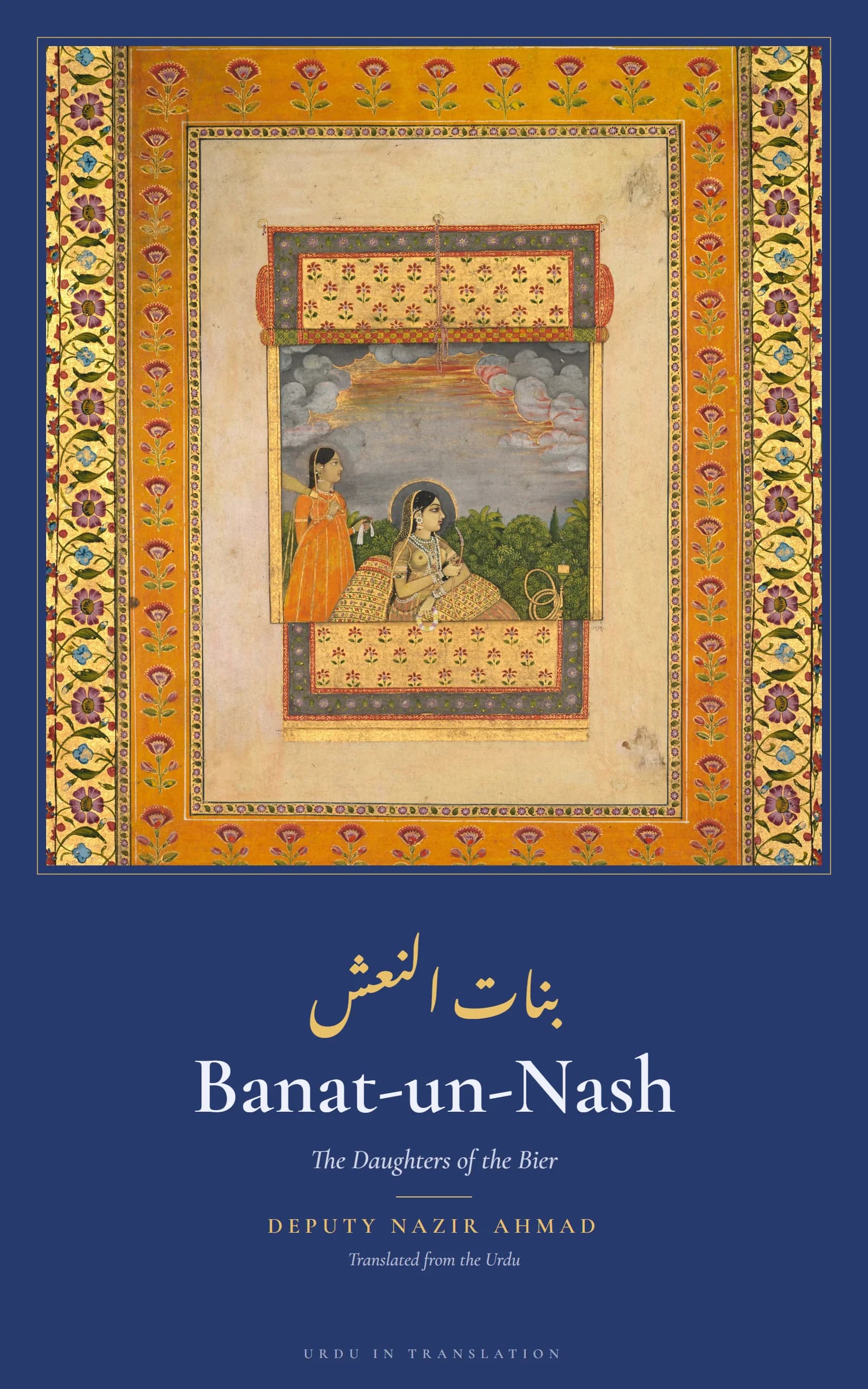
Roman
Deux premiers chapitres gratuitsBanat-un-Nash: The Daughters of the Bier
بنات النعش
Deputy Nazir Ahmad · sur Novel
Deputy Nazir Ahmad's Banat-un-Nash (c. 1872), the second part of his Mirat-ul-Uroos (1869), is one of the first Urdu books written to give girls a modern education. Asghari, the capable heroine of the earlier book, now keeps a school for girls in her Delhi home, and into it comes Husn Ara, the spoilt and bad-tempered daughter of a rich household. Through talk, example and patience rather than punishment, Asghari and her sister-in-law Mahmuda cure her of pride, laziness and superstition, while the girls learn arithmetic, gravity, the shape of the earth, the geography of Arabia, astronomy and the cause of eclipses, and hear the tale of the cruel nobleman Masih-ul-Mulk, a long story of women's superstitions, and the life of an English family. It ends with Husn Ara's moving farewell to the school before her marriage. A key text for the Urdu novel, women's education and reform in nineteenth-century India, and the daily life and speech of Delhi households after 1857. Complete Urdu text from a 1950 Delhi reprint, with the author's footnotes, a facing English translation, an introduction and a glossary. Cite as: Nazir Ahmad, Banat-un-Nash, tr. urduintranslation.com (2026). The first chapter is free to read.
22 chapitresEnglishd’autres langues à venir
Roman
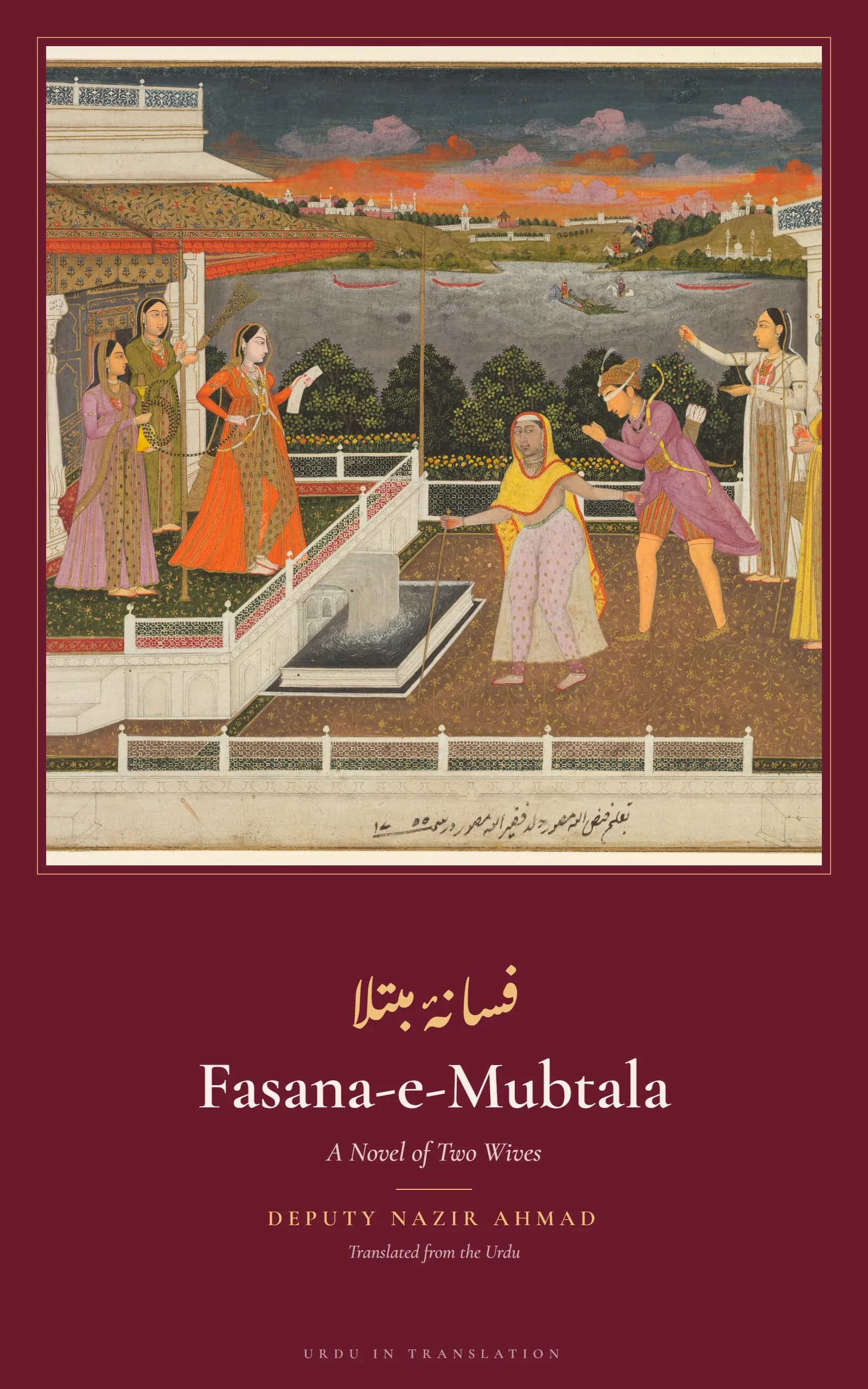
Deux premiers chapitres gratuitsFasana-e-Mubtala (The Tale of Mubtala): A Novel of Two Wives
فسانۂ مبتلا
Deputy Nazir Ahmad
Delhi, in the 1880s. Mubtala, spoilt only son of a well-to-do family, lives for beauty: married young to his plain, proud cousin Ghairat Begum, he despises her and spends his days with dancing girls and flatterers. His pious uncle returns from the hajj to set the house in order, his friend Arif argues with him about beauty and about what the Quran really allows, and Mubtala goes his own way: he marries Hariyali, a courtesan from Lucknow, and smuggles her into the house as a housekeeper. What follows is the comic and terrible story of two co-wives under one roof, the spying and cursing, a pot of poisoned milk, a police case fixed by Ghairat Begum's brother, a clever and unscrupulous pleader, and the slow ruin of a household and of Mubtala himself. Deputy Nazir Ahmad (1831-1912), the first Urdu novelist and author of Mirat-ul-Uroos, wrote it in 1885 against 'the freedom of men in the matter of marriage'. Complete Urdu text (Urdu Wikisource, checked against a Shamsi Press, Delhi printing, archive.org in.ernet.dli.2015.435949, with the author's preface and prelude transcribed from the scan) with a facing English translation, introduction and glossary. Cite as: Deputy Nazir Ahmad, Fasana-e-Mubtala, tr. urduintranslation.com (2026), https://www.urduintranslation.com/works/fasana-e-mubtala. The first two chapters are free to read.
31 chapitresEnglishd’autres langues à venir
Roman · 1869
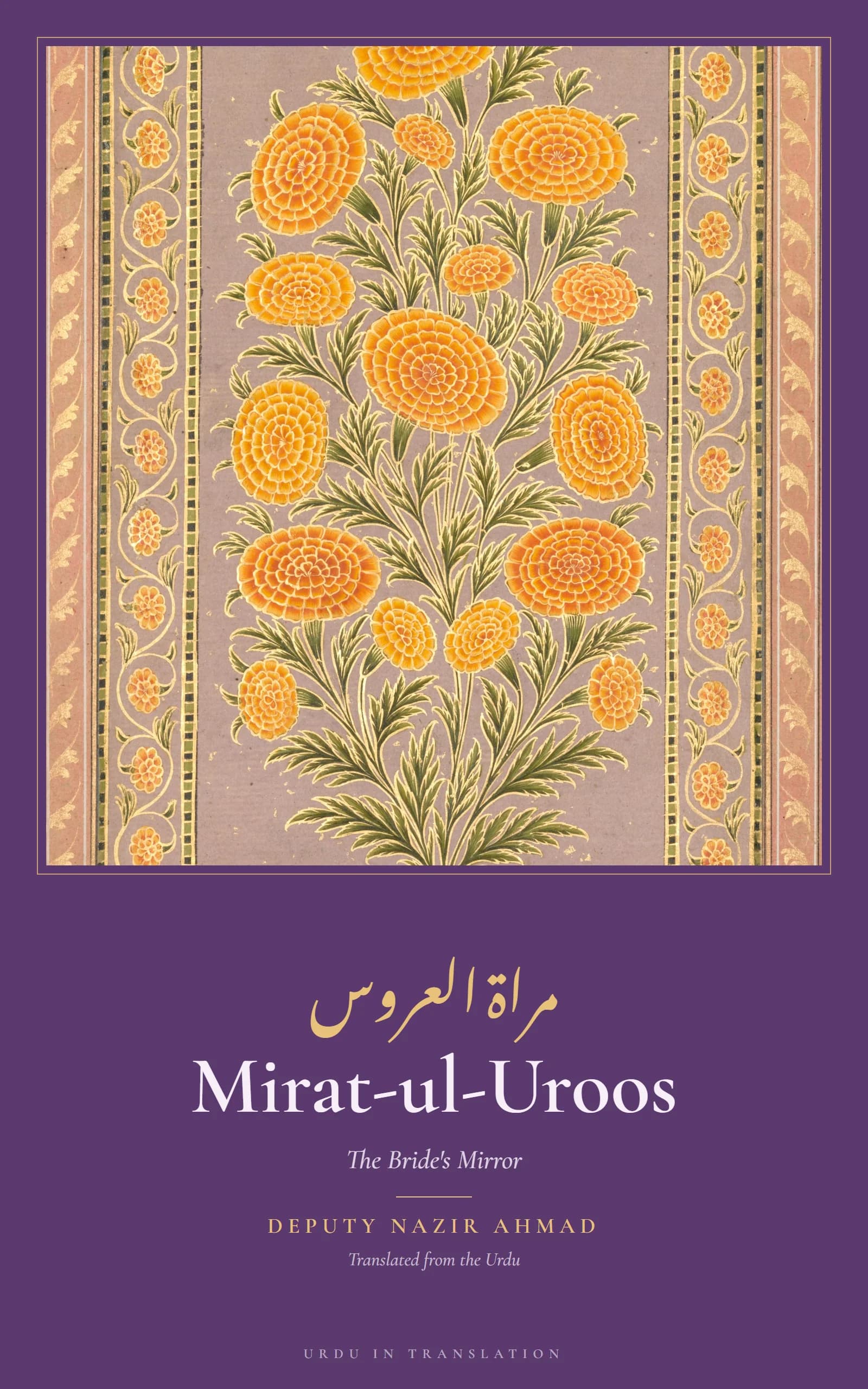
Deux premiers chapitres gratuitsMirat-ul-Uroos (The Bride's Mirror)
مراۃ العروس
Deputy Nazir Ahmad · sur Women's education and household management
Nazir Ahmad's 1869 novel of two Delhi sisters: Akbari, spoilt and quarrelsome, whose household falls into ruin, and Asghari, educated and sensible, who sets her husband's family in order, runs a school for girls, and arranges a brilliant match for her sister-in-law. Often called the first Urdu novel.
20 chapitresEnglishd’autres langues à venir
Roman · 1874
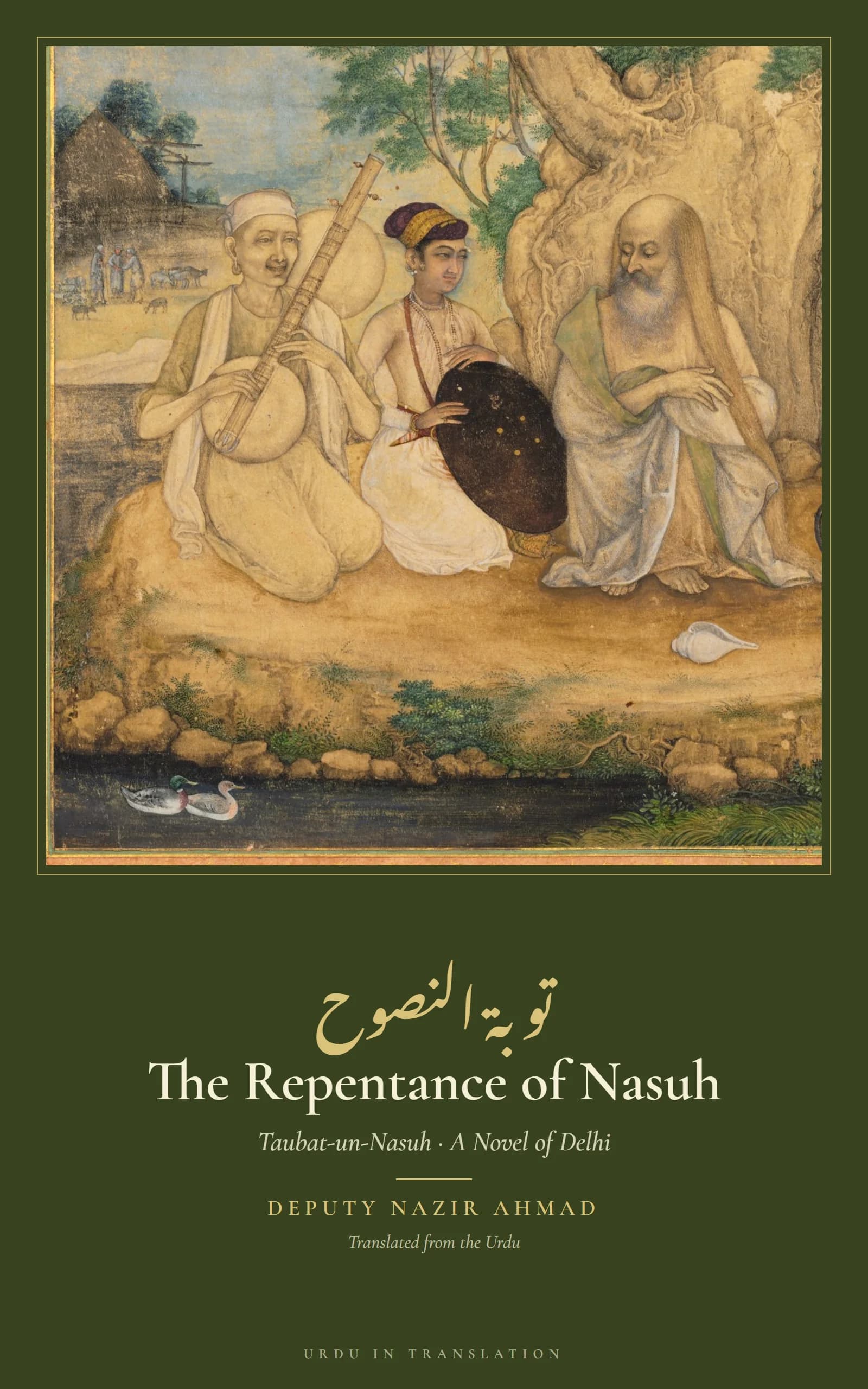
Deux premiers chapitres gratuitsLe Repentir de Nasuh (Taubat-un-Nasuh)
توبۃ النصوح
Deputy Nazir Ahmad
Le roman de Nazir Ahmad paru en 1874. Lors d'une épidémie de choléra à Delhi, Nasuh, un gentilhomme musulman respectable, aisé et insouciant, tombe malade et, dans un rêve de fièvre, voit son père défunt jugé devant Dieu. Il s'éveille transformé et résout de réformer sa maisonnée ; mais si sa femme Fahmida est consentante et si ses plus jeunes enfants le suivent, son fils aîné Kalim, adulte, dandy, poète et bel esprit, ne veut rien entendre. Un drame domestique de pères et de fils, de foi et de mode, par l'auteur d'Ibn-ul-Waqt et de Mirat-ul-Arus, et l'une des œuvres fondatrices du roman ourdou. Texte ourdou avec traduction en regard ; les deux premiers chapitres sont en lecture libre.
12 chapitresEnglishEspañolFrançaisالعربية中文Русский