Novela
ناول
Novela · 1936
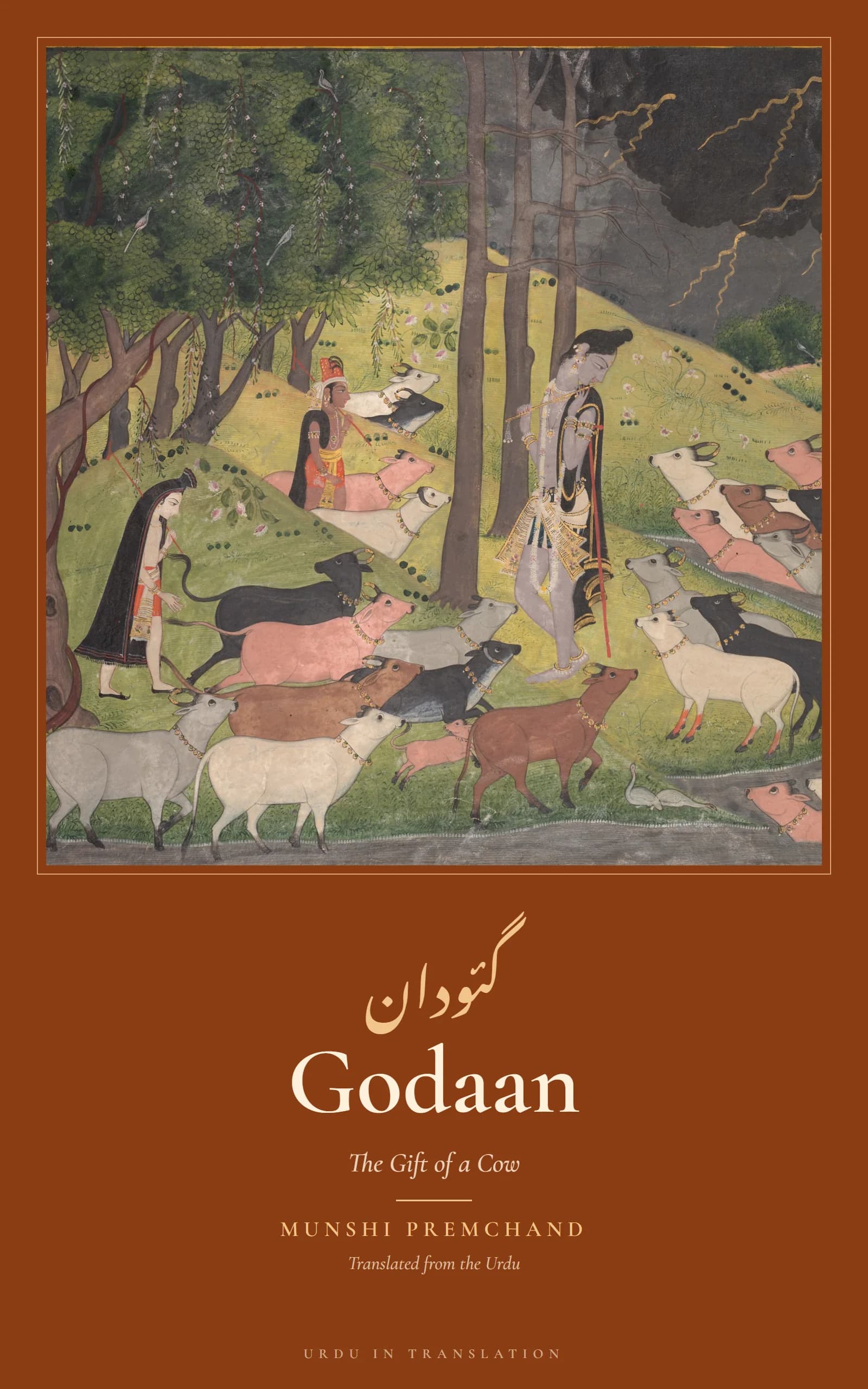
Dos primeros capítulos gratisGodaan (El regalo de una vaca)
گئودان
Munshi Premchand
La última novela terminada de Premchand (1936), y la gran novela de la vida aldeana india. Hori, campesino con cinco bighas de tierra, una esposa fiel y de lengua afilada llamada Dhaniya y una montaña de deudas, solo desea una cosa: una vaca atada a su puerta. En torno a esa modesta esperanza, Premchand levanta toda una sociedad: el terrateniente Rai Sahib con su teatro y sus preocupaciones, los prestamistas y los sacerdotes de la aldea, y la ciudad de Lucknow con sus industriales, sus médicos, sus periodistas y sus filósofos. Tierna, cómica e implacable, es el clásico del realismo indostaní. Texto urdu con traducción enfrentada; los dos primeros capítulos son de lectura libre.
36 capítulosEnglishEspañolFrançaisالعربية中文Русский
Novela · 1888
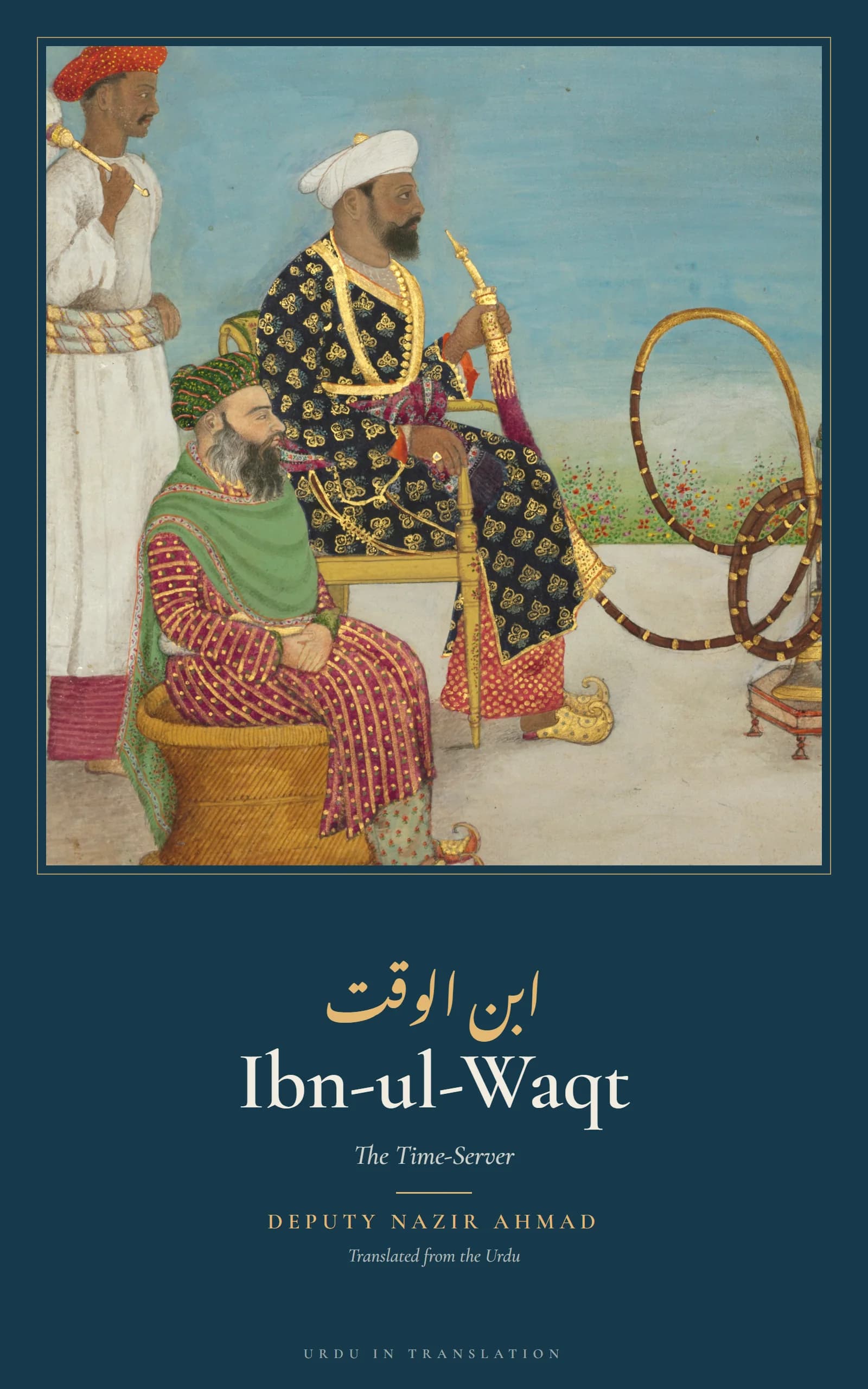
Dos primeros capítulos gratisIbn-ul-Waqt (El oportunista)
ابن الوقت
Deputy Nazir Ahmad
La novela cómica de Nazir Ahmad, publicada en 1888. Durante el levantamiento de 1857, Ibn-ul-Waqt, administrador de una princesa mogol y erudito en árabe y persa, esconde a un inglés herido, el señor Noble. Cuando cae Delhi, su recompensa es un lugar en la sociedad inglesa, y se lanza a ella de lleno: un bungalow, una mesa con cuchillos y tenedores, un sombrero, un perro y la nueva convicción de que los gobernantes son mejores que los gobernados en todo. Su primo Hujjat-ul-Islam es enviado para hacerle entrar en razón. Escrita en la época de Sir Syed, es la primera gran sátira urdu del mimetismo colonial, y sigue siendo muy divertida. Texto urdu con traducción enfrentada; los dos primeros capítulos se leen gratis.
28 capítulosEnglishEspañolFrançaisالعربية中文Русский
Novela · 1931
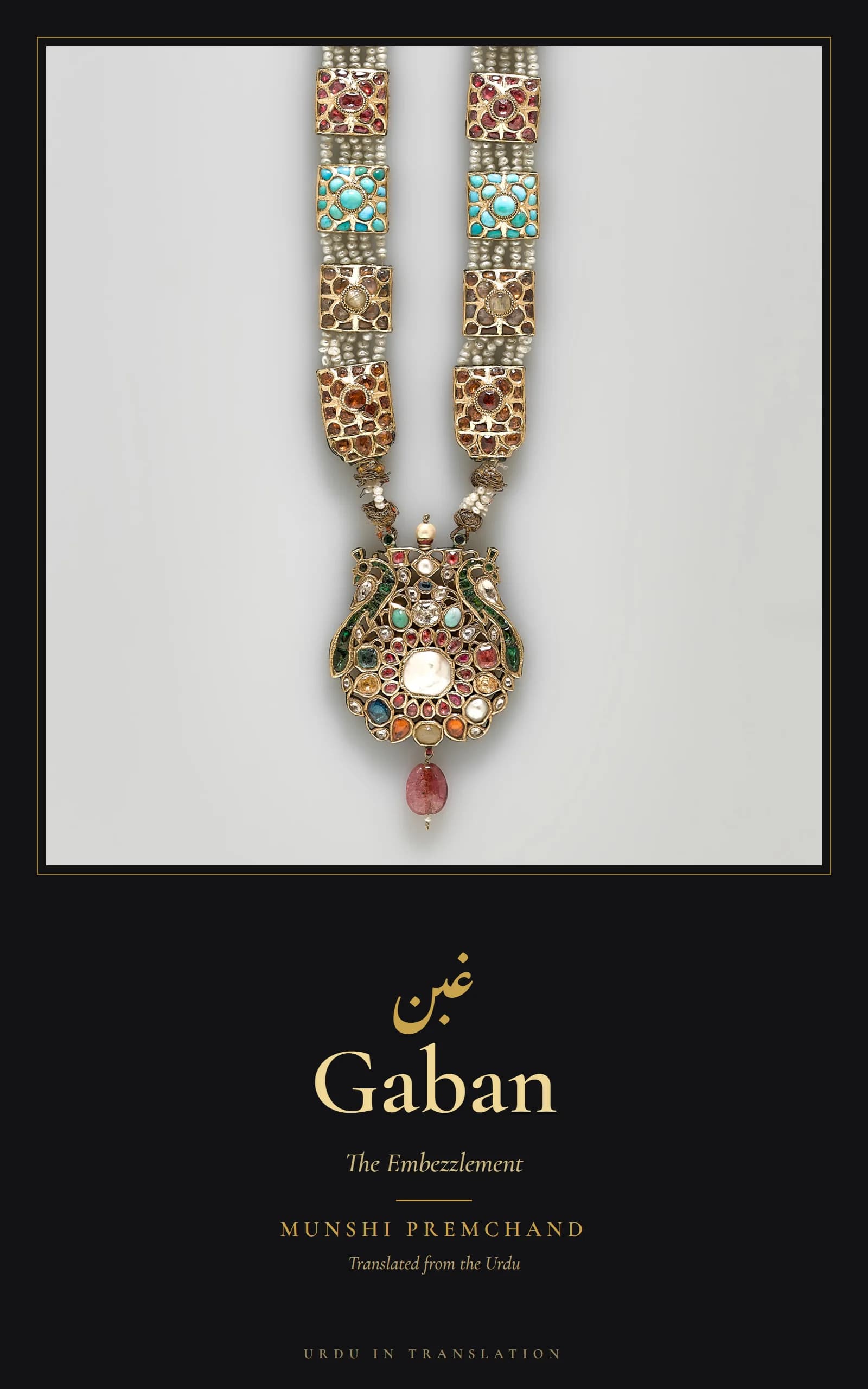
Dos primeros capítulos gratisGaban (La malversación)
غبن
Munshi Premchand
Novela de Premchand publicada en 1931. Jalpa, una muchacha de aldea, crece deseando una sola cosa: un chandan-haar, el collar de oro que vio en la caja de un buhonero junto al columpio. Su marido Ramanath, escribiente en la oficina municipal de Allahabad y débil ante la ostentación, pide prestado, miente y acaba metiendo la mano en el dinero público para tenerla cubierta de joyas. Lo que sigue es una historia de deudas, huida, confidentes de la policía y del lento descubrimiento de su propia fuerza por parte de una mujer. Una de las grandes novelas sociales del urdu y del hindi. Texto urdu con traducción inglesa enfrentada; los dos primeros capítulos son de lectura libre.
52 capítulosEnglishEspañolFrançaisالعربية中文Русский
Novela
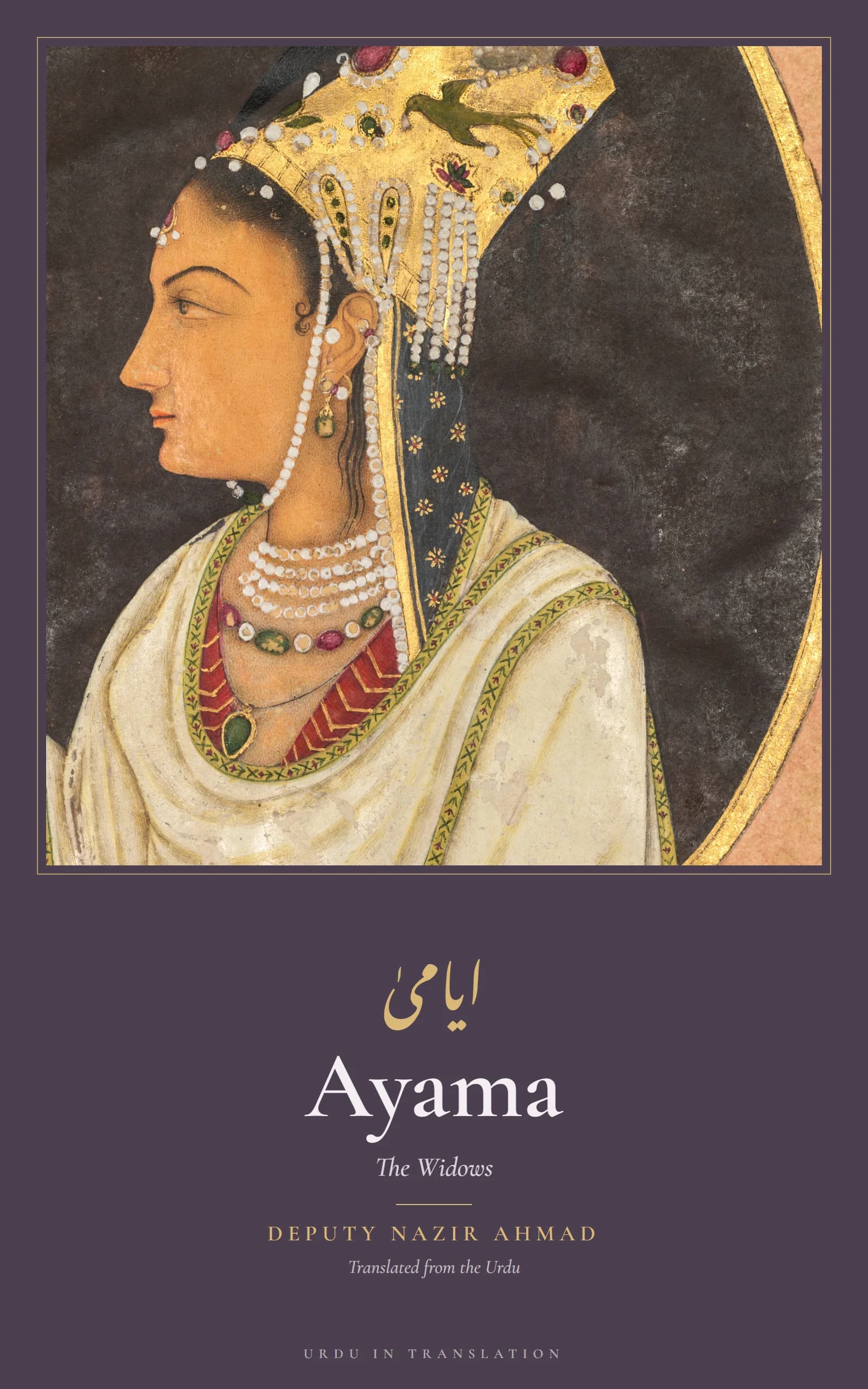
Dos primeros capítulos gratisAyama: The Widows
ایامیٰ
Deputy Nazir Ahmad · sobre Novel
Deputy Nazir Ahmad's Ayama ("The Widows", 1891) is the classic Urdu novel on the remarriage of widows. Azadi Begam, a girl of a good Delhi family raised between a sceptical father and a devout mother, marries the young scholar Maulvi Mustajab, weans him from the narrow life of a mosque maulvi, and is left a young, childless widow when he dies in the service of Bhopal. Held back by custom from marrying again, she lives through mourning, sermons on patience, loneliness, thoughts of suicide and the schemes of go-betweens, and in her last illness examines her life in a long dialogue with herself. On her deathbed she calls the men of her family and neighbourhood together and, from behind the curtain, makes them her bequest: a speech on the sufferings of widows and on the Qur'anic command to see them married. A key text for the Urdu novel, Muslim social reform, women's lives and the widow-remarriage debate in nineteenth-century India. Complete Urdu text from the 1891 first edition, with the author's footnotes, a facing English translation, an introduction and a glossary. Cite as: Nazir Ahmad, Ayama, tr. urduintranslation.com (2026). The first chapter is free to read.
21 capítulosEnglishmás idiomas próximamente
Novela
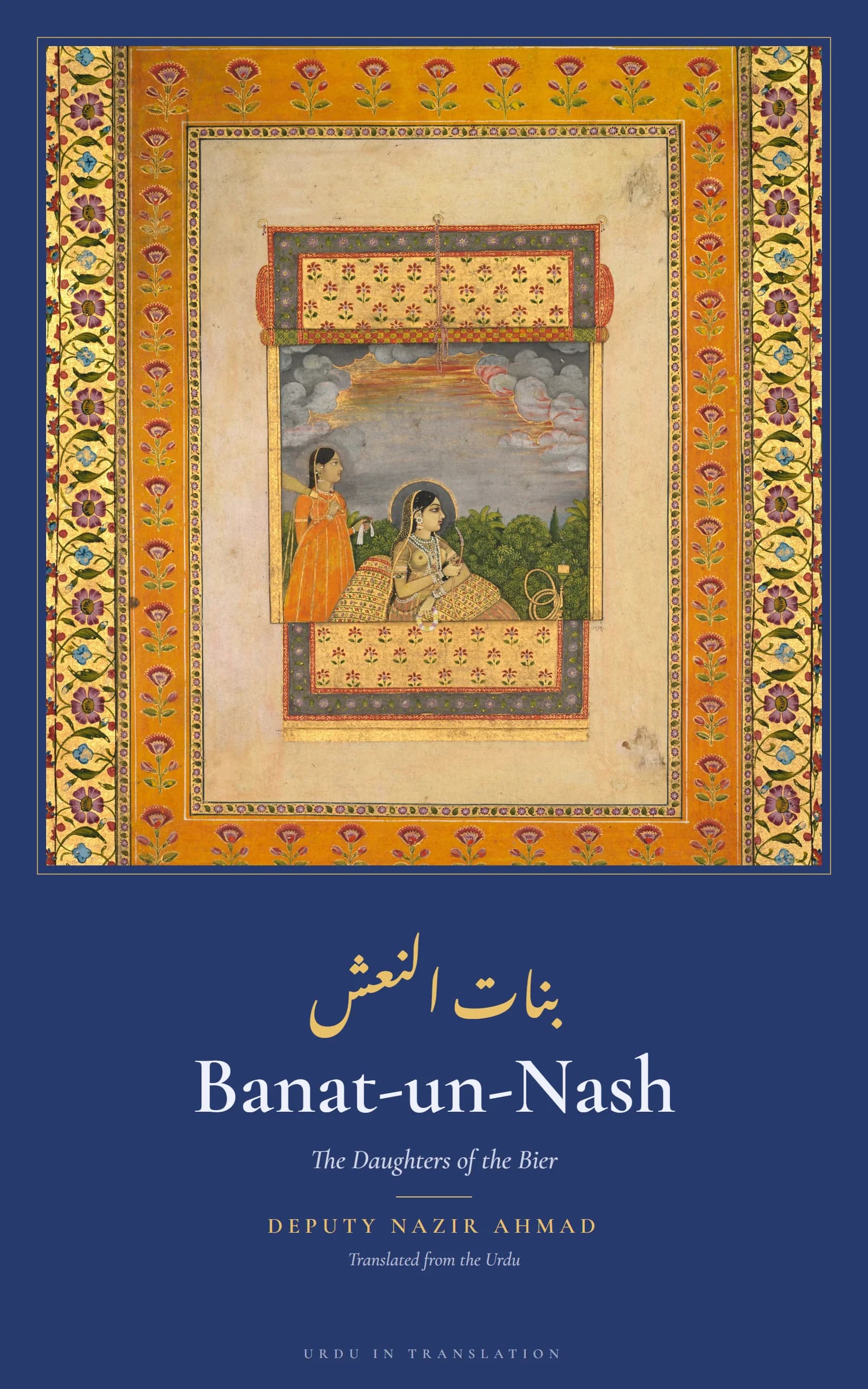
Dos primeros capítulos gratisBanat-un-Nash: The Daughters of the Bier
بنات النعش
Deputy Nazir Ahmad · sobre Novel
Deputy Nazir Ahmad's Banat-un-Nash (c. 1872), the second part of his Mirat-ul-Uroos (1869), is one of the first Urdu books written to give girls a modern education. Asghari, the capable heroine of the earlier book, now keeps a school for girls in her Delhi home, and into it comes Husn Ara, the spoilt and bad-tempered daughter of a rich household. Through talk, example and patience rather than punishment, Asghari and her sister-in-law Mahmuda cure her of pride, laziness and superstition, while the girls learn arithmetic, gravity, the shape of the earth, the geography of Arabia, astronomy and the cause of eclipses, and hear the tale of the cruel nobleman Masih-ul-Mulk, a long story of women's superstitions, and the life of an English family. It ends with Husn Ara's moving farewell to the school before her marriage. A key text for the Urdu novel, women's education and reform in nineteenth-century India, and the daily life and speech of Delhi households after 1857. Complete Urdu text from a 1950 Delhi reprint, with the author's footnotes, a facing English translation, an introduction and a glossary. Cite as: Nazir Ahmad, Banat-un-Nash, tr. urduintranslation.com (2026). The first chapter is free to read.
22 capítulosEnglishmás idiomas próximamente
Novela
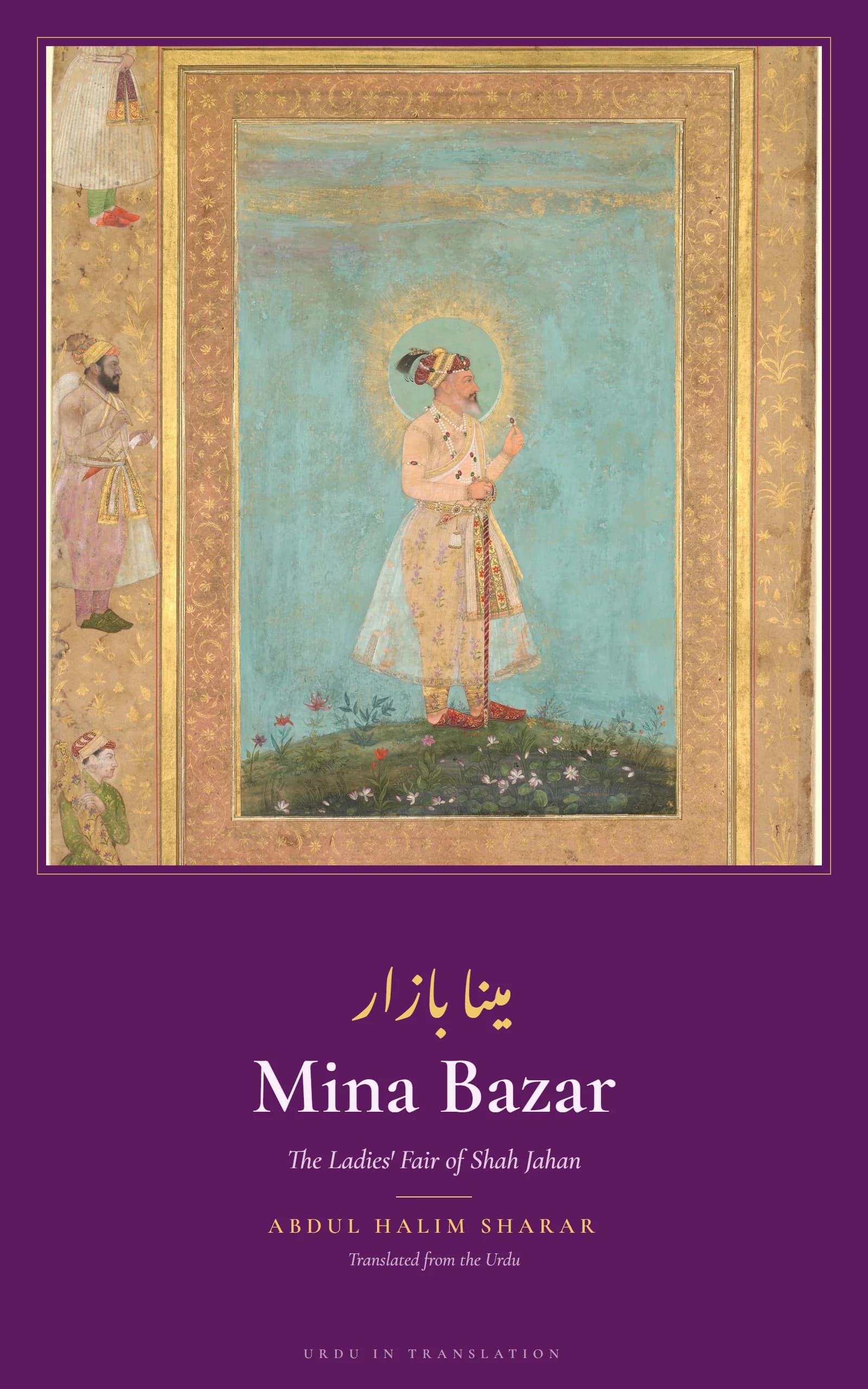
Dos primeros capítulos gratisMina Bazar (The Ladies' Fair of Shah Jahan)
مینا بازار
Abdul Halim Sharar
A historical romance by Abdul Halim Sharar (1860-1926) of Lucknow, set at the court of the Mughal emperor Shah Jahan. At the Empress Mumtaz Mahal's wish a fair is built inside the palace where the women of Delhi keep shops of their own, and the scholars argue over whether it breaks the rules of parda. On the opening day the Emperor is charmed by Gulrukh Begum, wife of his general Jamal Khan, who sells him a "diamond" made of sugar-candy. Her three days as the Empress's guest bring a jealous husband's divorce, a false friend's scheming and the Emperor's wrath, until a sentence of death under an elephant's foot hangs on the heroine's answer. Complete Urdu text from Wikisource with a facing English translation, introduction and glossary. Cite as: Abdul Halim Sharar, Mina Bazar, tr. urduintranslation.com (2026), https://www.urduintranslation.com/works/mina-bazar. The first two chapters are free to read.
16 capítulosEnglishmás idiomas próximamente
Novela
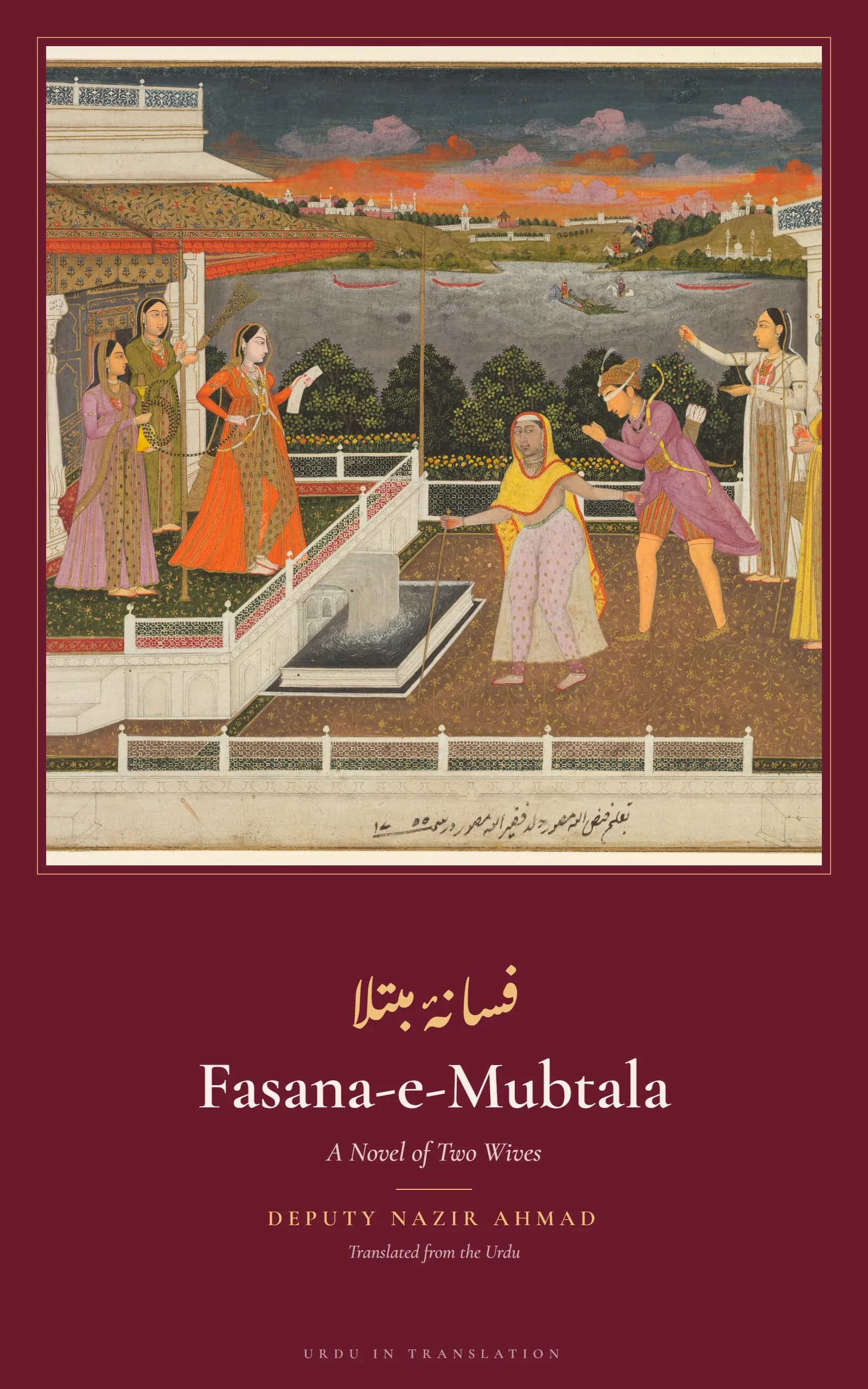
Dos primeros capítulos gratisFasana-e-Mubtala (The Tale of Mubtala): A Novel of Two Wives
فسانۂ مبتلا
Deputy Nazir Ahmad
Delhi, in the 1880s. Mubtala, spoilt only son of a well-to-do family, lives for beauty: married young to his plain, proud cousin Ghairat Begum, he despises her and spends his days with dancing girls and flatterers. His pious uncle returns from the hajj to set the house in order, his friend Arif argues with him about beauty and about what the Quran really allows, and Mubtala goes his own way: he marries Hariyali, a courtesan from Lucknow, and smuggles her into the house as a housekeeper. What follows is the comic and terrible story of two co-wives under one roof, the spying and cursing, a pot of poisoned milk, a police case fixed by Ghairat Begum's brother, a clever and unscrupulous pleader, and the slow ruin of a household and of Mubtala himself. Deputy Nazir Ahmad (1831-1912), the first Urdu novelist and author of Mirat-ul-Uroos, wrote it in 1885 against 'the freedom of men in the matter of marriage'. Complete Urdu text (Urdu Wikisource, checked against a Shamsi Press, Delhi printing, archive.org in.ernet.dli.2015.435949, with the author's preface and prelude transcribed from the scan) with a facing English translation, introduction and glossary. Cite as: Deputy Nazir Ahmad, Fasana-e-Mubtala, tr. urduintranslation.com (2026), https://www.urduintranslation.com/works/fasana-e-mubtala. The first two chapters are free to read.
31 capítulosEnglishmás idiomas próximamente
Novela
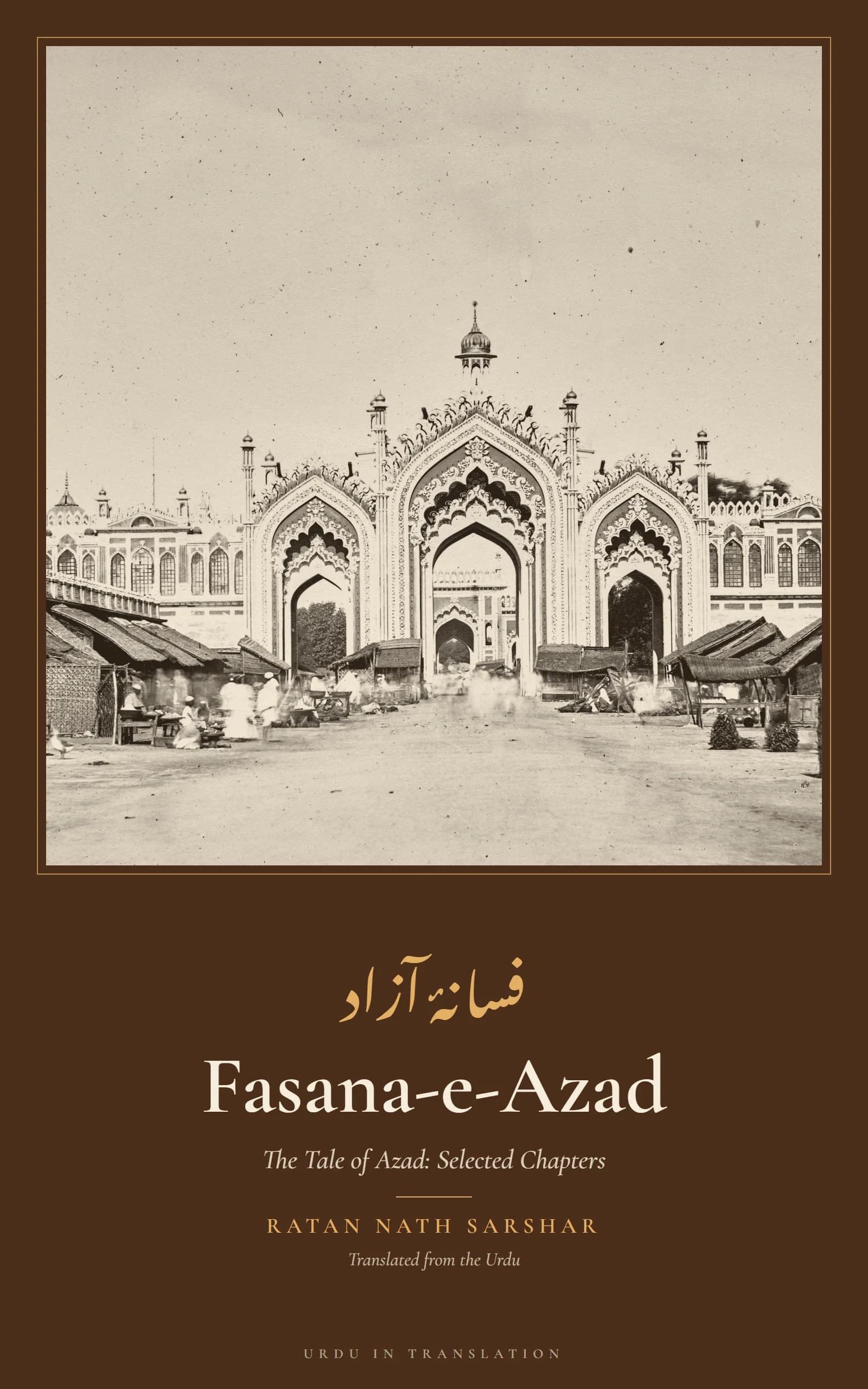
Dos primeros capítulos gratisFasana-e-Azad (The Tale of Azad): Selected Chapters
فسانۂ آزاد (انتخاب)
Ratan Nath Sarshar
The opening of Ratan Nath Sarshar's great comic panorama of nineteenth-century Lucknow (1878–79), serialised in Avadh Akhbar: Sarshar's preface and the first fifteen episodes, in which the clever, idle Mian Azad wanders through the city's houses, weddings, Muharram processions, poets' gatherings and salons. Ornate rhymed prose, Persian verse and bazaar slang in a book that stands between the dastan and the modern novel, taught on Urdu courses in Pakistan and India. Urdu text newly transcribed from the 1986 Taraqqi Urdu Bureau edition, with an English translation; the first two chapters are free. How to cite: Sarshar, Fasana-e-Azad (selection), tr. Urdu in Translation (2026), https://www.urduintranslation.com/works/fasana-e-azad
8 capítulosEnglishmás idiomas próximamente
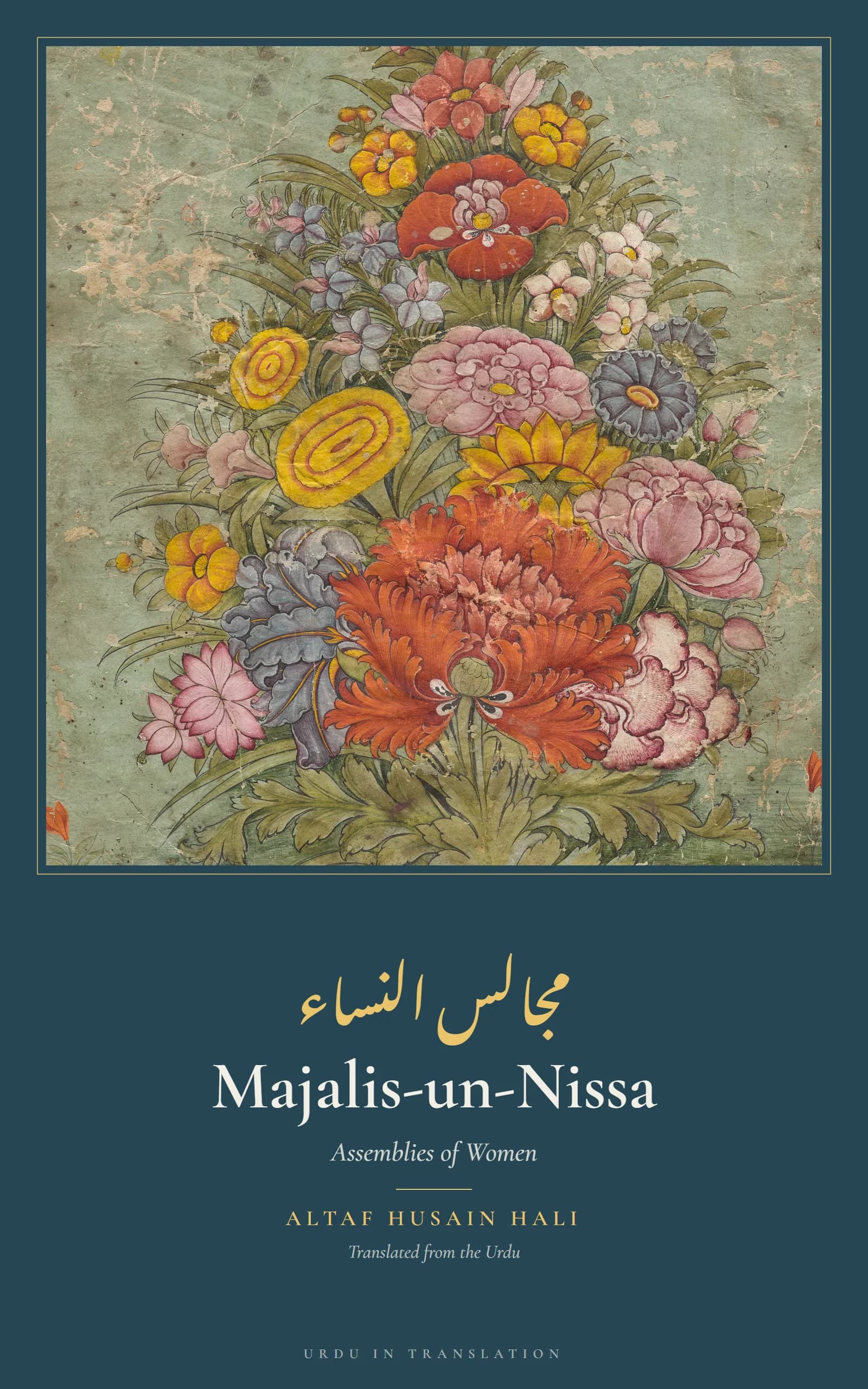
Novela · 1874
Dos primeros capítulos gratisMajalis-un-Nissa (Assemblies of Women)
مجالس النساء
Altaf Husain Hali
Written in 1874 by the poet and reformer Altaf Husain Hali (1837–1914), Majalis-un-Nissa is one of the first Urdu prose narratives set entirely in the home, and a founding text of the debate on women's education in South Asia. In nine evening gatherings an elderly governess, Atu-ji, answers the doubts of the young women of a Delhi household by telling the life of Zubaida Khatun: how her mother taught her to read, keep accounts and run a house; how, widowed young, she raised her son Sayyid Abbas herself; and how he travelled from Delhi to Bombay, Mecca and Istanbul. Rich in the everyday speech of Delhi women, with Hali's own glosses. Complete Urdu text from the Hali Press edition (Panipat, 1924; publisher's matter omitted), with a facing English translation, introduction and glossary. Cite as: Hali, Majalis-un-Nissa, tr. urduintranslation.com (2026). The first chapter is free to read.
11 capítulosEnglishmás idiomas próximamente
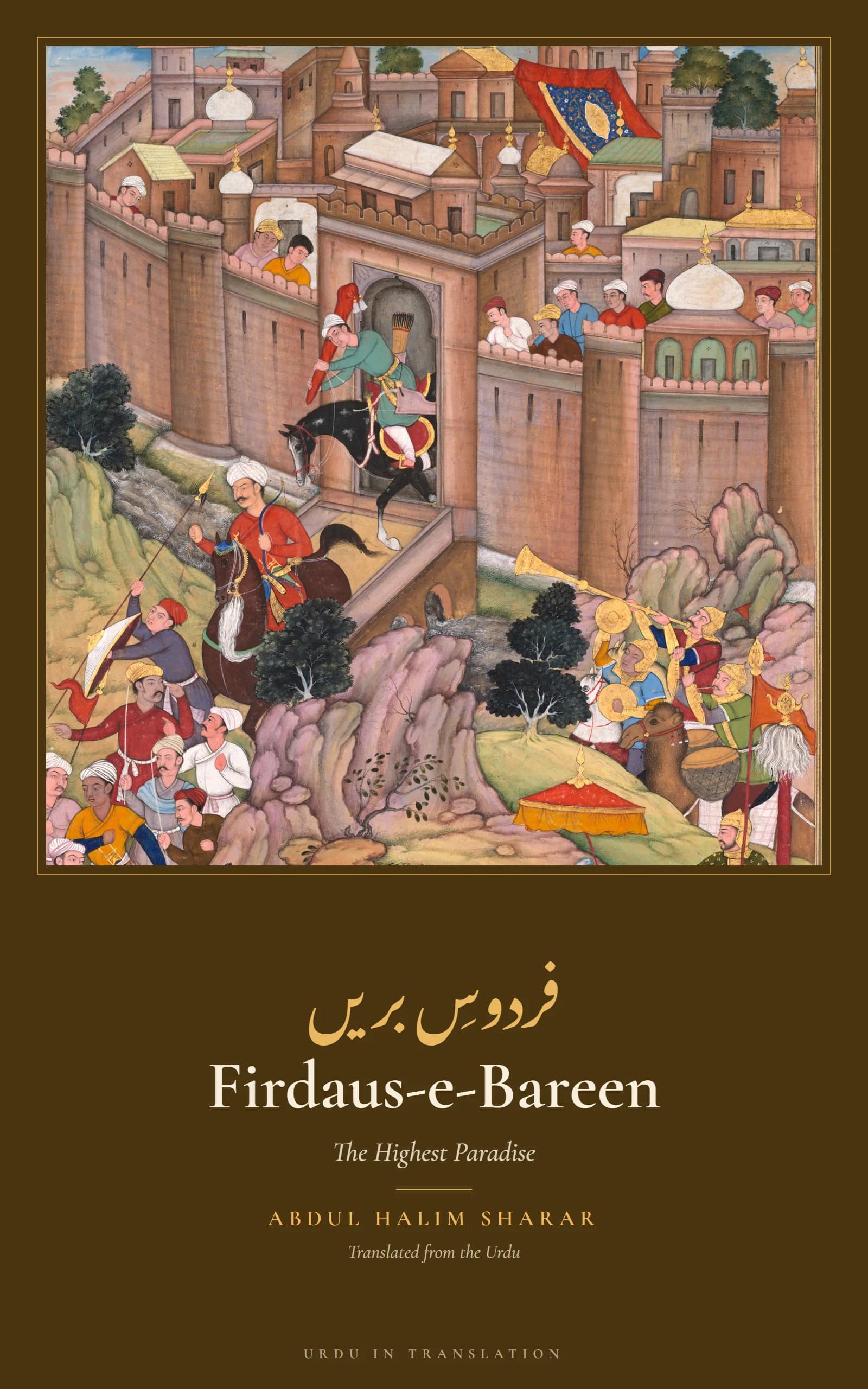
Novela · 1899
Dos primeros capítulos gratisFirdaus-e-Bareen (The Highest Paradise)
فردوسِ بریں
Abdul Halim Sharar
Abdul Halim Sharar's best-known historical novel (1899), set in the 1250s in the mountains south of the Caspian. Husain and Zamurrud, a young couple on the road, fall into the hands of the Batinis of Alamut, whose leaders have built a hidden garden "paradise" to deceive their followers and send them out to kill. Sharar follows Husain as he is drawn in and used, until the order falls to Hulagu Khan's Mongols. Adventure, romance and history in one of the founding works of the Urdu novel, taught on university Urdu courses in Pakistan and India. Complete Urdu text with a new English translation, paragraph by paragraph; the first two chapters are free to read. How to cite: Sharar, Firdaus-e-Bareen, tr. Urdu in Translation (2026), https://www.urduintranslation.com/works/firdaus-e-bareen
12 capítulosEnglishmás idiomas próximamente
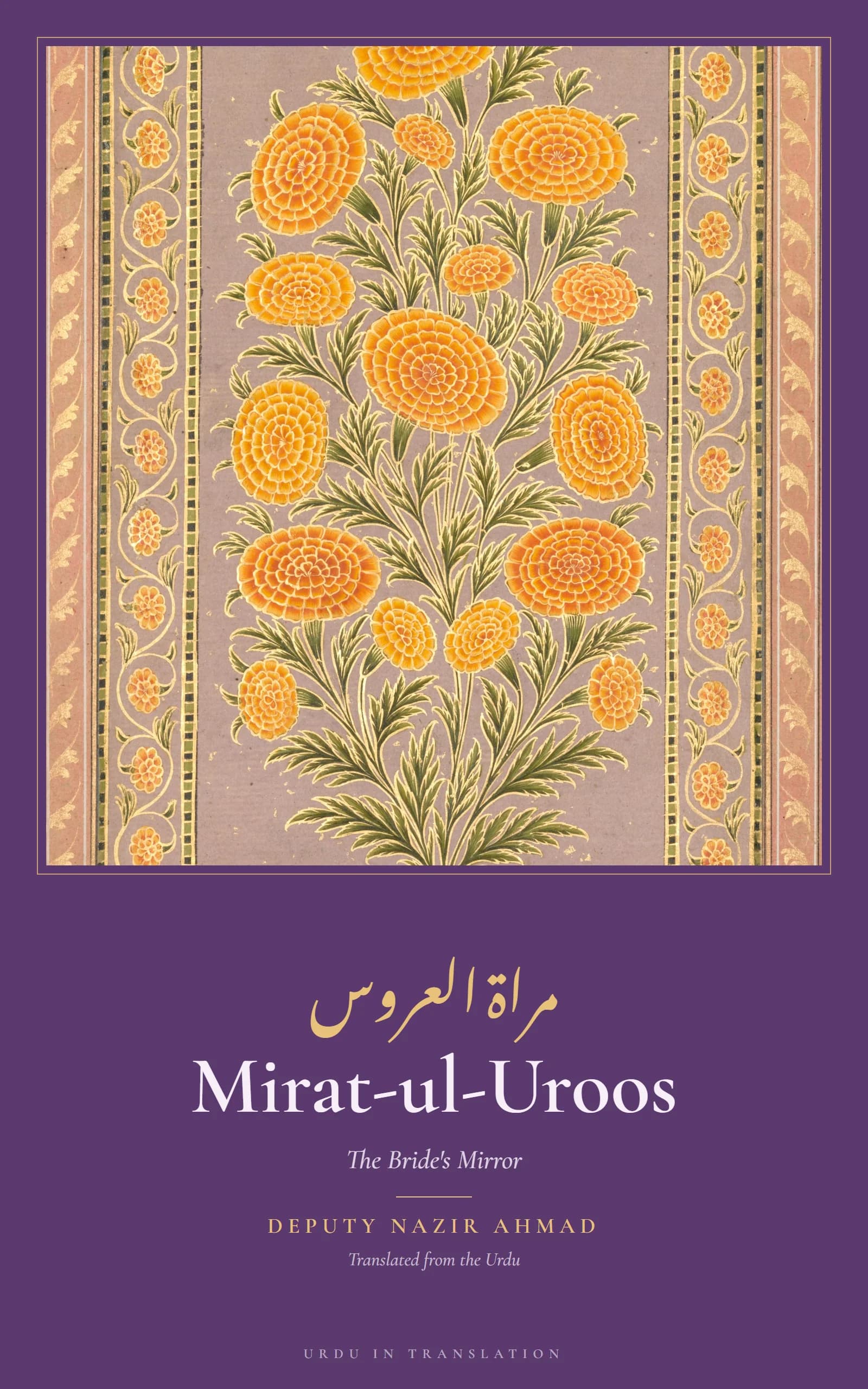
Novela · 1869
Dos primeros capítulos gratisMirat-ul-Uroos (The Bride's Mirror)
مراۃ العروس
Deputy Nazir Ahmad · sobre Women's education and household management
Nazir Ahmad's 1869 novel of two Delhi sisters: Akbari, spoilt and quarrelsome, whose household falls into ruin, and Asghari, educated and sensible, who sets her husband's family in order, runs a school for girls, and arranges a brilliant match for her sister-in-law. Often called the first Urdu novel.
20 capítulosEnglishmás idiomas próximamente
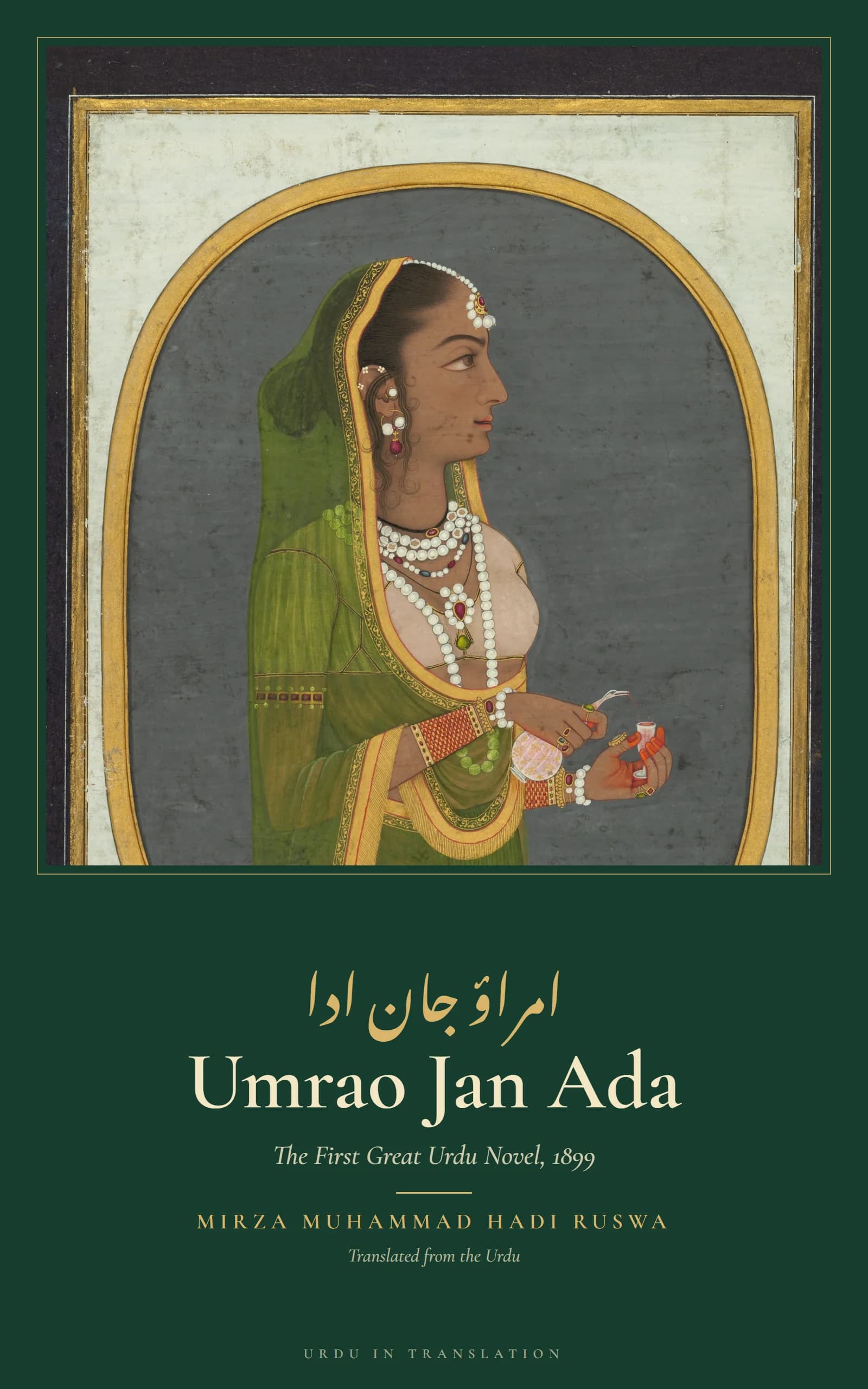
Novela · 1899
Dos primeros capítulos gratisUmrao Jan Ada
امراؤ جان ادا
Mirza Muhammad Hadi Ruswa
La novela de Mirza Hadi Ruswa de 1899, la más célebre de todas las novelas urdu. Raptada de niña en su casa de Faizabad y vendida a una casa de cortesanas de Lucknow, Amiran se convierte en Umrao Jan, cantante, bailarina y poeta con el seudónimo de Ada. Ya mayor, tras una velada de poetas, accede a contarle su vida a Ruswa: su formación, sus amantes y protectores, el bandido Faiz Ali, la convulsión de 1857 y el regreso a la ciudad de la que la robaron. Un retrato de la desaparecida cultura del Lucknow del siglo XIX, contado con su propia voz. Texto urdu con traducción; los dos primeros capítulos son de lectura libre.
20 capítulosEnglishEspañolFrançaisالعربية中文Русский
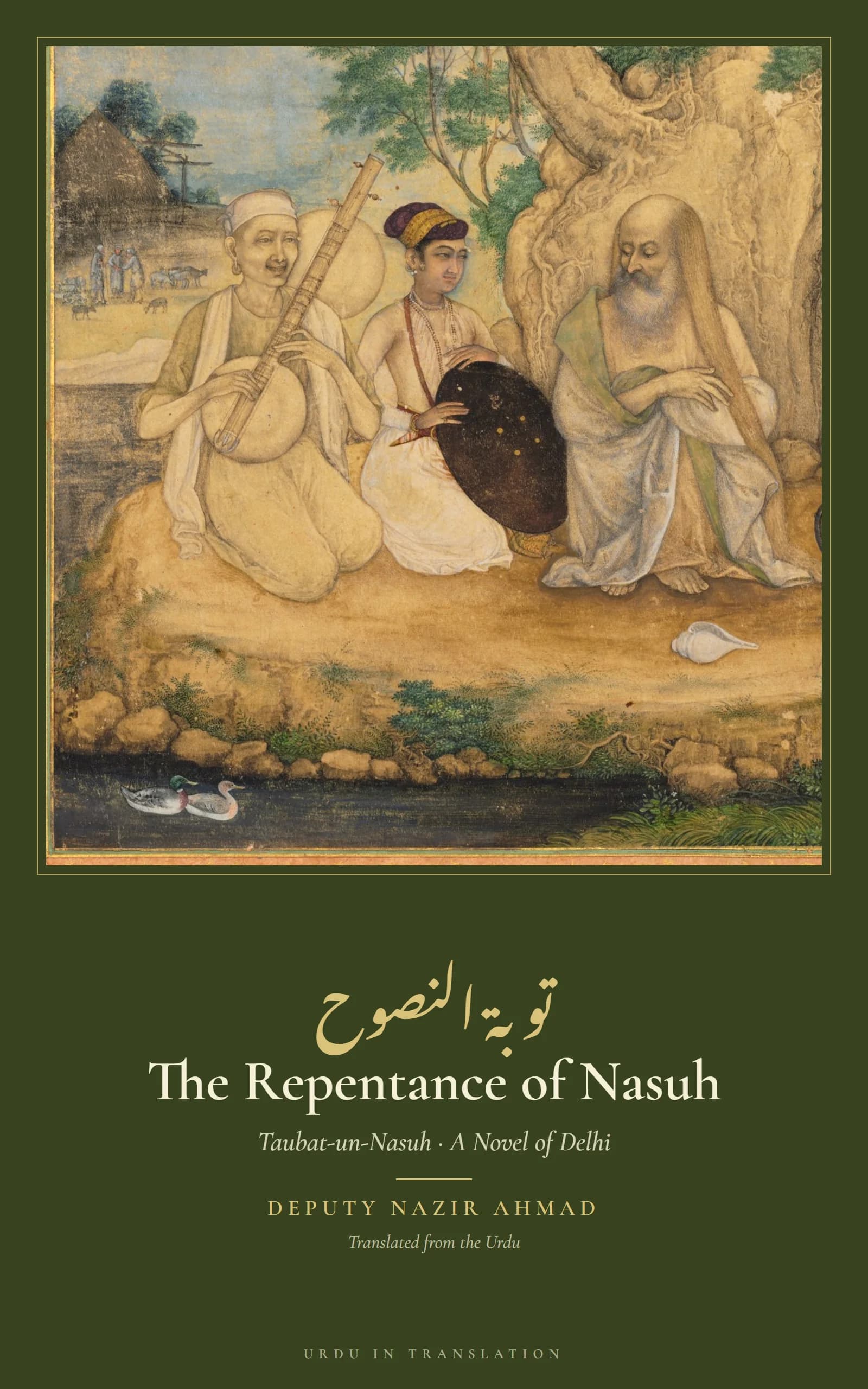
Novela · 1874
Dos primeros capítulos gratisEl arrepentimiento de Nasuh (Taubat-un-Nasuh)
توبۃ النصوح
Deputy Nazir Ahmad
La novela de Nazir Ahmad publicada en 1874. Durante una epidemia de cólera en Delhi, Nasuh, un caballero musulmán respetable, acomodado y despreocupado, cae enfermo y, en un sueño de fiebre, ve a su difunto padre juzgado ante Dios. Despierta transformado y resuelve reformar su casa; pero, aunque su mujer Fahmida está dispuesta y sus hijos menores lo siguen, su hijo mayor Kalim, adulto, dandi, poeta y hombre de ingenio, no quiere oír hablar de ello. Un drama doméstico de padres e hijos, de fe y de moda, del autor de Ibn-ul-Waqt y Mirat-ul-Arus, y una de las obras fundacionales de la novela urdu. Texto urdu con traducción enfrentada; los dos primeros capítulos son de lectura libre.
12 capítulosEnglishEspañolFrançaisالعربية中文Русский