Urdu in Translation
Buscar

دلِ ناداں تجھے ہوا کیا ہے؟

Un pareado de Mirza Asadullah Khan Ghalib, con el urdu romanizado y sus traducciones.

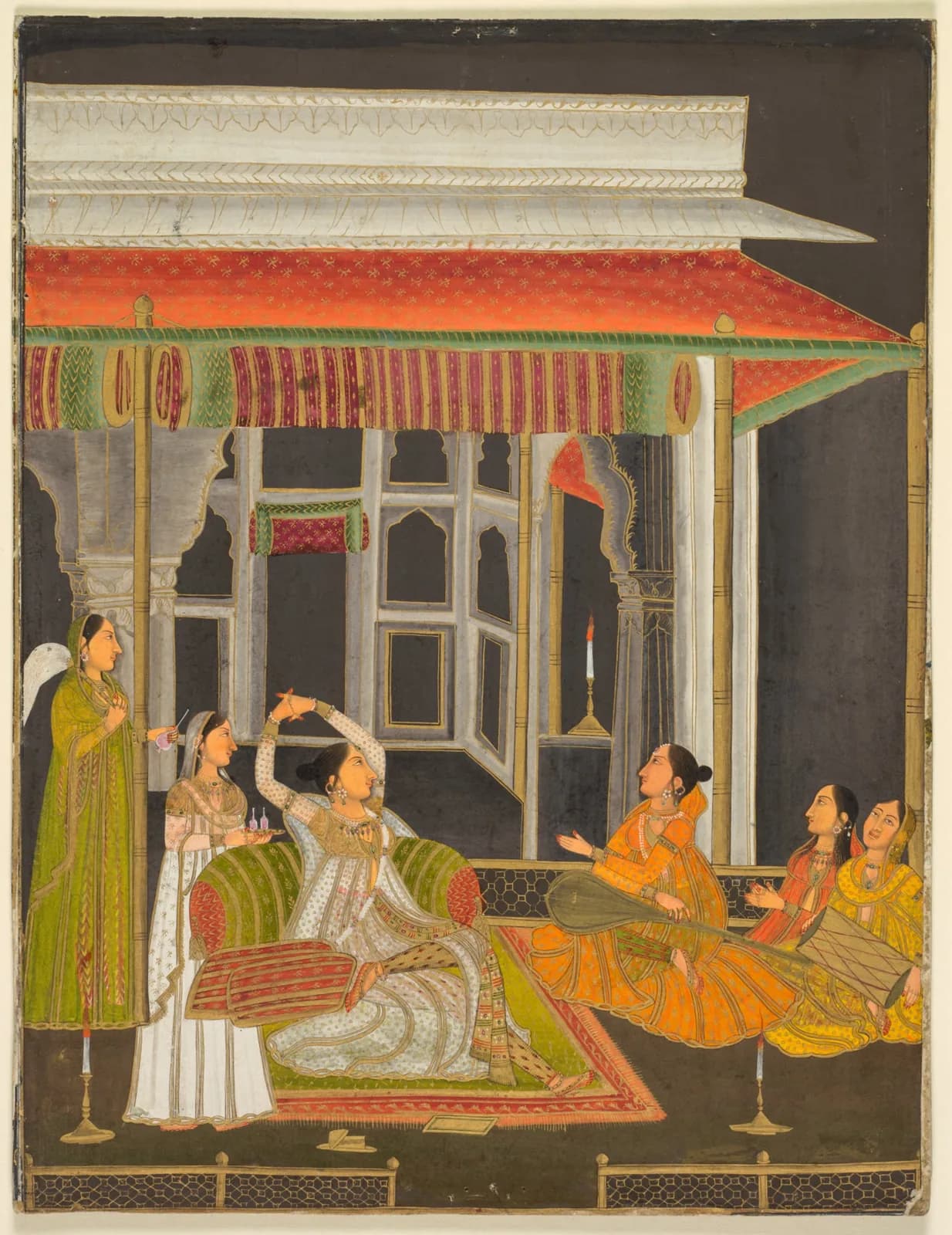
A Princess on a Terrace with Attendants at Night (recto), c. 1760

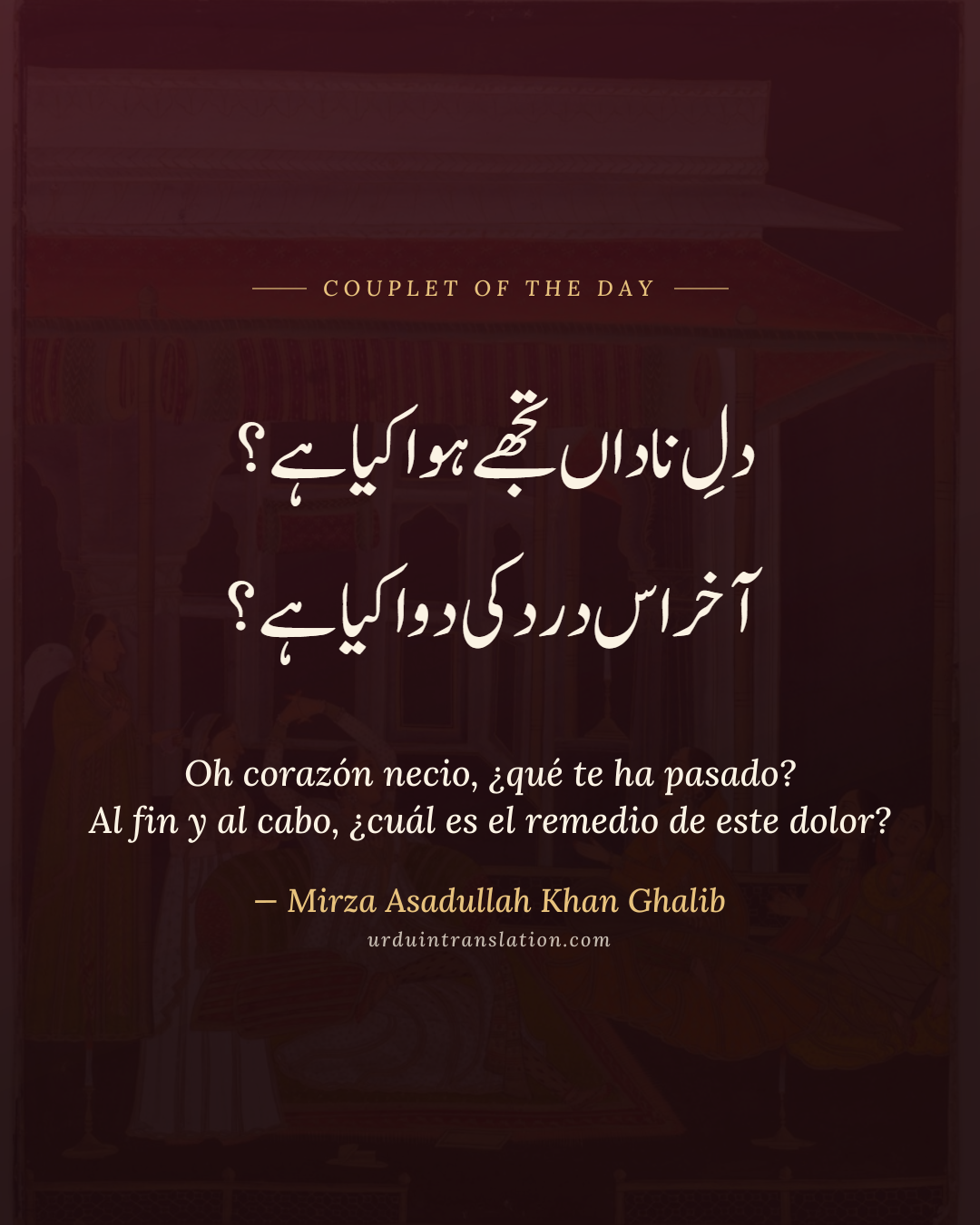
دلِ ناداں تجھے ہوا کیا ہے؟آخر اس درد کی دوا کیا ہے؟

dil-e-naadaañ tujhe huaa kyaa hai?aaKHir is dard kii davaa kyaa hai?

Oh corazón necio, ¿qué te ha pasado?Al fin y al cabo, ¿cuál es el remedio de este dolor?

Mirza Asadullah Khan Ghalibمرزا اسد اللہ خاں غالبؔ
Leer el poema
Descargar imagen

Pintura: A Princess on a Terrace with Attendants at Night (recto), c. 1760. Cleveland Museum of Art, CC0.

Urdu romanizado

dil-e-naadaañ tujhe huaa kyaa hai?aaKHir is dard kii davaa kyaa hai?

Significado de las palabras

دل
dil
heart
ناداں
naadaañ
naive, foolish
آخر
aakhir
after all; at last
درد
dard
pain
دوا
davaa
medicine, cure

Comentario (sharh)

Ghalib speaks to his own heart as if it were someone else, and asks questions whose answer he already knows: the pain is love, and it has no cure. Asking what one knows is tajahul-e-arifana (feigned ignorance). The diction is plain enough for a beginner, yet it cannot be said more simply: this is sahl-e-mumtana', the 'easy that cannot be imitated'.

Traducciones

English
O foolish heart, what has come over you?After all, what is the cure for this pain?
العربية
أيها القلب الغافل، ماذا أصابك؟وما دواء هذا الألم في النهاية؟
中文
无知的心啊,你怎么了?这痛苦究竟有什么药可医?
Français
Ô cœur insensé, que t'est-il arrivé ?Après tout, quel est le remède de cette douleur ?
Español
Oh corazón necio, ¿qué te ha pasado?Al fin y al cabo, ¿cuál es el remedio de este dolor?
Русский
Неразумное сердце, что с тобою стало?В конце концов, какое лекарство от этой боли?

De: Intikhab-e-Ghalib: sesenta gazales de Mirza Ghalib · Mirza Asadullah Khan Ghalib · Sobre el poeta

Leer el poema completo →

Más pareados de Mirza Asadullah Khan Ghalib