Urdu in Translation
Recherche

میں نے مانا کہ کچھ نہیں غالبؔ

Un distique de Mirza Asadullah Khan Ghalib, avec l’ourdou romanisé et ses traductions.

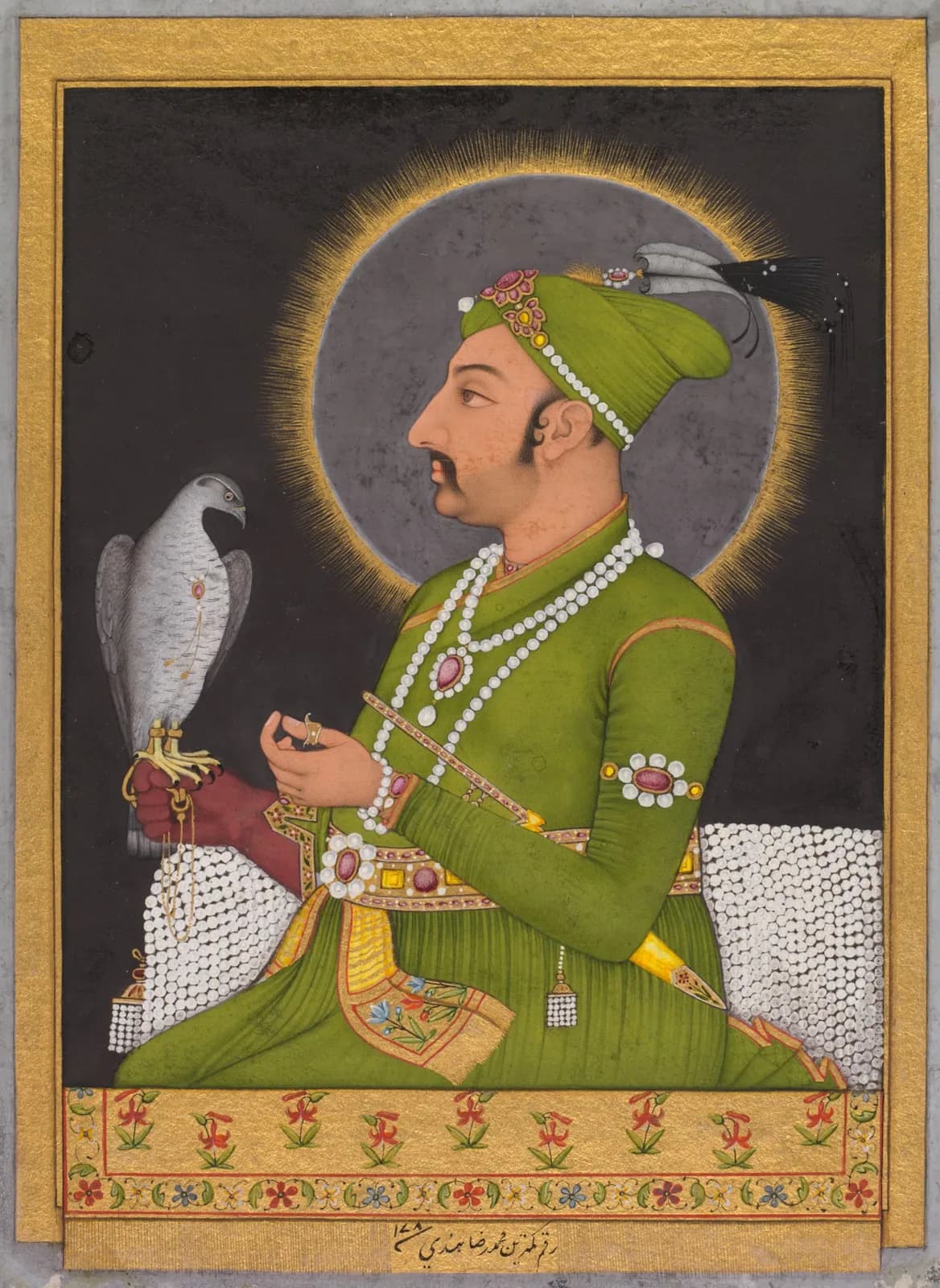
Posthumous portrait of the Mughal emperor Muhammad Shah (reigned 1719–1748) holding a falcon (recto), 1764

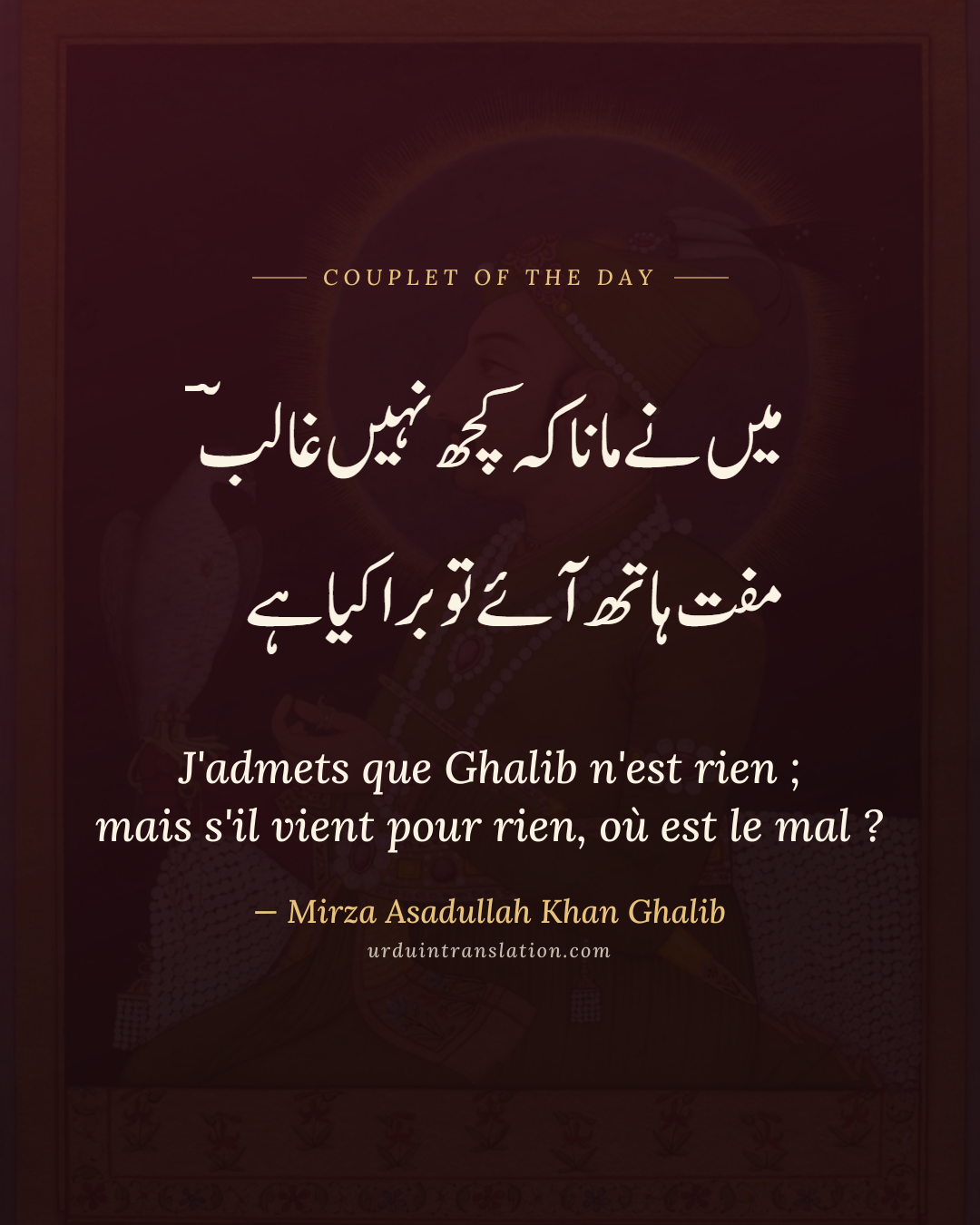
میں نے مانا کہ کچھ نہیں غالبؔمفت ہاتھ آئے تو برا کیا ہے

maiñ ne maanaa ki kuchh nahiiñ 'Gaalib'muft haath aa.e to buraa kyaa hai

J'admets que Ghalib n'est rien ;mais s'il vient pour rien, où est le mal ?

Mirza Asadullah Khan Ghalibمرزا اسد اللہ خاں غالبؔ
Lire le poème
Télécharger l’image

Peinture: Posthumous portrait of the Mughal emperor Muhammad Shah (reigned 1719–1748) holding a falcon (recto), 1764. Cleveland Museum of Art, CC0.

Ourdou romanisé

maiñ ne maanaa ki kuchh nahiiñ 'Gaalib'muft haath aa.e to buraa kyaa hai

Sens des mots

ماننا
maannaa
to accept, to grant
مفت
muft
free, for nothing
برا
buraa
bad

Commentaire (sharh)

The maqta carries the takhallus (pen name) Ghalib. The poet mocks himself in the beloved's voice and then makes a cheeky bargain: worthless or not, he costs nothing. Self-irony like this is typical of Ghalib's closing couplets.

Traductions

English
I grant that Ghalib is nothing;but if he comes free, where is the harm?
العربية
سلّمت أن غالب لا شيء؛لكن إن جاء بالمجّان، فما الضرر؟
中文
我承认迦利布什么也不是;可若白白得来,又有什么不好?
Français
J'admets que Ghalib n'est rien ;mais s'il vient pour rien, où est le mal ?
Español
Concedo que Ghalib no es nada;pero si llega gratis, ¿qué hay de malo?
Русский
Допустим, Галиб — ничто;но если он достаётся даром, что в том плохого?

Extrait de: Intikhab-e-Ghalib : soixante ghazals de Mirza Ghalib · Mirza Asadullah Khan Ghalib · Le poète

Lire le poème entier →

Autres distiques de Mirza Asadullah Khan Ghalib