Sir Syed Ahmad Khan
سر سید احمد خان
Life1817–1898
Syed Ahmad was born in Delhi in 1817 into a family close to the Mughal court. He joined the East India Company's judicial service in 1838. During the uprising of 1857 he was a judicial officer at Bijnor, where he protected the English residents.
In 1869–70 he spent more than a year in England, and returned convinced that Indian Muslims needed modern Western education. In 1875 he founded the Muhammadan Anglo-Oriental College at Aligarh, which became Aligarh Muslim University in 1920. He was knighted in 1888 and died in Aligarh in 1898.
Obras de Sir Syed Ahmad Khan
Mazmoon (ensayo) · 1859
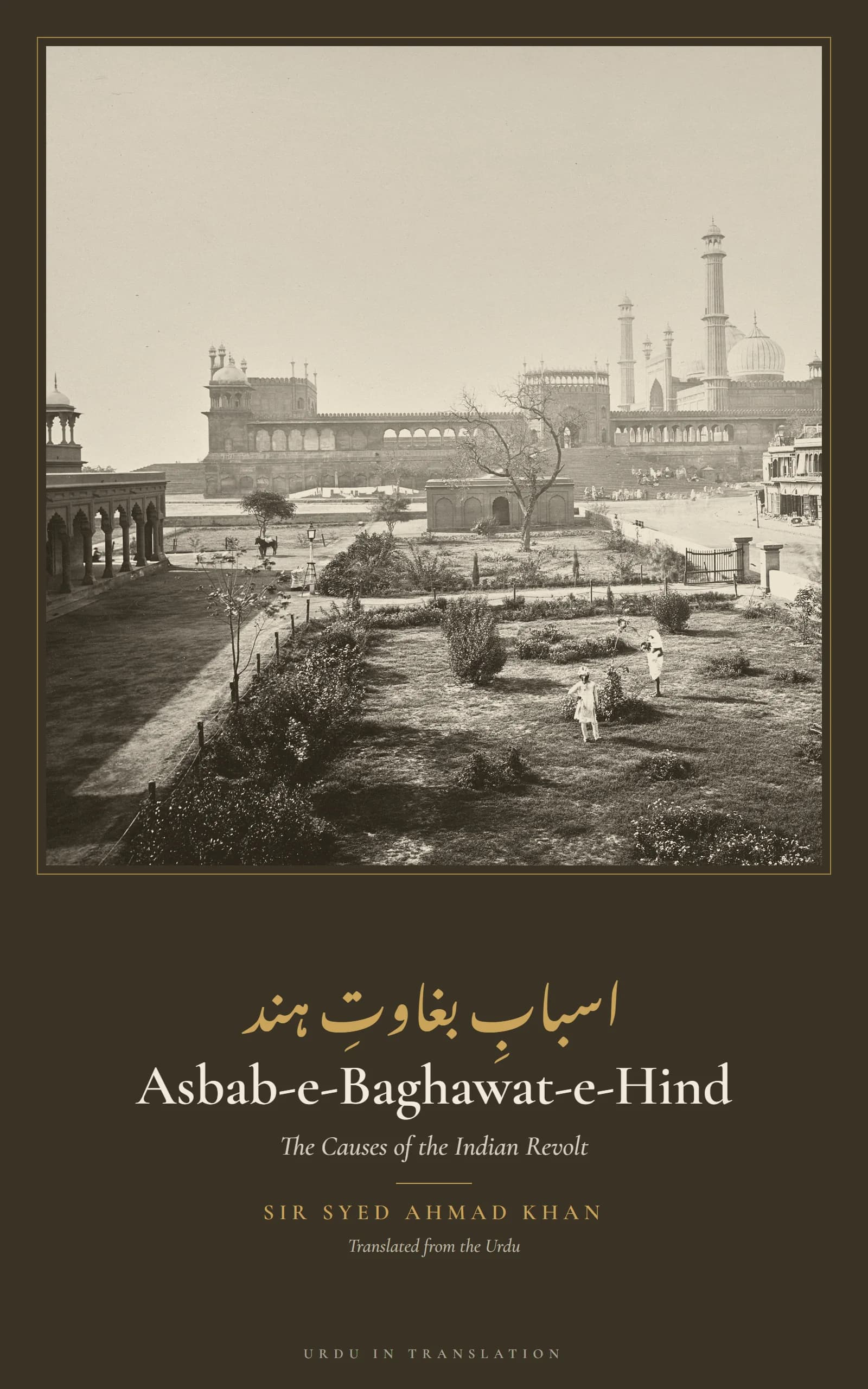
Dos primeros capítulos gratisAsbab-e-Baghawat-e-Hind (The Causes of the Indian Revolt)
اسباب بغاوت ہند
Sir Syed Ahmad Khan · sobre History
Written in 1858, while the ashes of 1857 were still warm, this short treatise by Syed Ahmad Khan (1817–1898), a judicial officer of the East India Company who had stood by the British at Bijnor in 1857, told the British government what almost nobody else dared: that the Revolt was not a Muslim conspiracy or a plot of the Mughal court, but the result of a government that kept Indians out of its councils and so never knew, or was told, what its subjects felt. He traces five consequences: popular fear for religion, unsuitable laws and revenue settlements, ignorance of the people's poverty and grievances, the neglect of courtesy and trust, and the mismanagement of the army. He had five hundred copies printed and sent almost all of them to Parliament and the government in England; it is a founding text of modern Indian Muslim political thought and a core reading in courses on 1857, colonialism and South Asian history. Complete Urdu text from the Lahore edition of Munshi Fazluddin, Qaumi Kutub Khana (undated, after 1898), with the Persian proclamation of the Lieutenant-Governor printed as its appendix, a facing English translation, introduction, notes and glossary. Cite as: Sir Syed Ahmad Khan, Asbab-e-Baghawat-e-Hind, tr. urduintranslation.com (2026), https://www.urduintranslation.com/works/asbab-e-baghawat-e-hind. The first chapter is free to read.
10 capítulosEnglishmás idiomas próximamente
Mazmoon (ensayo) · 1870–1897
Dos primeros capítulos gratisEnsayos del Tahzib-ul-Akhlaq
مضامینِ سرسید: تہذیب الاخلاق سے
Sir Syed Ahmad Khan
En 1870 Sir Syed Ahmad Khan, de vuelta de Inglaterra, fundó el Tahzib-ul-Akhlaq («El refinamiento de las costumbres»), la revista que dio origen al movimiento de Aligarh y a la prosa urdu moderna. Estos son sus ensayos publicados en ella: sobre la costumbre y el prejuicio, la adulación y la hipocresía, la pereza y la discusión, los derechos de la mujer y la crianza de los hijos, la esperanza, el pasado, el espejismo de la vida, y la alegoría «La historia de Adán». Llanos, urgentes y a menudo divertidos, son la voz de un hombre que intenta despertar a una comunidad derrotada después de 1857. Texto urdu con traducción enfrentada; las dos primeras piezas se leen gratis.
29 capítulosEnglishEspañolFrançaisالعربية中文Русский