Muhammad Husain Azad
محمد حسین آزاد
Life1830–1910
Muhammad Husain Azad was born in Delhi, the son of the journalist Muhammad Baqir, who was executed after 1857. He fled the ruined city, settled in Lahore, and taught at Government College.
With Hali he launched the new natural poetry at the Anjuman-e-Punjab, and his Aab-e-Hayat, a lively history of Urdu poetry, is one of the classics of Urdu prose. His allegorical essays in Nairang-e-Khayal and his school readers were read for generations.
Muhammad Husain Azad的作品
自传与传记
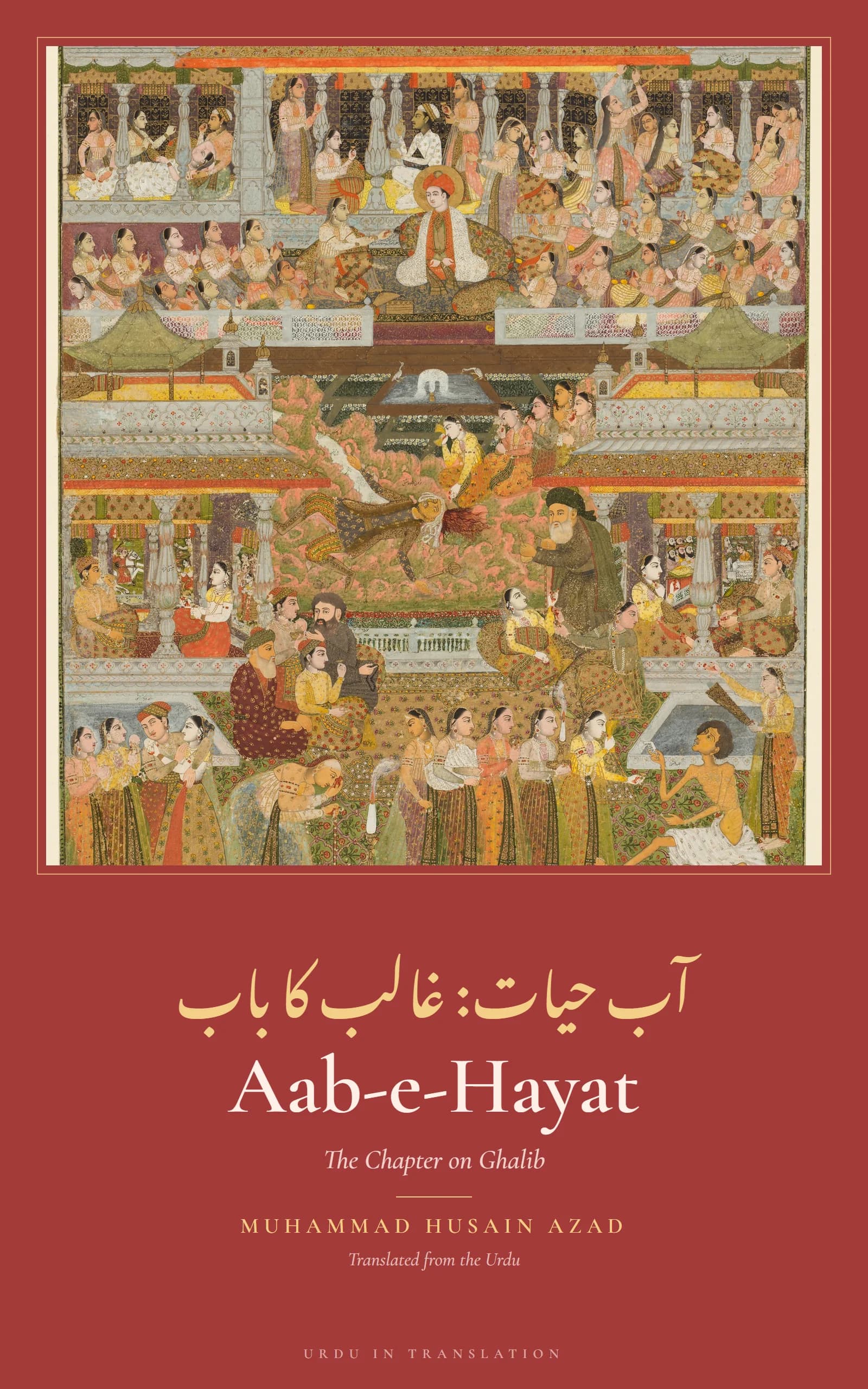
前两章免费Aab-e-Hayat: The Chapter on Ghalib
آب حیات: غالب کا باب
Muhammad Husain Azad · 关于Literary history and biography
The section on Mirza Ghalib (1797–1869) from Muhammad Husain Azad's Aab-e-Hayat (1880), the first history of Urdu poetry and a founding classic of modern Urdu prose. Azad, a pupil of Ghalib's rival Zauq who knew Ghalib in person, tells of his noble descent, lost pension and journey to Calcutta, his poverty, pride, marriage, religion and friends, and the ruin of Delhi in 1857; quotes many of his famous Urdu letters; lists his Persian and Urdu works; tells the story of the wedding sehra that offended the emperor and Ghalib's verse apology; and collects his celebrated witticisms, ending with his own death chronogram and a selection of ten ghazals. One of the earliest accounts of Ghalib and the source of many anecdotes still told about him, read in courses on Ghalib, Urdu literature and the culture of Mughal Delhi. Complete Urdu text from the Lucknow edition of 1900, with Azad's footnotes, a facing English translation, an introduction and a glossary. Cite as: Muhammad Husain Azad, Aab-e-Hayat (Ghalib), tr. urduintranslation.com (2026). The first chapter is free to read.
8 章English更多语言即将推出
散文(马兹蒙)
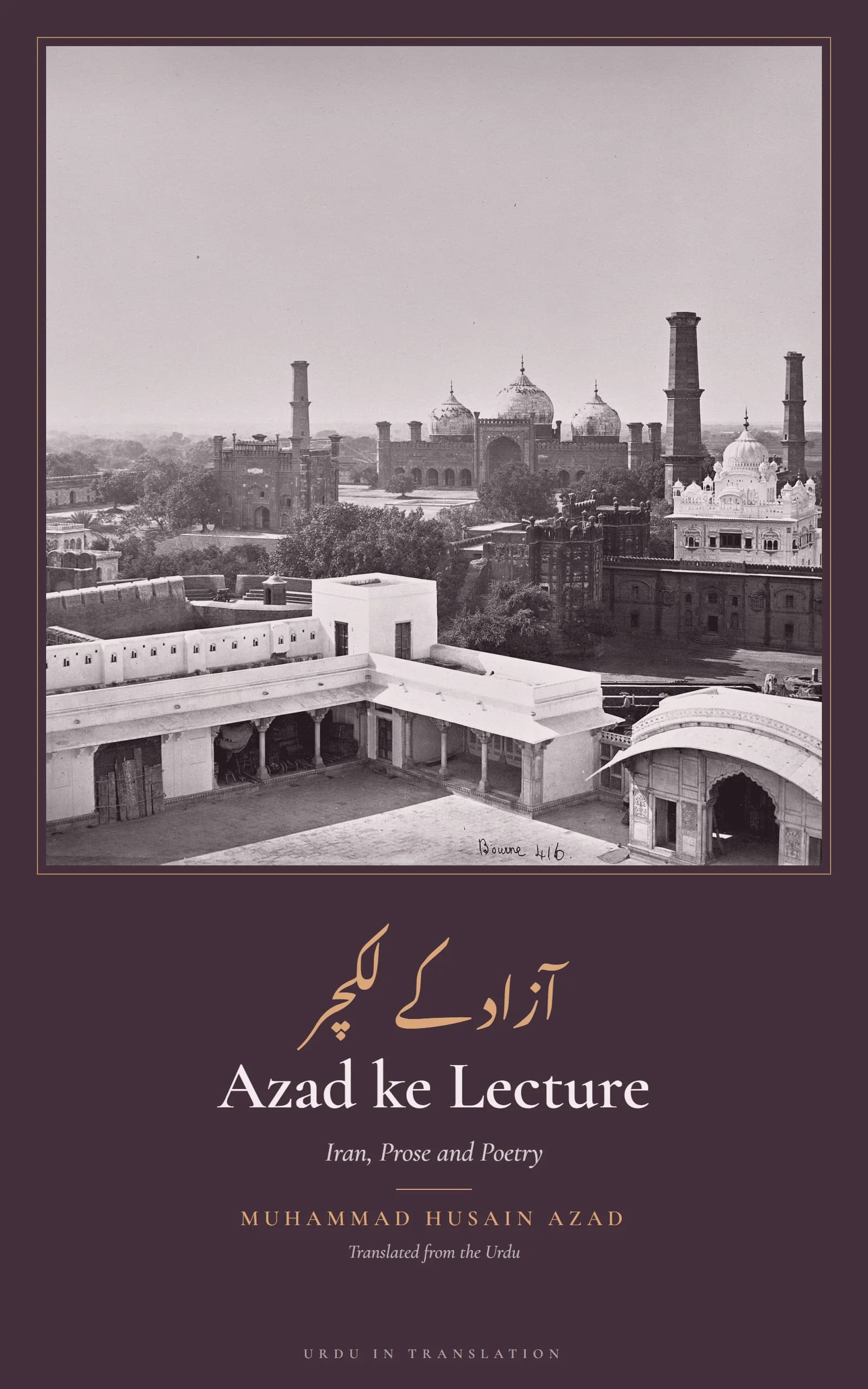
前两章免费Azad ke Lecture (Lectures: A Journey Through Iran, On Urdu and English Prose, On Poetry)
آزاد کے لکچر
Muhammad Husain Azad
Three lectures by Muhammad Husain Azad (1830-1910), the Delhi-born scholar of Lahore who wrote Aab-e-Hayat. In "A Journey Through Iran" he tells a Lahore audience of his journey in search of books and words for a Persian dictionary: by steamer to Bushehr, by caravan to Shiraz, Isfahan and Tehran, where princes and ministers sat with him over dictionaries, then on to Mashhad and home through Herat and Kandahar, questioned at every step and riding into Quetta on a cartload of books. "Some Thoughts on Urdu and English Prose" argues that young Urdu must grow through learning and take new plants from the English garden. "On Poetry and Measured Speech" (1868), an address to the Anjuman-e-Punjab, praises poetry as the speech that moves the heart. Complete Urdu text from Wikisource with a facing English translation, introduction and glossary. Cite as: Muhammad Husain Azad, Azad ke Lecture, tr. urduintranslation.com (2026), https://www.urduintranslation.com/works/azad-ke-lecture. The first two chapters are free to read.
5 章English更多语言即将推出