Abdul Halim Sharar
عبد الحلیم شرر
Life1860–1926
Abdul Halim Sharar was born in Lucknow and spent part of his youth at Matiaburj in Calcutta, the court in exile of Wajid Ali Shah, the last king of Awadh. He became one of the busiest Urdu writers of his age: journalist, editor of the magazine Dilgudaz, and the author of more than a hundred books.
He is best known for his historical romances, among them Firdaus-e-Bareen and Malik-ul-Aziz Varjina, which brought the Islamic past to a wide readership, and for Guzishta Lucknow, his affectionate portrait of the vanished culture of the city. He is counted among the founders of the Urdu novel.
Abdul Halim Sharar的作品
散文(马兹蒙)
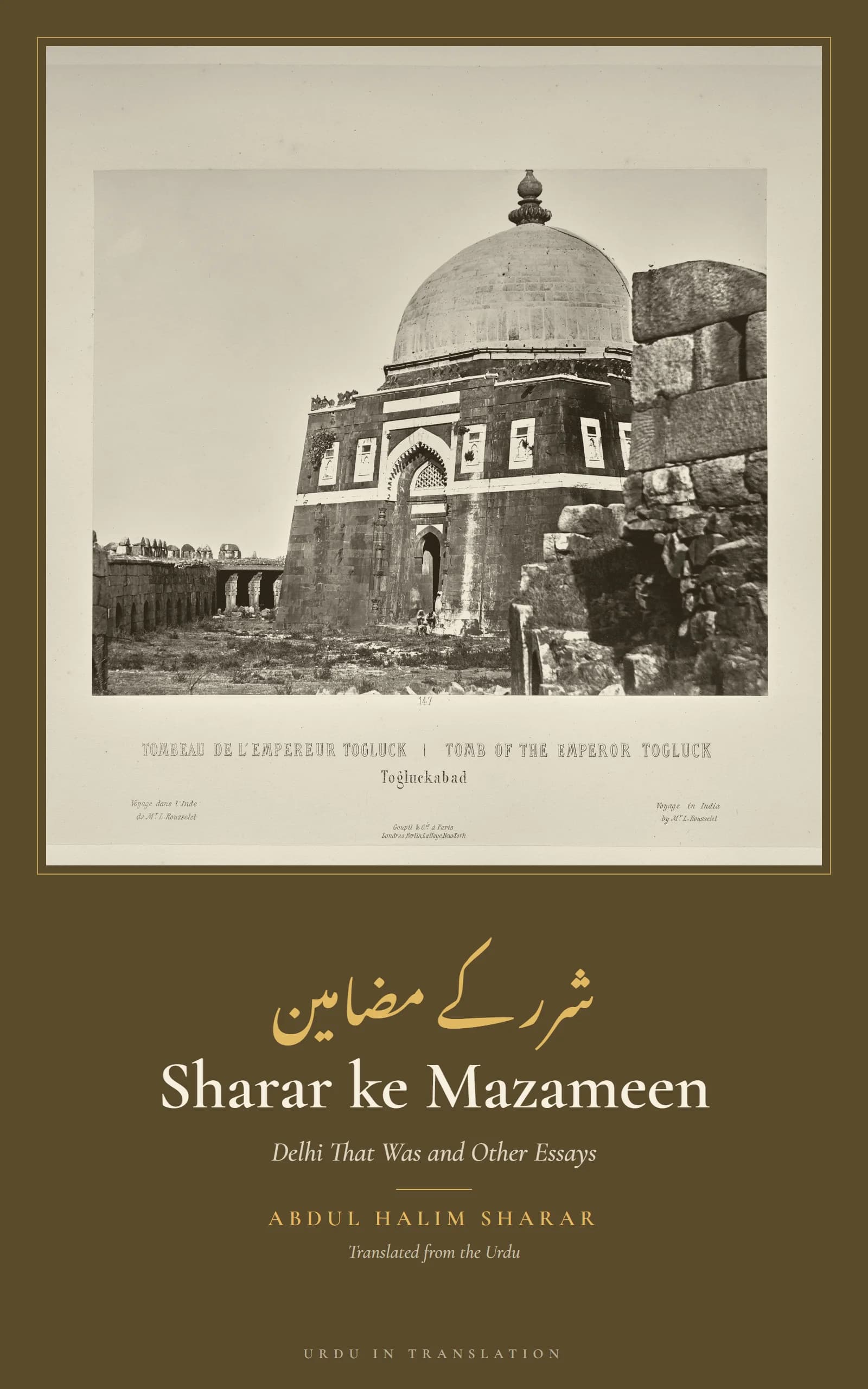
前两章免费Sharar ke Mazameen (Essays: Delhi That Was, The Gallants of Europe, The Garden of Desire)
شرر کے مضامین
Abdul Halim Sharar
Three essays by Abdul Halim Sharar (1860-1926) of Lucknow, from his magazine Dilgudaz. In "Delhi That Was" he retells the Moroccan traveller Ibn Battuta's account of Delhi under Sultan Muhammad Tughluq: its four cities, the Qutb Minar and the great tanks, the gates of the palace, the Hall of a Thousand Pillars, the ranks of the court and the Eid procession. "The Gallants of Europe" (1914) is a history of the Knights Templars, from their founding to guard pilgrims to Jerusalem to their arrest, torture and burning under Philip IV of France, read through the eyes of an Indian Muslim. "The Garden of Desire" is a short allegory on hope that always stays one step away. Complete Urdu text from Wikisource with a facing English translation, introduction and glossary. Cite as: Abdul Halim Sharar, Sharar ke Mazameen, tr. urduintranslation.com (2026), https://www.urduintranslation.com/works/sharar-ke-mazameen. The first two chapters are free to read.
5 章English更多语言即将推出
游记
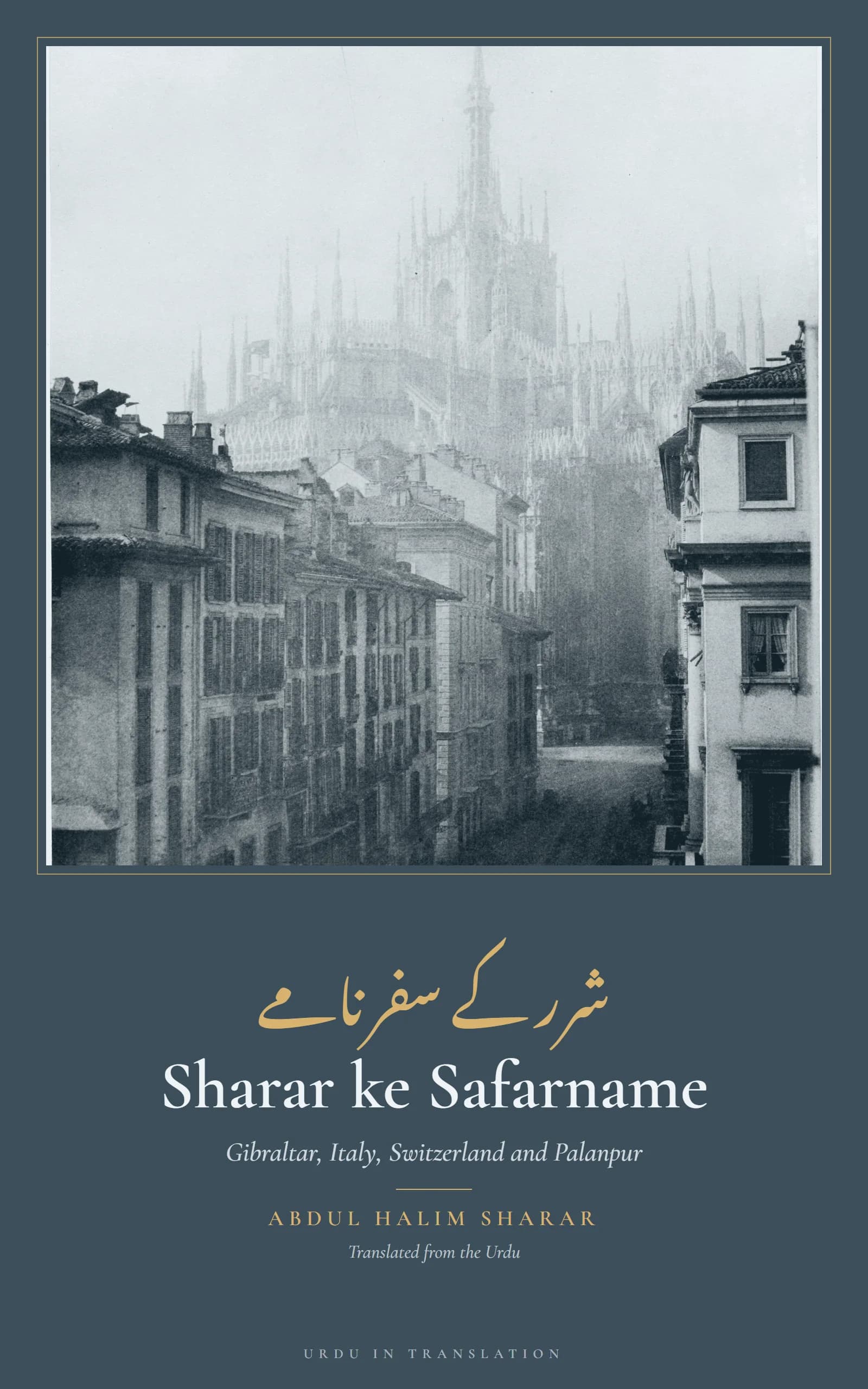
前两章免费Sharar ke Safarname (Sharar's Travels: Gibraltar, Italy, Switzerland and Palanpur)
شرر کے سفرنامے
Abdul Halim Sharar
Four travel pieces by Abdul Halim Sharar (1860-1926) of Lucknow, from his magazine Dilgudaz. On a journey between India and England in the 1890s he lands at Brindisi among tobacco beggars, marvels at the marble cathedral of Milan, rides the St Gotthard railway through the snows of the Alps, and spends six hours at Gibraltar, Tariq's Mountain, where the memory of Muslim Spain meets the sight of its Muslims sweeping the streets. Twenty years later he visits the small Mahdavi Muslim state of Palanpur in Gujarat, tells its history from the Tughluqs to the Raj, and describes the aged Nawab's court, the Eid procession and a dinner served in brass thalis. Complete Urdu text from Wikisource with a facing English translation, introduction and glossary. Cite as: Abdul Halim Sharar, Sharar ke Safarname, tr. urduintranslation.com (2026), https://www.urduintranslation.com/works/sharar-ke-safarname. The first two chapters are free to read.
6 章English更多语言即将推出
长篇小说
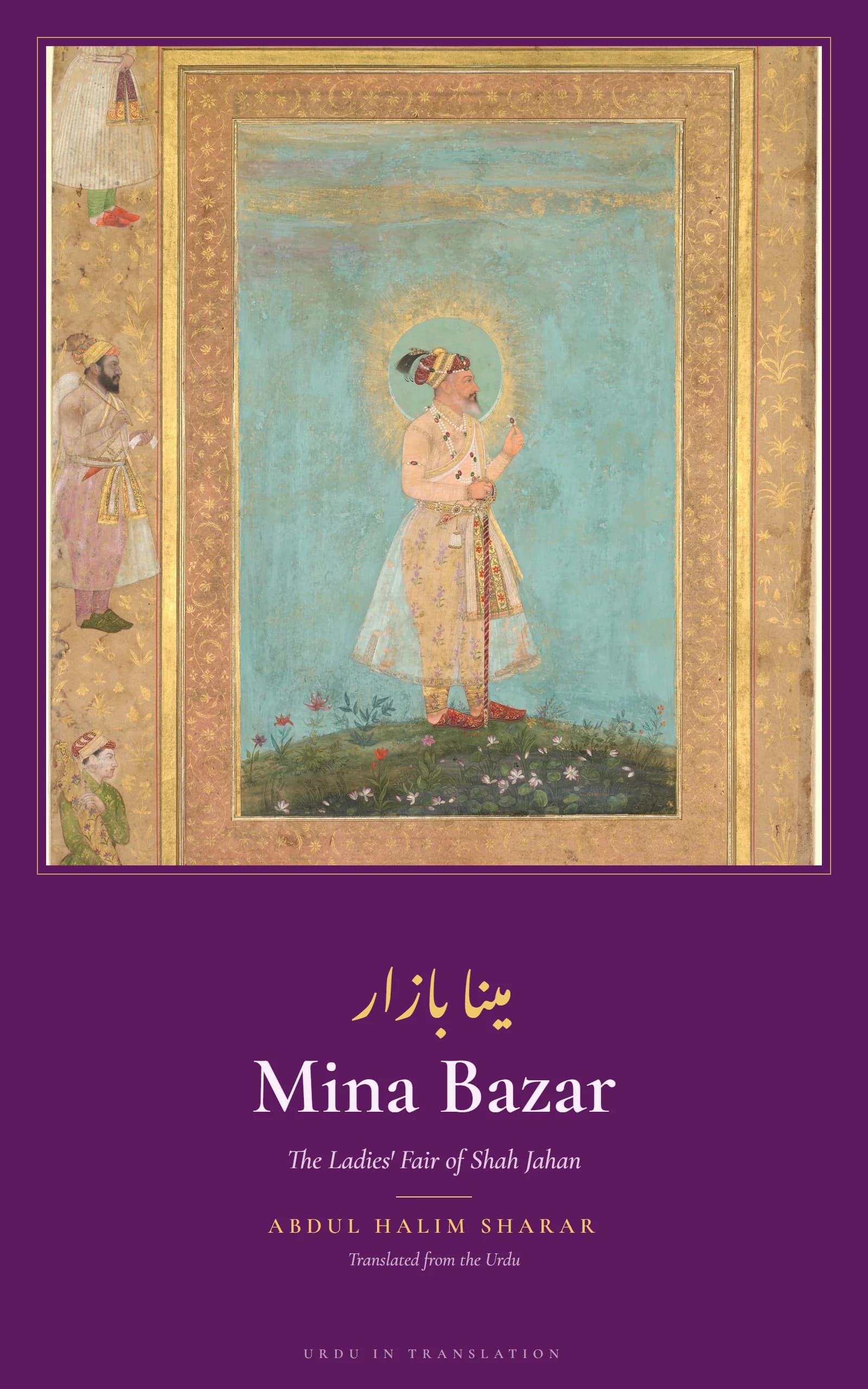
前两章免费Mina Bazar (The Ladies' Fair of Shah Jahan)
مینا بازار
Abdul Halim Sharar
A historical romance by Abdul Halim Sharar (1860-1926) of Lucknow, set at the court of the Mughal emperor Shah Jahan. At the Empress Mumtaz Mahal's wish a fair is built inside the palace where the women of Delhi keep shops of their own, and the scholars argue over whether it breaks the rules of parda. On the opening day the Emperor is charmed by Gulrukh Begum, wife of his general Jamal Khan, who sells him a "diamond" made of sugar-candy. Her three days as the Empress's guest bring a jealous husband's divorce, a false friend's scheming and the Emperor's wrath, until a sentence of death under an elephant's foot hangs on the heroine's answer. Complete Urdu text from Wikisource with a facing English translation, introduction and glossary. Cite as: Abdul Halim Sharar, Mina Bazar, tr. urduintranslation.com (2026), https://www.urduintranslation.com/works/mina-bazar. The first two chapters are free to read.
16 章English更多语言即将推出
历史
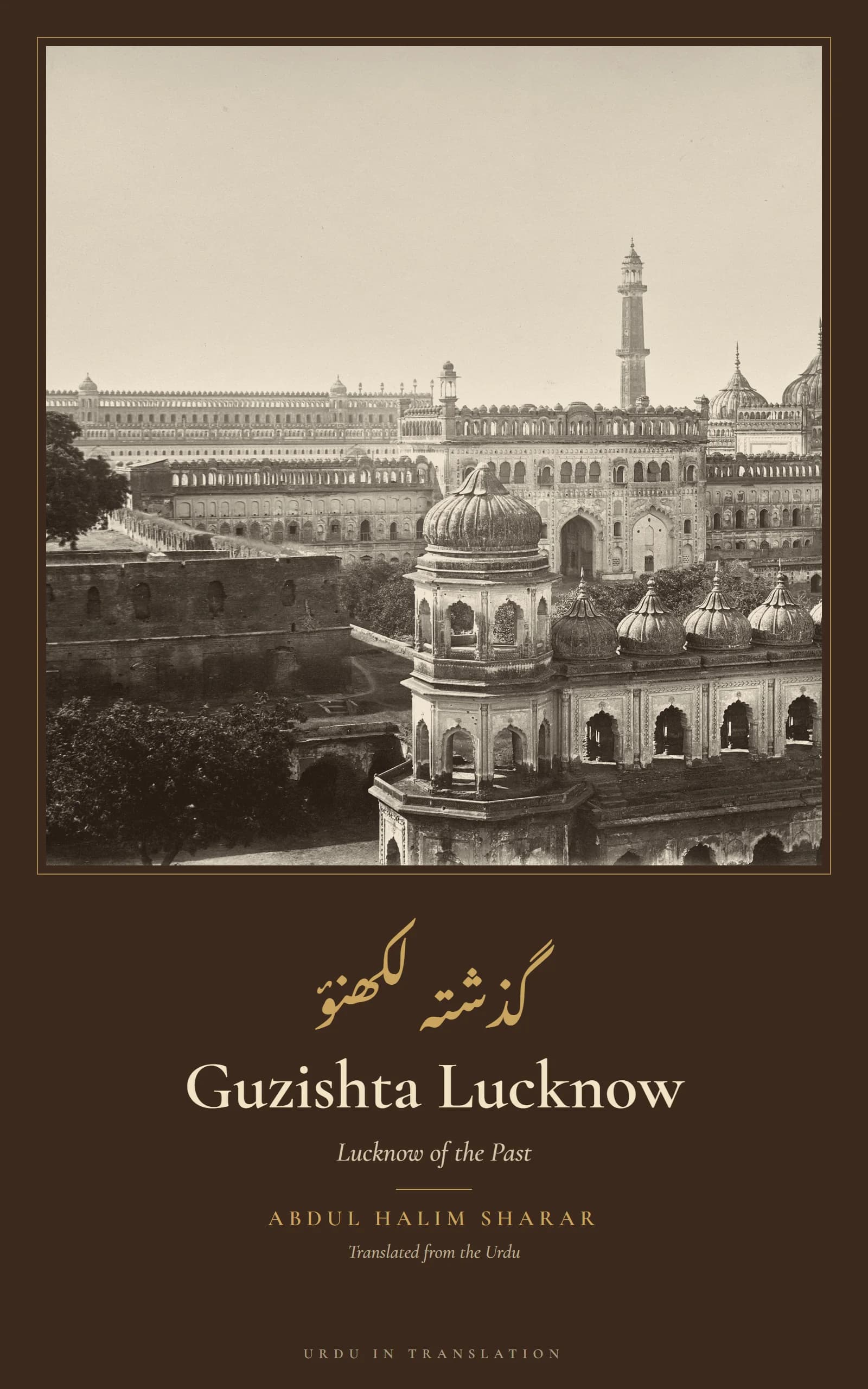
前两章免费Guzishta Lucknow (Lucknow of the Past: The Last Example of Eastern Civilisation in India)
گذشتہ لکھنؤ
Abdul Halim Sharar
Abdul Halim Sharar's Guzishta Lucknow is the classic portrait of nineteenth-century Lucknow, the city in which, as Sharar puts it, the old culture of Muslim India made its last stand. Sharar (1860–1926), novelist, journalist and editor of Dilgudaz, grew up partly at Wajid Ali Shah's court in exile at Matiya Burj. After a short history of the Nawabs and Kings of Awadh, he describes the city's culture subject by subject: poetry, prose and speech; learning, medicine and calligraphy; martial arts and animal fights; music, dance and soz-khwani; food, dress and jewellery; houses, manners and conversation; the ceremonies of birth, marriage and death; the huqqa and pan; conveyances; and pottery. A basic source for historians of Awadh, Urdu, Hindustani music and everyday life. Complete Urdu text in 54 sections from the Digital Library of India copy, completed from the 1971 Maktaba Jamia edition, with a facing English translation, introduction and glossary. Cite as: Sharar, Guzishta Lucknow, tr. urduintranslation.com (2026). The first chapter is free to read.
56 章English更多语言即将推出
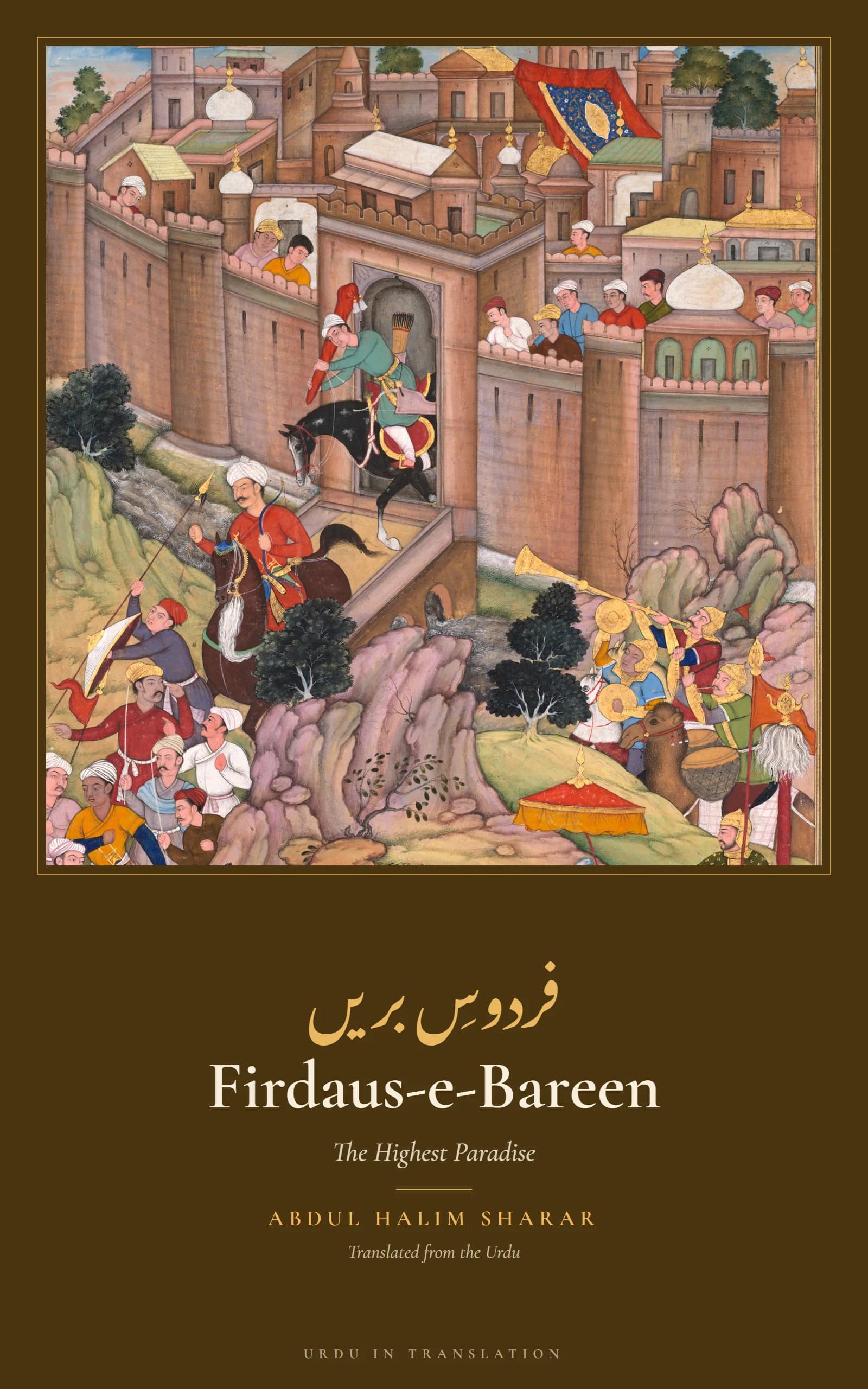
长篇小说 · 1899
前两章免费Firdaus-e-Bareen (The Highest Paradise)
فردوسِ بریں
Abdul Halim Sharar
Abdul Halim Sharar's best-known historical novel (1899), set in the 1250s in the mountains south of the Caspian. Husain and Zamurrud, a young couple on the road, fall into the hands of the Batinis of Alamut, whose leaders have built a hidden garden "paradise" to deceive their followers and send them out to kill. Sharar follows Husain as he is drawn in and used, until the order falls to Hulagu Khan's Mongols. Adventure, romance and history in one of the founding works of the Urdu novel, taught on university Urdu courses in Pakistan and India. Complete Urdu text with a new English translation, paragraph by paragraph; the first two chapters are free to read. How to cite: Sharar, Firdaus-e-Bareen, tr. Urdu in Translation (2026), https://www.urduintranslation.com/works/firdaus-e-bareen
12 章English更多语言即将推出