Chapter 2 of 9
Title and Preface
سرورق اور دیباچہ
Tap a word, Urdu or English, and its meaning appears. Select a phrase to see it whole.
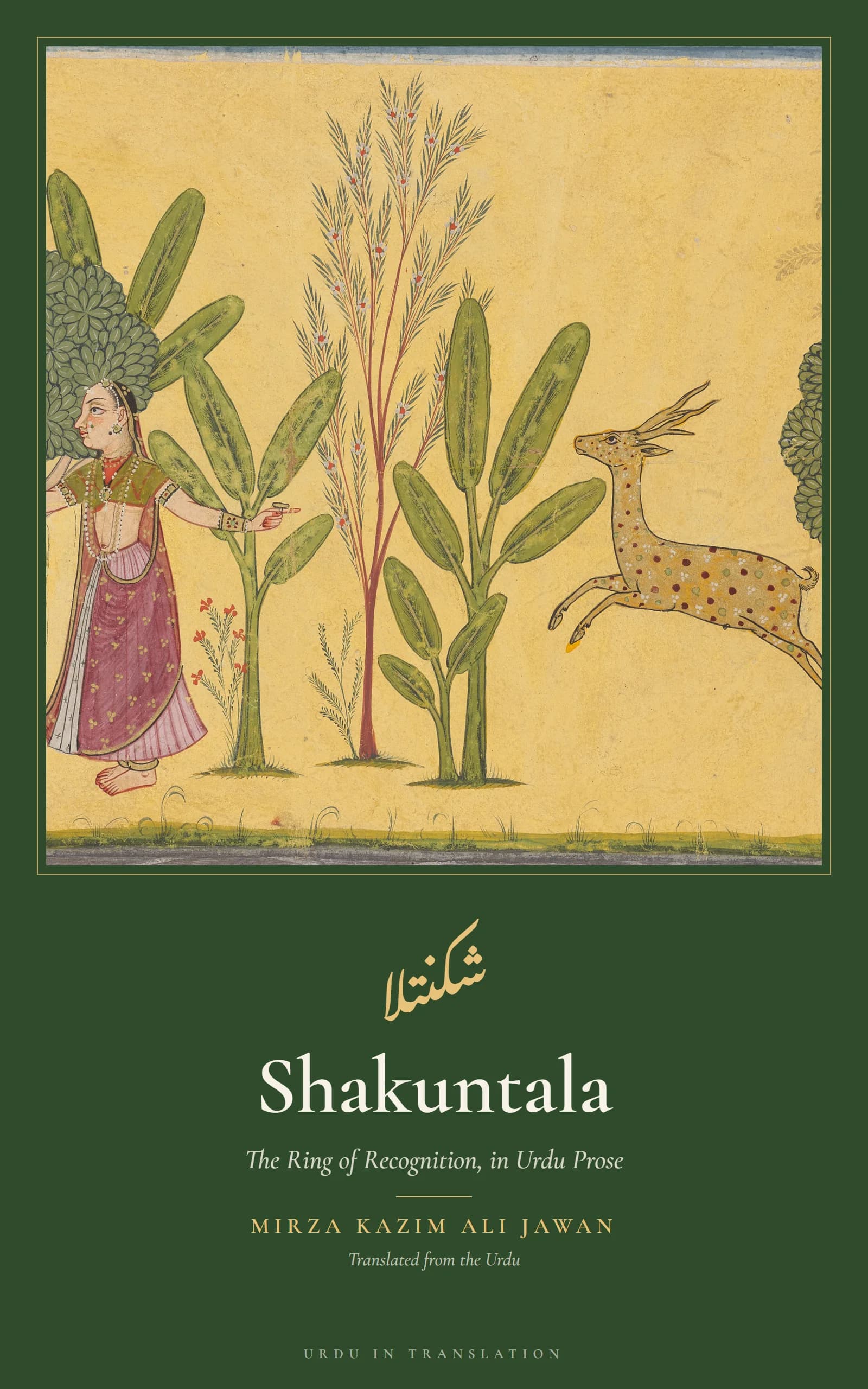
Shakuntala
سکنتلا
In the name of God, the Merciful, the Compassionate
بسم اللہ الرحمن الرحيم
Fairy or man, who has the life to cast a glance at the beauty and loveliness of His praise and glory? He made the miraculous word of Ahmad the Chosen, Muhammad Mustafa, God bless him and give him peace, the witness to it; His was the splendour at the sight of which Moses was no longer himself. Such is the love of His beauty that one went mad and another gave up his very life. Who is there whose heart has no attachment to Him? It is from His burning and His love that fire has its heat!
پری ہو یا انسان، کسی کی کیا جان جو اس کے شاہد و حمد و ثنا کے حسن و جمال پر کر سکے نگاہ۔ كلام معجز نظام احمد مجتبی محمد مصطفى صلى اللہ عليہ و سلم کو اس پر ہی گواہ کیا، وہ جلوہ تھا جسے دیکھ موسی آپ میں نہ رہا۔ عشق ہے اس کے حسن کا کہ کوئی تو دیوانہ ہوا اور کسی نے اپنا جی ہی دیا۔ کون ہے ایسا جس کے دل کو اس کی نہیں ہے لاگ؟ اسی کا سوز و محبت رکھتی ہے آگ!
Quatrain
رباعی
In the gathering of wonder, like a candle, every humble one,
O Jawan, what burning and what music he keeps in his heart!
بزم حیرت میں مثال شمع ہر اہل نیازاے جواں رکھتا ہے کیا کیا دل میں اپنے سوز و ساز
Better the seal of silence on the lips than the burning of love;
Do not lose yourself; enough; go no further in revealing the secret.
لب پہ مہر خامشی بہتر ہے سوز عشق سےہو نہ از خود رفتہ بس آگے نہ کر افشائے راز
Now this worthless one sets out, for the information of all, small and great, the thread of the employment he was given in the service of the Company Bahadur, may its fortune last.
اب یہ ہیچ مدان ہر صغیر و کبیر کی دریافت کے لیے اس روزگار کے سر رشتے سے کہ سرکار میں کمپنی بہادر دام اقبالہ کی مقرر ہوا، بیان کرتا ہے۔
Colonel Scott, who is the great Sahib of Lucknow [TN: the British Resident at Lucknow], at the request of the Governor General Bahadur, may his rule last, in 1800 honoured several poets with places among the servants of the exalted government and sent them to Calcutta, the noblest of cities. Among them this humble one also arrived here and, as ordered, was honoured with service in the Hindi school [TN: the Hindustani department of Fort William College] under Gilchrist Sahib Bahadur, of exalted qualities, may his shadow last.
کرنیل اسکاٹ صاحب جو لکھنؤ کے بڑے صاحب ییں، انھوں نے حسب الطلب گورنر جنرل بہادر دام ملکہ کے 1800ء میں کتنے شاعروں کو سرکار عالی کے ملازموں میں سرفراز فرما کر اشرف البلاد کلکتے کو روانہ کیا۔ انھوں میں احقر بھی یہاں وارد ہوا اور موافق حكم حضور خدمت میں مدرسہ ہندی کے جو صاحب والا مناقب گلکرسٹ صاحب بہادر دام ظلہ ہیں، شرف اندوز ہوا۔
The very next day he very kindly and graciously ordered me to translate the play *Shakuntala* into our own language, and ordered Lallu Ji Lal Kab [TN: Lallu Lal, the poet] to have it written out without a break. Although I had never practised prose, only verse, by God's grace it was well accomplished, so that whoever heard it liked it and called it good. Much of it was read and written, and some of it, by chance, was left unprinted.
دوسرے ہی دن انھوں نے نہایت مہربانی و الطاف سے ارشاد فرمایا کہ سکنتلا ناٹک کا ترجمہ اپنی زبان کے موافق کرو اور للو جی لال کب کو حکم کیا کہ بلا ناغہ لكھایا کرے۔ اگرچہ کبھی سوائے نظم کے نثر کی مشق نہ تھی لیکن خدا کے فضل سے بخوبی انصرام ہوا کہ جس نے سنا پسند کیا اور اچھا کہا۔ بہت سا پڑھنے لکھنے میں آیا اور کچھ چھپ کر اتفاقات سے رہ گیا۔
In these days, when it is 1800 of the Christian era [TN: so in the text] and this humble one is correcting the idiom of the Hindi translation of the Holy Quran, the praised Sahib said, "We wish now to have this book printed anew; a revision is needed." And he told that poet [TN: Lallu Lal] to compare it too with the original book, so that if anywhere the sense had been increased or lessened, it should not remain so. So we carried out his order; then, as the Sahib ordered, your servant also wrote a short preface; the earlier one is this one [TN: the wording here is unclear in the source].
ان دنوں میں کہ 1800 عیسوی ہیں اور احقر قرآن شریف کے ہندی ترجمے کا محاورہ درست کرتا ہے، صاحب ممدوح نے فرمایا: ہم چاہتے ہیں کہ اب اس کتاب کو سر نو چھپواوں، نظر ثانی لازم ہے۔ اور اس کب کو فرمایا کہ تم بھی اسی کتاب سے مقابلہ کرو کہ اگر کہیں مطلب کی کمی بیشی ہوئی ہو، نہ رہے؛ چنانچہ ہم ان کا فرمانا بجا لائے؛ پھر موافق حكم صاحب کے بندے نے تھوڑا سا دیباچہ اور بھی لکھا ولأنہ اگلا یہی ہے۔
First take God's name upon your tongue;
Then set your heart upon the tale.
خدا کا نام لے پہلے زبان پرلگا پھر دل کو اپنے داستان پر
This tale was translated from Sanskrit into Braj Bhakha in the reign of the emperor Farrukh Siyar. Now, in the reign of the emperor Shah Alam, and in the government of the Most Noble Marquess Wellesley, Governor General Bahadur, may his fortune last, the choicest of great nobles and special counsellor of the King of England, whose court is as high as Saturn, in 1801, corresponding to 1215 of the Hijra, Kazim Ali Jawan has told it in the Rekhta tongue [TN: Urdu] by order of the honoured John Gilchrist Sahib Bahadur, may his shadow last.
یہ قصہ فرخ سیر بادشاہ کی سلطنت میں سنسکرت سے برج بھاکا میں ترجمہ ہوا تھا۔ اب شاہ عالم بادشاہ کے عہد میں اور زبدۂ نوئینان عظيم الشان مشیر خاص شاہ کیوان بارگاہ انگلستان اشرف الاشراف ماركويس ولزلی گورنر جنرل بہادر دام دولتہ کی حکومت میں 1801ء مطابق 1215 ہجری کے جناب جان گلکرسٹ صاحب بہادر دام ظلہ کے حسب الحكم كاظم على جوان نے اسے زبان ریختہ میں بیان کیا۔
The writer of this tale [TN: of the Braj version] has written that when the son of Maula Khan Fidai Khan, one of the devoted servants of the emperor Farrukh Siyar, won a battle, he received from His Radiant Majesty the title of Azim Khan. In those same days he ordered Nawaz Kishor to tell the play *Shakuntala*, which is in Sanskrit, in the Braj tongue. That poet told this tale in *kabit* and *dohra* [TN: forms of Hindi verse], and this is a translation of it; and the version in English was made from the Sanskrit. If there is some difference between this and that, it is possible.
اس داستان کے لکھنے والے نے یوں لکھا ہے کہ فرخ سیر بادشاہ کے فدویوں میں سے مولی خاں فدائی خاں کے بیٹے نے جب ایک لڑائی ماری، تب حضور پر نور سے اس کا خطاب عظيم خاں ہوا۔ انھیں ایام میں اس نے نواز کشور کو حکم کیا کہ سںکنتلا ناٹک جو سنسکرت میں ہے، برج کی بولی میں کہہ۔ اس کبیشر نے یہ کہانی کبت دوھرے میں کہی کہ جس کا ترجمہ یہ ہے، اور جو انگریزی میں ہے وہ سنسکرت سے ہوا ہے۔ اگر اس میں اور اس میں کچھ فرق ہو تو ممکن ہے۔
Now my request to the men of knowledge and insight is that they open the eyes and ears of justice and say with a little fairness how a *kabit* or *dohra* can be translated into the Rekhta tongue as it should be. The difference between the composition of the one and the other is plain; what need to describe it?
اب صاحبان دانش و بینش کی خدمت میں التماس میرا یہ ہے کہ چشم و گوش انصاف کھولیں اور ٹک منصفی سے بولیں کہ کبت اور دوھرے کا ترجمہ جیسے چاہیے ویسا زبان ریختہ میں کب ہو سکتا ہے۔ اس کے اور اس کے مضمون کی بندش کا فرق کھلا ہوا ہے، بیان کی احتیاج کیا:
Its manner is different, its way is unique;
Its world is one thing, and the other's world is another.
طرز اس کی ہے جدا اس کا نرالا طور ہےاس کا عالم اور ہے اور اس کا عالم اور ہے
Apart from whether it is *kabit* or *dohra*, translating verse into prose scatters the mind; what can be done?
قطع نظر اس سے کہ کبت ہو یا دوھرا، نظم کا ترجمہ نثر میں طبیعت کو منتشر کرتا ہے، کیا کیا جائے؟
I have written these few phrases so that,
If there is any place to stop and think,
لکھے یہ اس لیے دو چار فقرےاگر جائے تامل ہو کسی جا
The wise should not find fault with it,
For this matter here was of this kind;
گرفت اس میں نہ ہو اہل خرد کوکہ اس مضمون کا یاں طور یہ تھا
And if they see a fault, then too, understanding,
Let them pardon it and show kindness;
وگر دیکھیں خطا تو بھی سمجھ کرمعاف اس کو کریں ہو لطف فرما
For is any man free of fault?
Why should anyone taunt another for it?
کہ خالی ہے بشر کوئی خطا سے؟کسی کو اس میں طعنے کوئی دے کیا
Jawan, now set your heart upon the tale;
From here, then, its beginning is thus.
جواں بس دل لگا تو داستان پریہاں سے یوں ہے اب آغاز اس کا
What did this chapter leave with you?
Sign in to react
Discussion
No one has spoken yet. Say what this chapter stirred in you.