Chapter 1 of 5
About This Edition and Introduction
اس اشاعت کے بارے میں اور تعارف
Tap a word, Urdu or English, and its meaning appears. Select a phrase to see it whole.
About This Edition
اس اشاعت کے بارے میں
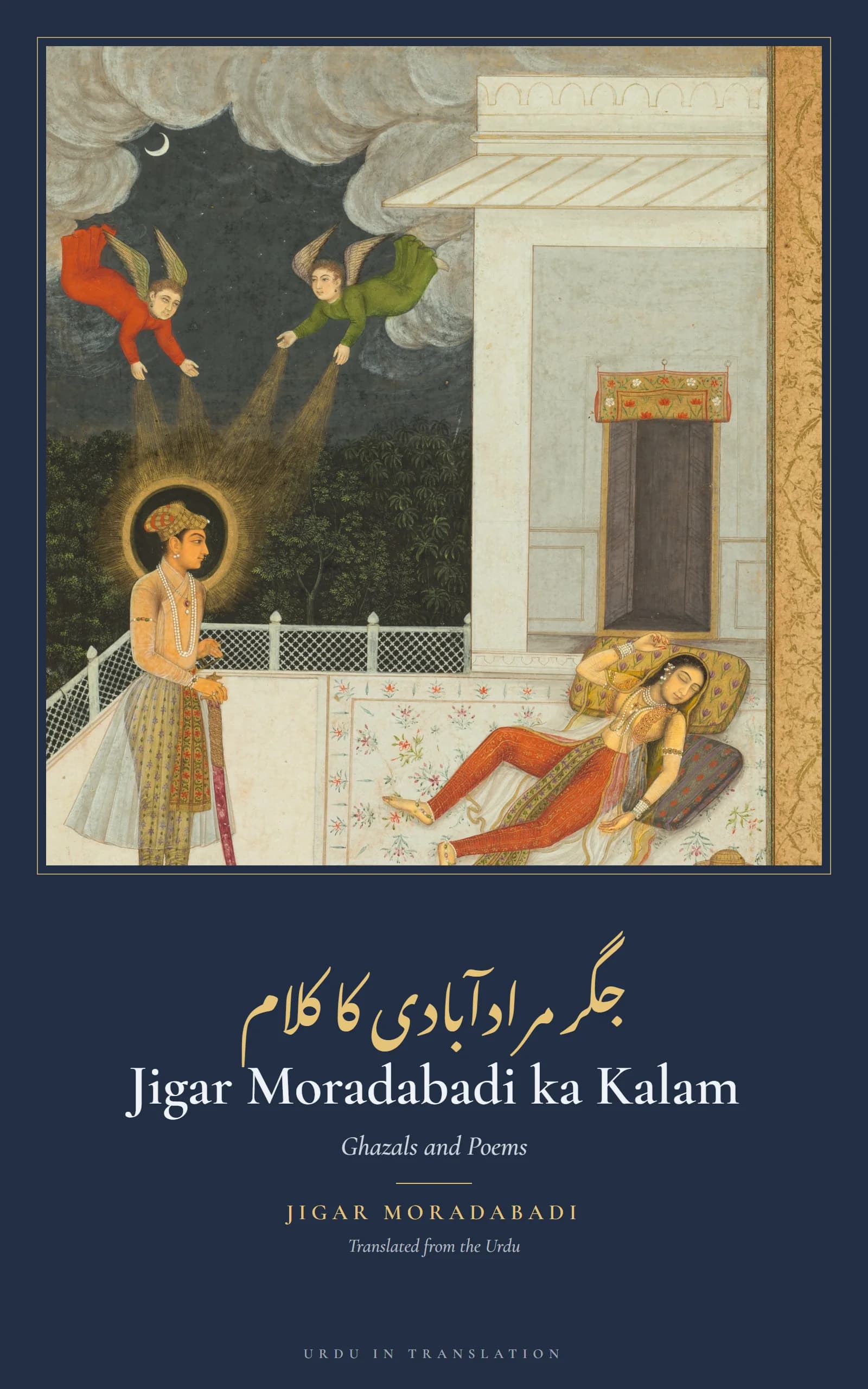
This book gives the Urdu text and a new English translation of eighty-nine poems by Jigar Moradabadi (d. 1960): eighty-four *ghazals* (lyric poems), a *naat* (poem in praise of the Prophet), and four titled poems. They are all the poems by Jigar on Urdu Wikisource. The title, *Jigar Moradabadi ka Kalam* ("Poems of Jigar Moradabadi"), has been given to this selection by the present edition.
اس کتاب میں جگر مرادآبادی (م ۱۹۶۰ء) کی نواسی تخلیقات کا اردو متن اور ان کا نیا انگریزی ترجمہ ہے: چوراسی غزلیں، ایک نعت اور چار عنوان والی نظمیں۔ یہ ویکی ماخذ پر جگر کا پورا کلام ہے۔ کتاب کا نام ’’جگر مرادآبادی کا کلام‘‘ اس اشاعت نے اس انتخاب کو دیا ہے۔
Source of the Urdu text: Urdu Wikisource (ur.wikisource.org), the eighty-nine pages listed under the author, downloaded in October 2026. The source pages carry no modern editorial matter. In a few places a line is repeated or a word is evidently garbled in the source; the text is printed as found and the translation follows the likeliest sense, with a note.
اردو متن کا ماخذ: اردو ویکی ماخذ (ur.wikisource.org)، مصنف کے تحت درج نواسی صفحات، اکتوبر ۲۰۲۶ء میں حاصل کیے گئے۔ ماخذ کے صفحات پر کوئی جدید ادارتی مواد نہیں۔ چند جگہوں پر ماخذ میں کوئی مصرع دہرایا گیا ہے یا کوئی لفظ صاف طور پر بگڑا ہوا ہے؛ وہاں متن جیسا ملا ویسا دیا گیا ہے اور ترجمہ قرین قیاس مفہوم کے مطابق ہے، نوٹ کے ساتھ۔
What is left out and what was changed: nothing has been left out. The poems are given in the order of the source, which is broadly alphabetical by first line, and divided into three chapters. Ghazals are headed by their first line; the four poems that carry titles on Wikisource ("Image and Imagining", "Broken Repentance", "The Bengal Famine" and "In Memory of Gandhiji") are headed by those titles, translated. One couplet appears in two different ghazals in the source and is kept in both.
کیا چھوڑا گیا اور کیا بدلا گیا: کچھ نہیں چھوڑا گیا۔ تخلیقات ماخذ کی ترتیب میں ہیں، جو بڑی حد تک پہلے مصرع کے لحاظ سے حروف تہجی کی ترتیب ہے، اور تین ابواب میں بانٹی گئی ہیں۔ غزلوں کا عنوان ان کا پہلا مصرع ہے؛ جن چار نظموں کے ویکی ماخذ پر عنوان ہیں (’’تصویر و تصور‘‘، ’’شکست توبہ‘‘، ’’قحط بنگال‘‘ اور ’’گاندھی جی کی یاد میں‘‘) وہ انہی عنوانوں کے ساتھ ہیں۔ ایک شعر ماخذ میں دو مختلف غزلوں میں آیا ہے اور دونوں جگہ رکھا گیا ہے۔
Copyright: Jigar Moradabadi died in 1960, so his poems are in the public domain in Pakistan and India. The English translation is new. Translator's notes are marked [TN: …]. The translation keeps each line of verse as a line, and puts accuracy before rhyme. The pen name Jigar is kept as a name; it means "liver", the seat of grief and courage in Urdu verse, and the poet often plays on it.
حق اشاعت: جگر مرادآبادی کا انتقال ۱۹۶۰ء میں ہوا، اس لیے ان کا کلام پاکستان اور بھارت میں پبلک ڈومین میں ہے۔ انگریزی ترجمہ نیا ہے۔ مترجم کے نوٹ [TN: …] سے ظاہر کیے گئے ہیں۔ ترجمے میں ہر مصرع الگ سطر میں رکھا گیا ہے، اور صحت کو قافیے پر مقدم رکھا گیا ہے۔ تخلص جگر نام کے طور پر رکھا گیا ہے؛ اردو شاعری میں جگر غم اور حوصلے کا مقام ہے، اور شاعر اکثر اس لفظ سے کھیلتے ہیں۔
Names are spelled in one way throughout: Moradabad, Medina, Bengal, Bombay, India, Sinai, the Kaaba; Khizr, Joseph, Mansur, Hafiz, Khayyam, Ahriman; Gandhiji (the Mahatma); Majazi.
ترجمے میں نام ایک ہی طرح لکھے گئے ہیں: مرادآباد، مدینہ، بنگال، بمبئی، ہند، طور، کعبہ؛ خضر، یوسف، منصور، حافظ، خیام، اہرمن؛ گاندھی جی (مہاتما)؛ مجازی۔
Introduction
تعارف
Ali Sikandar, who wrote as Jigar, takes his name from Moradabad; he died in 1960. He was one of the most loved voices of the twentieth-century ghazal, and these poems show why: the classical figures of the tavern, the Saqi and the moth are here, but the music is direct and the feeling unguarded. One of his best-known couplets is in this book: "This love is not easy; understand just this much: it is a river of fire, and one must cross it by drowning."
علی سکندر، جو جگر تخلص کرتے تھے، مرادآباد کی نسبت سے مرادآبادی کہلاتے ہیں؛ ۱۹۶۰ء میں ان کا انتقال ہوا۔ وہ بیسویں صدی کی غزل کی سب سے محبوب آوازوں میں سے تھے، اور یہ کلام اس کی وجہ دکھاتا ہے: میخانہ، ساقی اور پروانہ جیسی کلاسیکی تصویریں یہاں موجود ہیں، مگر لہجہ سیدھا اور جذبہ بے ساختہ ہے۔ ان کا ایک بہت مشہور شعر اسی کتاب میں ہے: ’’یہ عشق نہیں آساں اتنا ہی سمجھ لیجے، اک آگ کا دریا ہے اور ڈوب کے جانا ہے‘‘۔
Wine runs through the poems as it runs through his legend. He writes of himself with a smile, "Jigar's verses have killed everyone, and wine has killed Jigar", claims as his masters not Khayyam but "sweet-spoken Hafiz", and in "Broken Repentance" drinks "smashing my repentance to bits"; yet another ghazal turns the same imagery inward: "Giving up wine, I have become even more of a drinker: every day the flask of dawn comes for me."
شراب ان کے کلام میں اسی طرح رچی ہوئی ہے جیسے ان کی داستان میں۔ وہ مسکرا کر اپنے بارے میں لکھتے ہیں: ’’سب کو مارا جگرؔ کے شعروں نے، اور جگرؔ کو شراب نے مارا‘‘؛ اپنا استاد خیام کو نہیں بلکہ ’’حافظ خوش کلام‘‘ کو مانتے ہیں؛ اور ’’شکست توبہ‘‘ میں ’’توبہ کو توڑ تاڑ کے‘‘ پیتے ہیں؛ مگر ایک اور غزل یہی تصویریں باطن کی طرف موڑ دیتی ہے: ’’ترک مے سے اور بھی میں تو شرابی بن گیا، روز آ جاتا ہے مینائے سحر میرے لئے‘‘۔
Some poems speak directly of their time. "The Bengal Famine" watches from afar the children "without grave or shroud, dust on their heads"; "In Memory of Gandhiji" mourns "that Mahatma, that martyr of peace and reconciliation"; and other ghazals ask why "in this age of progress man does not pay man what is his due". The collection ends in the tavern, with a ghazal that calls for "some revolution" because "though he has risen high, man is still the slave of desires".
کچھ نظمیں سیدھے اپنے زمانے سے بات کرتی ہیں۔ ’’قحط بنگال‘‘ دور سے ان بچوں کو دیکھتی ہے جو ’’بے گور و کفن خاک بہ سر‘‘ ہیں؛ ’’گاندھی جی کی یاد میں‘‘ ’’وہی مہاتما وہی شہید امن و آشتی‘‘ کا ماتم کرتی ہے؛ اور دوسری غزلیں پوچھتی ہیں کہ ’’اس دور ترقی میں آدمی سے آدمی کا حق ادا ہوتا نہیں‘‘۔ مجموعہ میخانے میں ختم ہوتا ہے، ایک ایسی غزل پر جو ’’کوئی انقلاب‘‘ کی پکار دیتی ہے، کیونکہ ’’بلند ہو کے بھی آدمی ابھی خواہشوں کا غلام ہے‘‘۔
What did this chapter leave with you?
Sign in to react
Discussion
No one has spoken yet. Say what this chapter stirred in you.