Chapitre 1 sur 10
About This Edition and Introduction
اس اشاعت کے بارے میں اور تعارف
Touchez un mot, en ourdou ou en anglais : son sens apparaît. Sélectionnez une phrase pour la voir entière.
About This Edition
اس اشاعت کے بارے میں
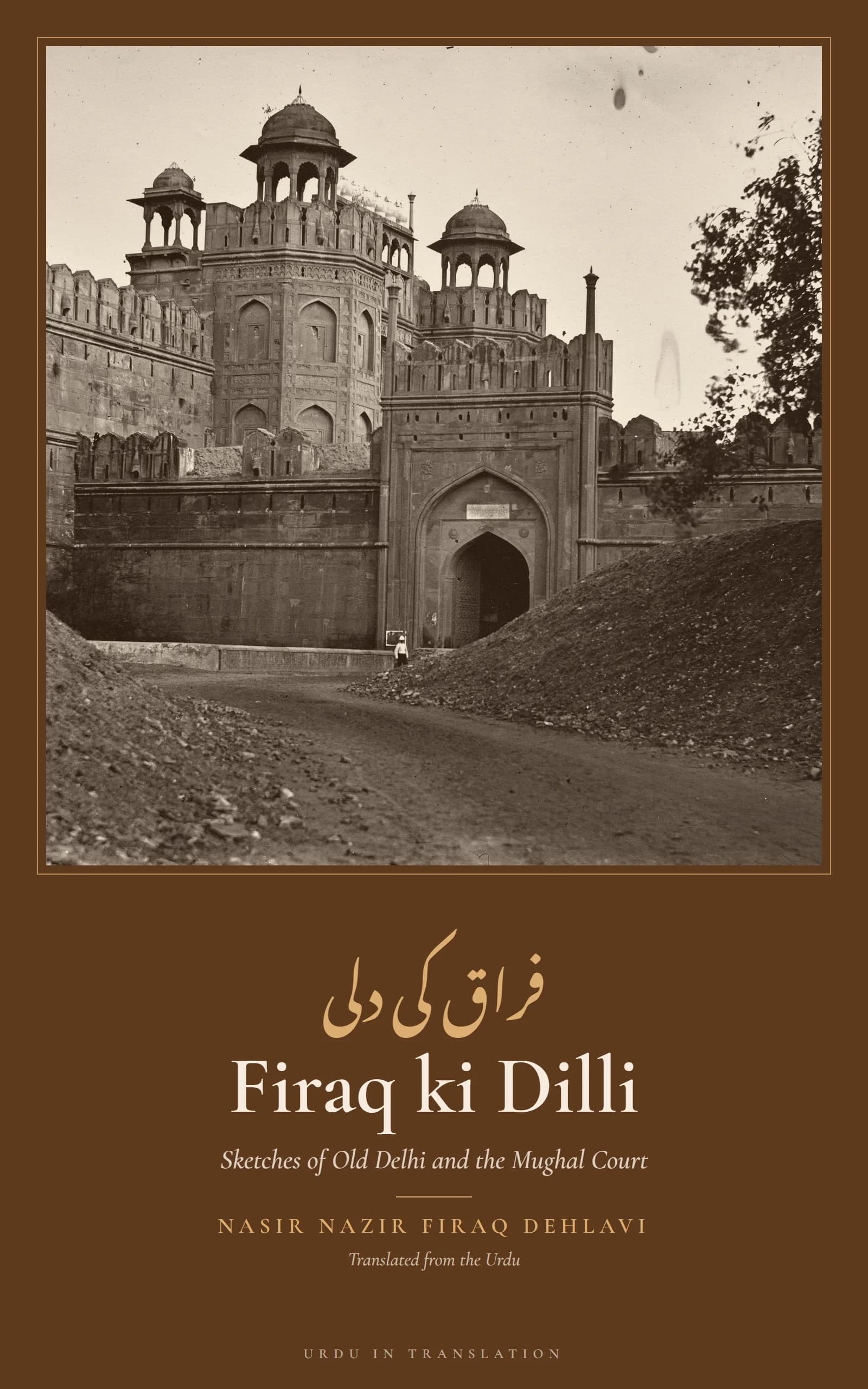
This book gives the Urdu text and a new English translation of eight prose pieces about old Delhi by Nasir Nazir Firaq Dehlavi (died 1933): "Jahan Abad" (*Jahan Abad*), "A Wedding Party in Delhi and the Teasing of the Begams" (*Dilli mein Biyah ki ek Mahfil aur Begamon ki Chhed Chhar*), "A Humorous Glimpse of the Red Fort" (*Lal Qila ki Jhalak, Zarafat-amez*), "A Tribute of Five Thousand Tamburas and Sitars" (*Panch Hazar Tanbure aur Sitar ka Nazrana*), "The Hidden Masters of Delhi" (*Dilli ke Poshida Arbab-e-Kamal*), "Nawab Aqil Khan, Commander of Five Thousand" (*Nawab Aqil Khan Panj Hazari*), "The Bowls of the Twenty-Second of Rajab" (*Ba'iswin Rajab ke Kunde*) and "The Goldsmith of Tughlaqabad" (*Tughlaqabad ka Sunar*). The title, *Firaq ki Dilli* ("Firaq's Delhi"), has been given to this selection by the present edition; it is not the title of a book published by the author.
اس کتاب میں ناصر نذیر فراق دہلوی (وفات ۱۹۳۳ء) کی پرانی دلی کے بارے میں آٹھ نثری تحریروں کا اردو متن اور ان کا نیا انگریزی ترجمہ شامل ہے: ’’جہان آباد‘‘، ’’دلی میں بیاہ کی ایک محفل اور بیگموں کی چھیڑ چھاڑ‘‘، ’’لال قلعہ کی جھلک ظرافت آمیز‘‘، ’’پانچ ہزار طنبورے اور ستار کا نذرانہ‘‘، ’’دلی کے پوشیدہ ارباب کمال‘‘، ’’نواب عاقل خاں پنج ہزاری‘‘، ’’بائیسویں رجب کے کونڈے‘‘ اور ’’تغلق آباد کا سنار‘‘۔ ’’فراق کی دلی‘‘ کا عنوان اس اشاعت نے اس انتخاب کو دیا ہے؛ یہ مصنف کی شائع کردہ کسی کتاب کا نام نہیں۔
Source of the Urdu text: Urdu Wikisource (ur.wikisource.org), the eight pages of the same names listed under the author, downloaded in October 2026. Wikisource does not say in which of the author's books, or in which year, each piece first appeared. No scan of an early printing has been found on archive.org. Wikisource has some further pieces by Firaq that are not included in this selection.
اردو متن کا ماخذ: اردو ویکی ماخذ (ur.wikisource.org)، مصنف کے تحت درج انہی ناموں کے آٹھ صفحات، اکتوبر ۲۰۲۶ء میں حاصل کیے گئے۔ ویکی ماخذ پر یہ نہیں بتایا گیا کہ ہر تحریر پہلی بار مصنف کی کس کتاب میں اور کس سال چھپی۔ archive.org پر کسی ابتدائی اشاعت کا عکس نہیں ملا۔ ویکی ماخذ پر فراق کی کچھ اور تحریریں بھی ہیں جو اس انتخاب میں شامل نہیں۔
What is left out and what was changed: nothing of the author's text has been left out. Verses that run into the prose in the source have been set out on their own lines, a couplet to a block, and the section numbers (2) to (6) in "A Humorous Glimpse of the Red Fort" have been set on their own lines. The lists of dishes in "Jahan Abad" have been set out one item to a line. Long paragraphs in the source have sometimes been divided. A few obvious misprints, such as a doubled word, have been corrected silently.
کیا چھوڑا گیا اور کیا بدلا گیا: مصنف کے متن میں سے کچھ نہیں چھوڑا گیا۔ ماخذ میں نثر کے ساتھ ملے ہوئے اشعار الگ سطروں میں، ایک شعر ایک بند میں، رکھے گئے ہیں، اور ’’لال قلعہ کی جھلک‘‘ میں (۲) سے (۶) تک حصوں کے نمبر الگ سطروں میں رکھے گئے ہیں۔ ’’جہان آباد‘‘ میں کھانوں کی فہرستیں ایک سطر میں ایک چیز کے حساب سے لکھی گئی ہیں۔ ماخذ کے بعض لمبے پیرے تقسیم کیے گئے ہیں۔ چند صریح غلطیاں، مثلاً دہرایا ہوا لفظ، خاموشی سے درست کر دی گئی ہیں۔
Copyright: Firaq died in 1933, so his work is in the public domain in Pakistan and India. "A Wedding Party in Delhi" refers to the Delhi Durbar of 1911, and "The Bowls of the Twenty-Second of Rajab" is dated by the author 17 February 1925, so at least some of the pieces were first printed after 1925. Their status in the United States should therefore be checked. The English translation is new. Translator's notes are marked [TN: …]. Arabic and Persian quotations are translated, and the language of the original is given in a note.
حقوق: فراق کا انتقال ۱۹۳۳ء میں ہوا، اس لیے ان کی تحریریں پاکستان اور ہندوستان میں پبلک ڈومین میں ہیں۔ ’’دلی میں بیاہ کی ایک محفل‘‘ میں ۱۹۱۱ء کے دہلی دربار کا ذکر ہے اور ’’بائیسویں رجب کے کونڈے‘‘ پر مصنف نے خود ۱۷؍ فروری ۱۹۲۵ء کی تاریخ لکھی ہے، اس لیے کم از کم کچھ تحریریں ۱۹۲۵ء کے بعد پہلی بار چھپیں۔ اس لیے امریکہ میں ان کی حیثیت کی جانچ ہونی چاہیے۔ انگریزی ترجمہ نیا ہے۔ مترجم کے نوٹ [TN: …] سے ظاہر کیے گئے ہیں۔ عربی اور فارسی اقتباسات کا ترجمہ کیا گیا ہے اور نوٹ میں اصل زبان بتائی گئی ہے۔
Names are spelled in one way throughout: Delhi, Shahjahanabad, the Red Fort, the Jama Masjid, the Jamna, Tughlaqabad, Lucknow, Bukhara; Amir Timur, Shah Jahan, Aurangzeb Alamgir, Akbar the Second, Abu Zafar Bahadur Shah, Ghalib, Zauq, Momin, Muhammad Husain Azad, Hakim Agha Jan Aish, Nazir Akbarabadi, Shah Bhure Sahib, Shaikh Kalimullah Jahanabadi.
نام ہر جگہ ایک ہی طرح لکھے گئے ہیں: دلی، شاہجہاں آباد، لال قلعہ، جامع مسجد، جمنا، تغلق آباد، لکھنؤ، بخارا؛ امیر تیمور، شاہجہاں، اورنگ زیب عالمگیر، اکبر ثانی، ابو ظفر بہادر شاہ، غالب، ذوق، مومن، محمد حسین آزاد، حکیم آغا جان عیش، نظیر اکبرآبادی، شاہ بھورے صاحب، شیخ کلیم اللہ جہان آبادی۔
Introduction
تعارف
Nasir Nazir Firaq Dehlavi was born in Delhi in the middle of the nineteenth century, into a family of Sufis and scholars, and he died there in 1933. He grew up among men and women who had known the city before the Mutiny of 1857, when the Mughal king still held court in the Red Fort, and he spent much of his life writing down what they told him. He calls Muhammad Husain Azad, the author of *Aab-e-Hayat*, his master, and like Azad he wrote a lively, spoken Urdu, full of idioms, proverbs and the special speech of the women of Delhi.
ناصر نذیر فراق دہلوی انیسویں صدی کے وسط میں دلی کے ایک صوفی اور علمی خاندان میں پیدا ہوئے اور ۱۹۳۳ء میں وہیں انتقال کیا۔ ان کی پرورش ایسے مردوں اور عورتوں کے درمیان ہوئی جنہوں نے ۱۸۵۷ء کے غدر سے پہلے کا شہر دیکھا تھا، جب مغل بادشاہ لال قلعہ میں دربار کرتا تھا، اور انہوں نے عمر کا بڑا حصہ ان کی سنائی ہوئی باتیں قلم بند کرنے میں گزارا۔ وہ ’’آب حیات‘‘ کے مصنف محمد حسین آزاد کو اپنا استاد کہتے ہیں، اور آزاد ہی کی طرح ایک زندہ، بول چال کی اردو لکھتے ہیں جو محاوروں، کہاوتوں اور دلی کی بیگماتی زبان سے بھری ہوئی ہے۔
His subject is Delhi itself: its history, its saints, its kings and its ordinary people, and above all the vanished life of the Mughal court and the old city. He writes as "the humble Firaq", an old man who has seen the last of that world and wants to save its memory before "the caravan moves on". His pieces mix history, anecdote, sermon and comedy, and he moves easily from a learned quotation in Persian to the chatter of the women's quarters.
ان کا موضوع خود دلی ہے: اس کی تاریخ، اس کے اولیا، اس کے بادشاہ اور اس کے عام لوگ، اور سب سے بڑھ کر مغل دربار اور پرانے شہر کی مٹی ہوئی زندگی۔ وہ ’’فقیر فراق‘‘ بن کر لکھتے ہیں، ایک بوڑھا آدمی جس نے اس دنیا کا آخری زمانہ دیکھا ہے اور ’’کارواں چلنے‘‘ سے پہلے اس کی یاد بچا لینا چاہتا ہے۔ ان کی تحریروں میں تاریخ، حکایت، وعظ اور ظرافت ملی جلی ہیں، اور وہ فارسی کے کسی عالمانہ اقتباس سے زنان خانے کی بات چیت تک آسانی سے پہنچ جاتے ہیں۔
The eight pieces chosen here show that range. "Jahan Abad" tells how a Sufi saint's blessing on Timur led to the Mughal empire and the building of Shah Jahan's new city, and describes the *toras*, the trays of dishes sent from the royal kitchens. "A Wedding Party in Delhi" is a letter from a young woman to her sister, describing a journey to Delhi and a wedding among the old families, written in the women's own idiom. "A Humorous Glimpse of the Red Fort" collects the jokes and anecdotes told by the court storytellers. "A Tribute of Five Thousand Tamburas and Sitars" is a comic tale of a king, a dancing girl and a clever minister. "The Hidden Masters of Delhi" remembers a forgotten fakir by the moat of the Red Fort and the poet Hakim Agha Jan Aish, and "Nawab Aqil Khan" gives the life and Sufi verse of a governor of Delhi under Aurangzeb. "The Bowls of the Twenty-Second of Rajab" begins with a morning walk in a public garden in 1925 and turns into a lament for the generosity of the old court and a sermon on the Red Fort within the heart. "The Goldsmith of Tughlaqabad" is a folk tale of three wishes and how a poor family wasted them.
یہاں منتخب آٹھ تحریریں اسی وسعت کو دکھاتی ہیں۔ ’’جہان آباد‘‘ بتاتی ہے کہ ایک صوفی بزرگ کی تیمور کو دی ہوئی دعا کس طرح مغل سلطنت اور شاہجہاں کے نئے شہر تک پہنچی، اور شاہی باورچی خانوں سے بھیجے جانے والے کھانوں کے توروں کا حال سناتی ہے۔ ’’دلی میں بیاہ کی ایک محفل‘‘ ایک نوجوان عورت کا اپنی بہن کے نام خط ہے، جس میں دلی کے سفر اور پرانے خاندانوں کی ایک شادی کا بیان بیگمات ہی کی زبان میں ہے۔ ’’لال قلعہ کی جھلک‘‘ میں درباری داستان گویوں کے لطیفے اور حکایتیں جمع ہیں۔ ’’پانچ ہزار طنبورے اور ستار کا نذرانہ‘‘ ایک بادشاہ، ایک ڈومنی اور ایک ہوشیار وزیر کا مزاحیہ قصہ ہے۔ ’’دلی کے پوشیدہ ارباب کمال‘‘ لال قلعہ کی خندق کے پاس ایک بھولے ہوئے فقیر اور شاعر حکیم آغا جان عیش کو یاد کرتی ہے، اور ’’نواب عاقل خاں‘‘ اورنگ زیب کے زمانے کے دلی کے ایک صوبہ دار کے حالات اور صوفیانہ کلام پیش کرتی ہے۔ ’’بائیسویں رجب کے کونڈے‘‘ ۱۹۲۵ء میں ایک باغ کی صبح کی سیر سے شروع ہو کر پرانے دربار کی فیاضی پر نوحہ اور دل کے اندر کے لال قلعہ پر وعظ بن جاتی ہے۔ ’’تغلق آباد کا سنار‘‘ تین دعاؤں کی ایک لوک کہانی ہے اور یہ کہ ایک غریب گھرانے نے انہیں کس طرح ضائع کیا۔
Que vous laisse ce chapitre ?
Connectez-vous pour réagir
Discussion
Personne n’a encore parlé. Dites ce que ce chapitre a remué en vous.