第 1 章,共 10 章
About This Edition and Introduction
اس اشاعت کے بارے میں اور تعارف
点一个词,乌尔都语或英语,释义即现。选中一个短语可整体查看。
About This Edition
اس اشاعت کے بارے میں
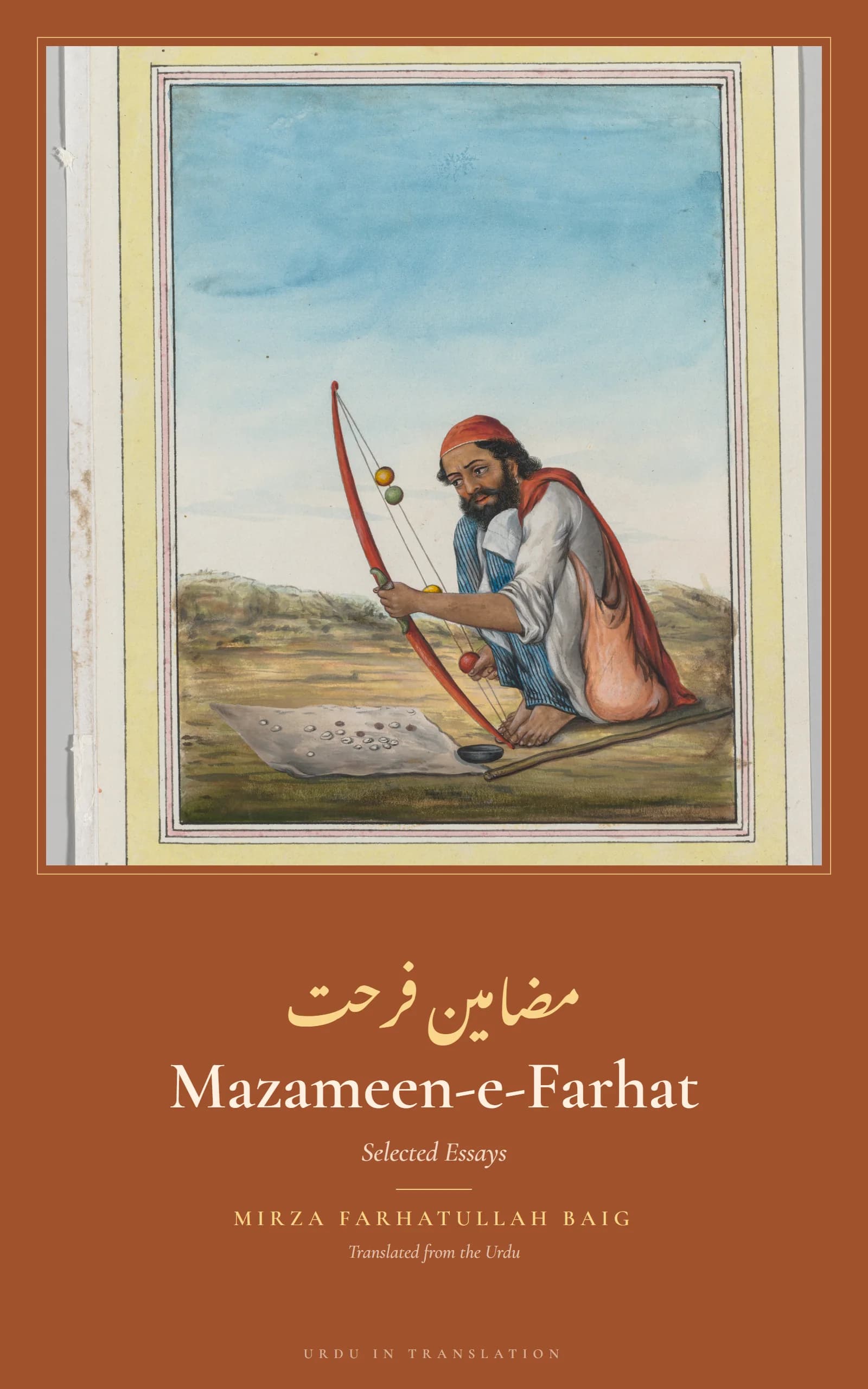
This book gives the Urdu text and a new English translation of eight essays by Mirza Farhatullah Baig (1883–1947), the Delhi humorist who spent most of his working life in Hyderabad. They are taken from the pieces published under his name on Urdu Wikisource. The title, *Mazameen-e-Farhat: Intikhab* ("Farhat's Essays: A Selection"), belongs to this edition; the author's own collected essays appeared in several volumes as *Mazameen-e-Farhat*, but this selection does not follow any one of them.
اس کتاب میں مرزا فرحت اللہ بیگ (۱۸۸۳ء–۱۹۴۷ء) کے آٹھ مضامین کا اردو متن اور ان کا نیا انگریزی ترجمہ شامل ہے۔ مرزا صاحب دہلی کے مزاح نگار تھے جنہوں نے اپنی ملازمت کا بیشتر حصہ حیدرآباد میں گزارا۔ یہ مضامین اردو ویکی ماخذ پر مصنف کے نام سے شائع شدہ صفحات سے لیے گئے ہیں۔ ’’مضامین فرحت: انتخاب‘‘ کا عنوان اسی اشاعت کا ہے؛ مصنف کے مضامین کئی جلدوں میں ’’مضامین فرحت‘‘ کے نام سے چھپے تھے، مگر یہ انتخاب ان میں سے کسی ایک جلد کے مطابق نہیں۔
Source of the Urdu text: Urdu Wikisource (ur.wikisource.org), the author's page مصنف:مرزا فرحت اللہ بیگ, eight pages, downloaded in October 2026. No scan of an early printing has been found on archive.org. Wikisource gives no dates or first printings for these pieces.
اردو متن کا ماخذ: اردو ویکی ماخذ (ur.wikisource.org)، مصنف کا صفحہ مصنف:مرزا فرحت اللہ بیگ، آٹھ صفحات، اکتوبر ۲۰۲۶ء میں حاصل کیے گئے۔ آرکائیو ڈاٹ آرگ پر کسی قدیم اشاعت کا عکس نہیں ملا۔ ویکی ماخذ ان مضامین کی تاریخ یا پہلی اشاعت درج نہیں کرتا۔
What is left out and what was changed: nothing of the author's text has been left out. "Our Examination and Us" was written in two parts, two "sides of the picture"; the Wikisource text gives only the first, with a note by a later compiler saying so. That note is modern editorial matter and is not printed here. The author's own notes, marked "(Author)" or printed at the end of an essay, are kept. In the Wikisource text many paragraph breaks were lost and some verses ran into the prose; these have been restored. Footnote numbers have been put in their places, and obvious misprints have been read in the sense the context requires. Doubtful readings are marked with a translator's note.
کیا چھوڑا گیا اور کیا بدلا گیا: مصنف کی تحریر میں سے کچھ نہیں چھوڑا گیا۔ ’’ہم اور ہمارا امتحان‘‘ دو حصوں میں، تصویر کے دو رخ کے طور پر، لکھا گیا تھا؛ ویکی ماخذ میں صرف پہلا رخ ہے اور ایک بعد کے مرتب کا نوٹ اس کی وضاحت کرتا ہے۔ یہ نوٹ جدید ادارتی اضافہ ہے، اس لیے یہاں شامل نہیں کیا گیا۔ مصنف کے اپنے حاشیے، جن پر ’’(مصنف)‘‘ لکھا ہے یا جو مضمون کے آخر میں ہیں، باقی رکھے گئے ہیں۔ ویکی ماخذ کے متن میں بہت سے پیراگراف آپس میں مل گئے تھے اور کچھ اشعار نثر میں جا ملے تھے؛ انہیں الگ کر دیا گیا ہے۔ حاشیوں کے نمبر اپنی جگہ لگا دیے گئے ہیں، اور واضح غلطیوں کو سیاق و سباق کے مطابق پڑھا گیا ہے۔ مشکوک مقامات پر مترجم کا نوٹ ہے۔
Copyright: Baig died in 1947, so his work is in the public domain in Pakistan and India. "Carrying Out a Will" was written soon after the death of Wahiduddin Salim in 1928; "New Delhi" speaks of the new capital and of Osmania University; "The Editor's Room" names writers of the 1930s. As some pieces may first have been published in 1931 or later and the dates of the others are not known, this edition records its United States status as "check". The English translation is new. Translator's notes are marked [TN: …].
حقوق: مرزا فرحت اللہ بیگ کا انتقال ۱۹۴۷ء میں ہوا، اس لیے ان کی تحریریں پاکستان اور ہندوستان میں عوامی ملکیت میں ہیں۔ ’’ایک وصیت کی تعمیل‘‘ مولوی وحید الدین سلیم کی وفات (۱۹۲۸ء) کے کچھ ہی بعد لکھا گیا؛ ’’نئی دہلی‘‘ میں نئے دارالحکومت اور جامعہ عثمانیہ کا ذکر ہے؛ ’’ایڈیٹر صاحب کا کمرہ‘‘ میں ۱۹۳۰ء کی دہائی کے ادیبوں کے نام ہیں۔ چونکہ بعض مضامین شاید ۱۹۳۱ء یا اس کے بعد پہلی بار چھپے اور باقی کی تاریخیں معلوم نہیں، اس لیے اس اشاعت میں امریکہ میں ان کی قانونی حیثیت ’’جانچ طلب‘‘ درج کی گئی ہے۔ انگریزی ترجمہ نیا ہے۔ مترجم کے نوٹ [TN: …] کی صورت میں ہیں۔
Names are spelled in one way throughout: Farhat (the author), Dilli for the old city in the speech of its people and Delhi elsewhere, Hyderabad, Aurangabad, Chandni Chowk, the Chawri, Mehrauli, the Qutb; Mirza Qamru (Mirza Chhakra), Wahiduddin Salim, Abdul Haq, Nazir Ahmad, Shahid, Rashida, Mahbub.
نام پوری کتاب میں ایک ہی طرح لکھے گئے ہیں: فرحت (مصنف)، پرانے شہر کے لیے اہل شہر کی زبان میں ’’دلی‘‘ اور باقی جگہ ’’دہلی‘‘، حیدرآباد، اورنگ آباد، چاندنی چوک، چاوڑی، مہرولی، قطب؛ مرزا قمرو (مرزا چھکڑا)، وحید الدین سلیم، عبد الحق، نذیر احمد، شاہد، رشیدہ، محبوب۔
Introduction
تعارف
Mirza Farhatullah Baig was born in Delhi in 1883 and studied at St Stephen's College there. As a young man he came under the influence of Deputy Nazir Ahmad, the novelist and translator of the Quran, and his affectionate, comic portrait of his old teacher made his name. In 1908 he went to Hyderabad, where he served the Nizam's government for the rest of his career, in the courts and in the administration, and he died there in 1947. Though he lived far from Delhi, he wrote all his life in the speech of old Delhi, which he loved and recorded.
مرزا فرحت اللہ بیگ ۱۸۸۳ء میں دہلی میں پیدا ہوئے اور وہیں سینٹ اسٹیفنز کالج میں تعلیم پائی۔ جوانی میں ڈپٹی نذیر احمد سے، جو ناول نگار اور قرآن کے مترجم تھے، بہت متاثر ہوئے، اور اپنے استاد کا جو محبت بھرا اور پر مزاح خاکہ انہوں نے لکھا اس نے ان کا نام روشن کیا۔ ۱۹۰۸ء میں حیدرآباد گئے اور ساری عمر نظام کی سرکار میں عدالت اور انتظام کی خدمات انجام دیں۔ وہیں ۱۹۴۷ء میں انتقال کیا۔ دہلی سے دور رہ کر بھی وہ عمر بھر پرانی دلی کی زبان میں لکھتے رہے، جس سے انہیں عشق تھا اور جسے انہوں نے محفوظ کر دیا۔
Baig is one of the masters of Urdu humour. His best-known work, *Dehli ki Akhri Shama* ("The Last Candle of Delhi"), brings back to life a *mushaira* (poetry gathering) held in Mughal Delhi a little before the Revolt of 1857, with Ghalib, Zauq, Momin and the rest reciting in turn. His essays, collected as *Mazameen-e-Farhat*, are written in an easy, talking style, full of the idioms and proverbs of the Delhi household, and they laugh at the follies of family life, the office, the examination hall and the literary world, usually with affection and sometimes with a serious purpose.
مرزا فرحت اللہ بیگ اردو مزاح کے استادوں میں ہیں۔ ان کی سب سے مشہور تحریر ’’دہلی کی آخری شمع‘‘ مغلیہ دہلی کے ایک مشاعرے کو، جو ۱۸۵۷ء سے کچھ پہلے ہوا تھا، پھر سے زندہ کرتی ہے، جس میں غالب، ذوق، مومن اور دوسرے شاعر باری باری کلام سناتے ہیں۔ ان کے مضامین، جو ’’مضامین فرحت‘‘ کے نام سے جمع ہوئے، بے تکلف گفتگو کے انداز میں ہیں، دلی کے گھروں کے محاوروں اور کہاوتوں سے بھرے ہوئے، اور گھریلو زندگی، دفتر، امتحان گاہ اور ادبی دنیا کی کمزوریوں پر ہنستے ہیں، اکثر محبت سے اور کبھی کسی سنجیدہ مقصد کے ساتھ۔
The eight essays here show that range. "The Land of Love" is a fantasy: a grieving friend writes from a village where everyone who arrives falls in love, a place no railway guide can find. "The Servant Boy" is the life story of a foundling brought up to be beaten in a well-to-do house, told in his own voice. "The Editor's Room" is a comic scene in the office of a literary magazine, full of the names of real writers of the day. "The First of the Month" stages the monthly quarrel between husband and wife over the salary, and "Our Examination and Us" is a mock letter to an editor about the miseries of the examination season.
یہاں کے آٹھ مضامین اسی وسعت کو ظاہر کرتے ہیں۔ ’’دیار عشق‘‘ ایک تخیلی کہانی ہے: ایک غم زدہ دوست ایک ایسے گاؤں سے خط لکھتا ہے جہاں جو پہنچتا ہے عاشق ہو جاتا ہے، اور جس کا پتا کسی ریلوے گائیڈ میں نہیں ملتا۔ ’’غلام‘‘ ایک لاوارث لڑکے کی آپ بیتی ہے جو ایک خوش حال گھر میں مار کھانے کے لیے پالا گیا۔ ’’ایڈیٹر صاحب کا کمرہ‘‘ ایک ادبی رسالے کے دفتر کا مزاحیہ منظر ہے جس میں اس زمانے کے سچے ادیبوں کے نام آتے ہیں۔ ’’مہینے کی پہلی تاریخ‘‘ میں تنخواہ پر میاں بیوی کی ماہانہ تکرار ہے، اور ’’ہم اور ہمارا امتحان‘‘ امتحان کے موسم کی مصیبتوں پر ایڈیٹر کے نام ایک مزاحیہ خط ہے۔
Three essays have a graver purpose. "Child Marriage" tells, through an uncle who tried to stop it, how a twelve-year-old girl was married off and fell mortally ill. "New Delhi" records a talk on the steps of the Jama Masjid with an old Delhi gentleman who mourns the city of his youth: its courtesans and their manners, its fairs, its street cries and its language, all lost to riots, police and the new capital. "Carrying Out a Will" is a portrait of the scholar Wahiduddin Salim, who coined many of the technical terms of Urdu at Osmania University; at their first meeting he asked Baig to write about him after his death, and Baig, with laughter and grief, kept his word.
تین مضامین کا مقصد زیادہ سنجیدہ ہے۔ ’’کم سنی کی شادی‘‘ میں ایک چچا، جس نے یہ شادی روکنے کی کوشش کی تھی، بتاتا ہے کہ ایک بارہ برس کی لڑکی کیسے بیاہی گئی اور جان لیوا بیماری میں مبتلا ہو گئی۔ ’’نئی دہلی‘‘ میں جامع مسجد کی سیڑھیوں پر ایک بوڑھے دلی والے سے گفتگو ہے جو اپنی جوانی کے شہر کو روتا ہے: اس کی طوائفیں اور ان کے آداب، اس کے میلے، اس کے سودے والوں کی آوازیں اور اس کی زبان، سب فسادوں، پولیس اور نئے دارالحکومت کی نذر ہو گئے۔ ’’ایک وصیت کی تعمیل‘‘ مولوی وحید الدین سلیم کا خاکہ ہے، جنہوں نے جامعہ عثمانیہ میں اردو کی بہت سی اصطلاحات وضع کیں؛ پہلی ملاقات میں انہوں نے فرمائش کی کہ ان کی موت کے بعد ان پر مضمون لکھا جائے، اور مرزا صاحب نے ہنستے روتے اپنا وعدہ پورا کیا۔
这一章在你心里留下了什么?
登录后参与
讨论
还没有人开口。说说这一章触动了你什么。