Mirza Farhatullah Baig
مرزا فرحت اللہ بیگ
Life1883–1947
Mirza Farhatullah Baig was born in Delhi and studied there, then spent his working life in the service of the state of Hyderabad. He was a pupil of the scholar Nazir Ahmad, whose portrait he drew in a famous memoir.
He is best known for Dilli ki Akhri Shama, a recreation of the last great mushaira of Mughal Delhi, and for his light, affectionate essays on the people and idiom of old Delhi.
Произведения: Mirza Farhatullah Baig
Мазмун (эссе)
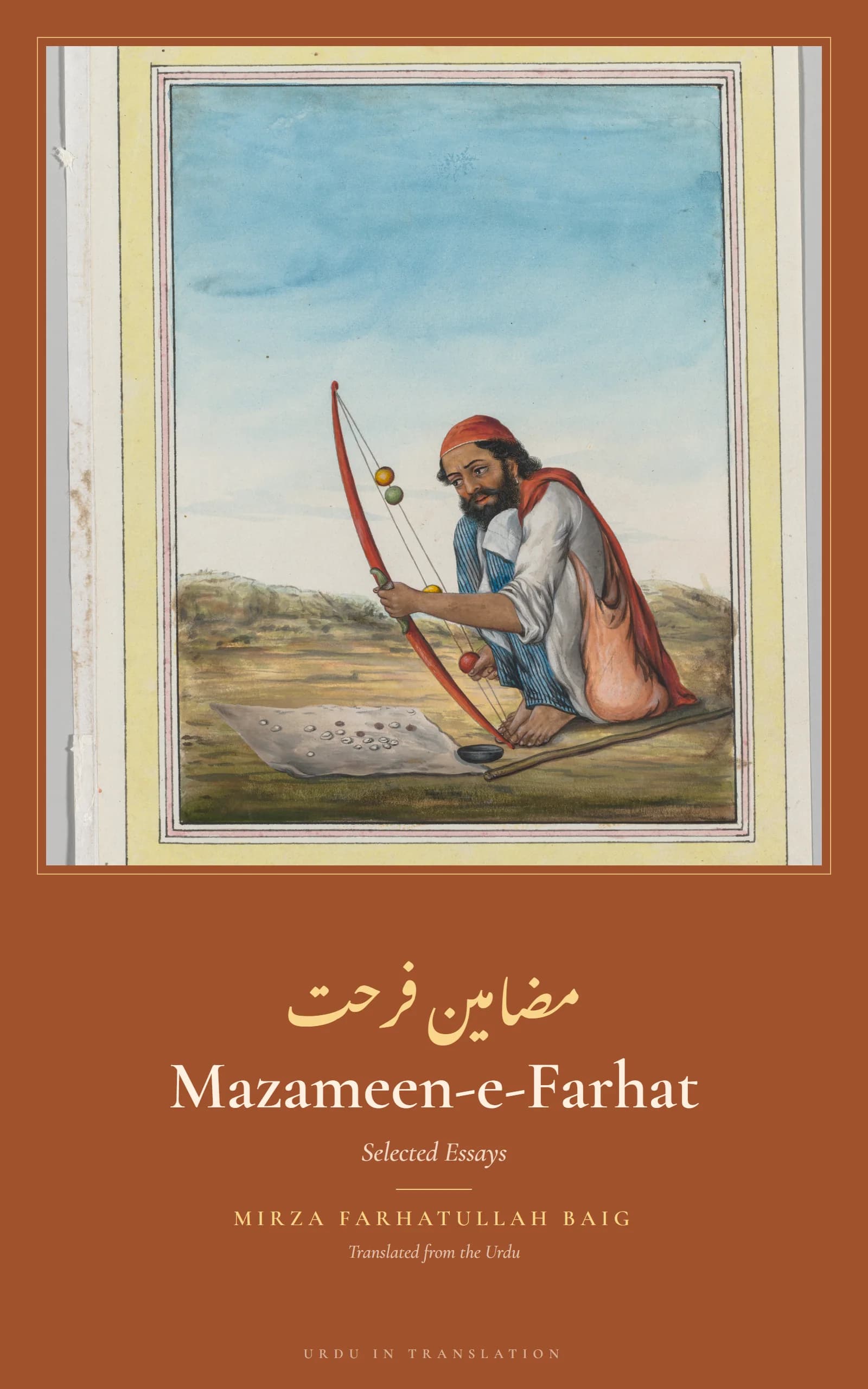
Первые две главы бесплатноMazameen-e-Farhat: Intikhab (Selected Essays of Mirza Farhatullah Baig)
مضامین فرحت: انتخاب
Mirza Farhatullah Baig
Eight essays by Mirza Farhatullah Baig (1883-1947), the Delhi humorist who served the Nizam in Hyderabad and wrote all his life in the speech of old Delhi. A grieving friend writes from a village where every newcomer falls in love, a place no railway guide can find; a foundling tells how he was brought up to be beaten; a literary editor drowns in contributors; husband and wife fight their monthly battle over the salary; a candidate writes to the papers about the miseries of the examination hall; and an uncle tells how his twelve-year-old niece was married off and fell mortally ill. In "New Delhi" an old gentleman on the steps of the Jama Masjid mourns the city of his youth, its courtesans, fairs, street cries and language; and in "Carrying Out a Will" Baig keeps a laughing promise to write the life of the scholar Wahiduddin Salim after his death. Complete Urdu text from Wikisource with a facing English translation, introduction and glossary. Cite as: Mirza Farhatullah Baig, Mazameen-e-Farhat: Intikhab, tr. urduintranslation.com (2026), https://www.urduintranslation.com/works/farhatullah-baig-ke-mazameen. The first two chapters are free to read.
10 главEnglishскоро другие языки
Мазмун (эссе)
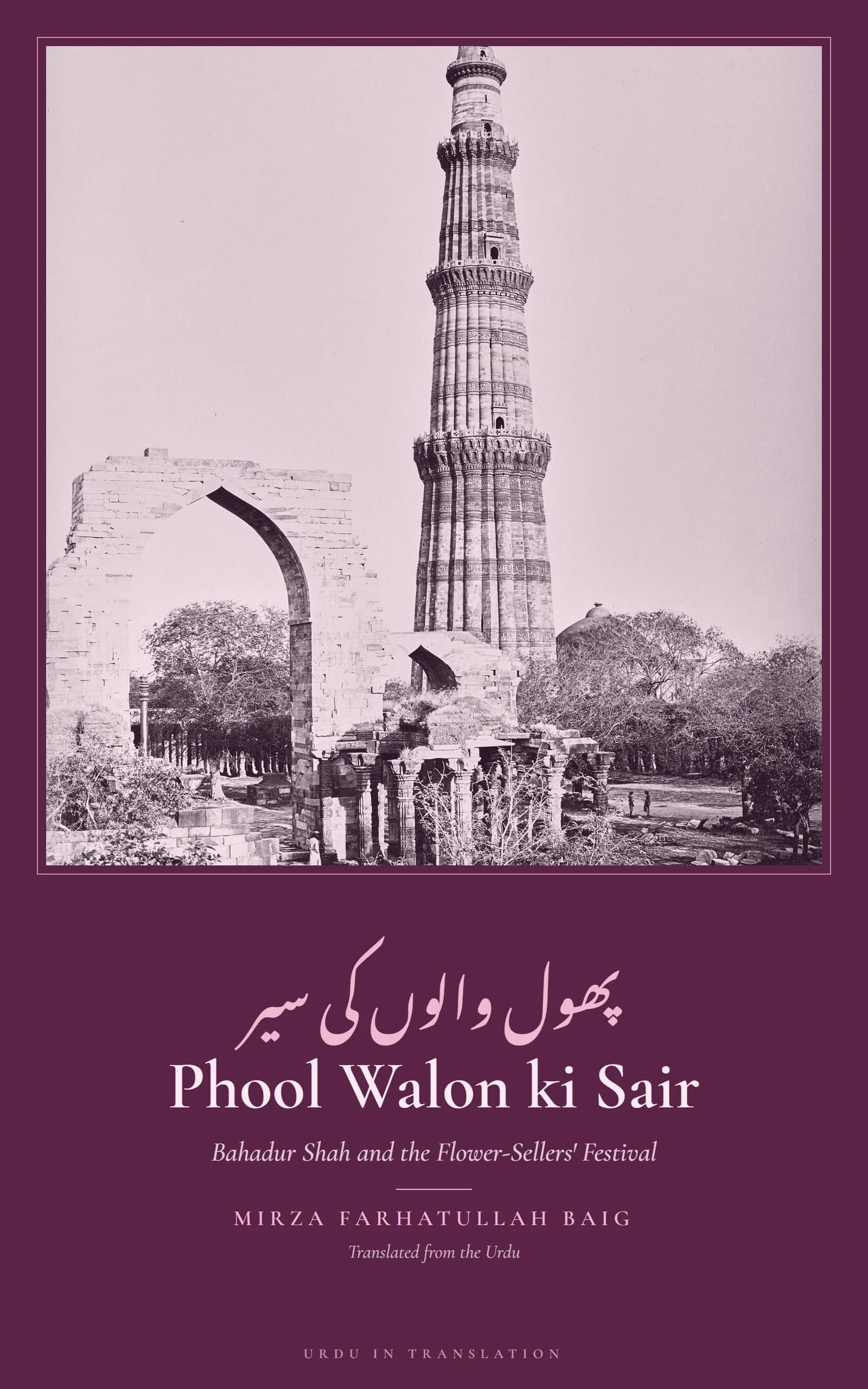
Первые две главы бесплатноBahadur Shah aur Phool Walon ki Sair (Bahadur Shah and the Flower-Sellers' Festival)
بہادر شاہ اور پھول والوں کی سیر
Mirza Farhatullah Baig
Mehrauli, 1848: the last great year, before misfortune overtook him, of Bahadur Shah, the last Mughal emperor, and of the Phool Walon ki Sair, the Flower-Sellers' Festival, in which Hindus and Muslims of Delhi carried fans of flowers to a Sufi shrine and a Hindu temple and the King refused to favour either. Mirza Farhatullah Baig (1883-1947), author of Dehli ki Akhri Shama, brings it back to life from the memories of old women who were there: a city flooded by the monsoon, the night procession of the royal women guarded by armed Turkish, Kalmuck, African and Georgian women, princesses swinging and singing in the mango grove at the Jharna as cakes fry beneath the trees, wrestlers and water-carriers in the procession of the fan, and a naval battle of fireworks on the Shamsi Tank. With the author's sixty-three notes, a small encyclopaedia of the vanished life of the Red Fort. Complete Urdu text with a facing English translation, introduction and glossary. Cite as: Mirza Farhatullah Baig, Bahadur Shah aur Phool Walon ki Sair, tr. urduintranslation.com (2026), https://www.urduintranslation.com/works/phool-walon-ki-sair. The first two chapters are free to read.
8 главEnglishскоро другие языки
Хака (очерк-портрет)
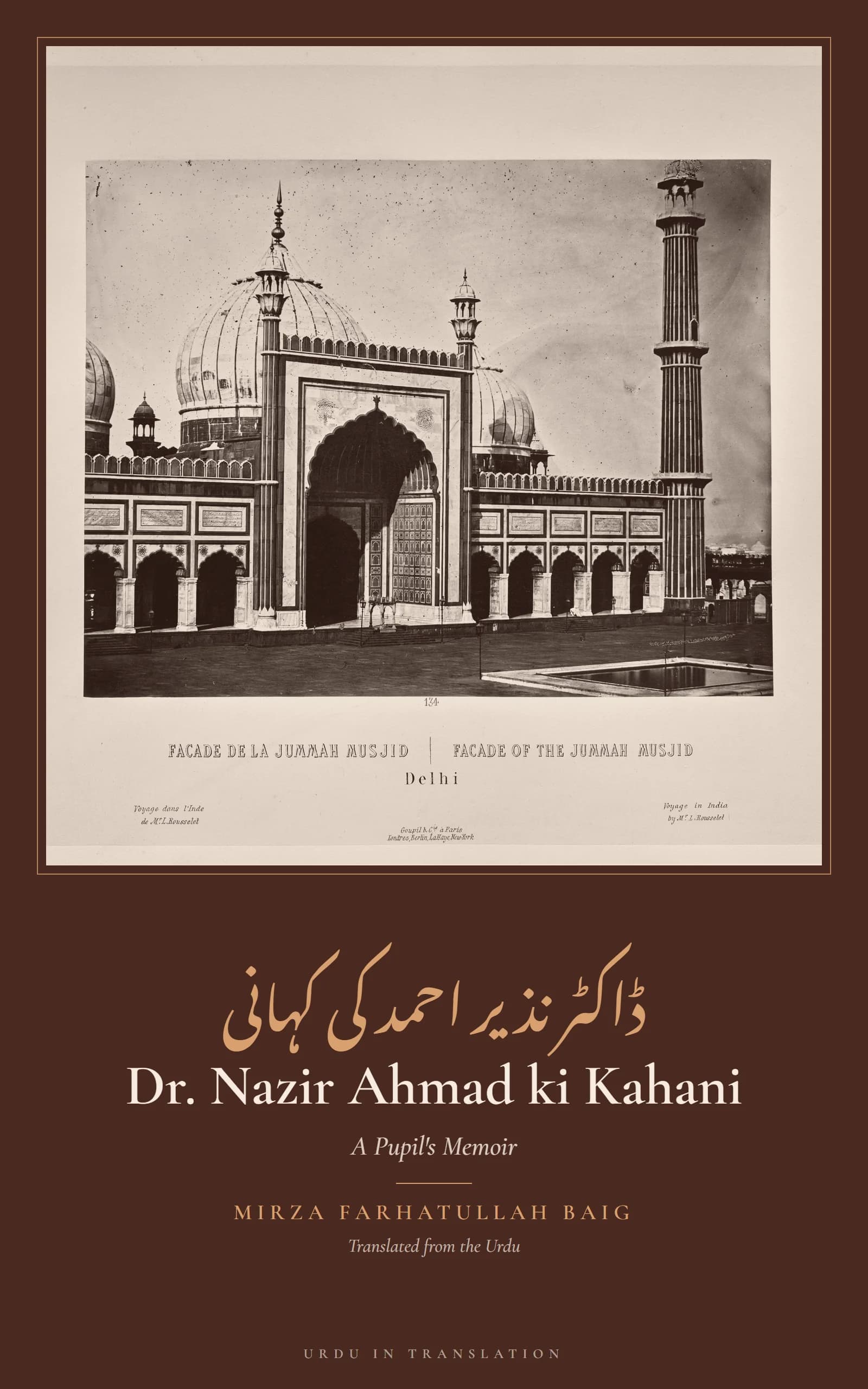
Первые две главы бесплатноDr. Nazir Ahmad ki Kahani (The Story of Dr Nazir Ahmad): A Pupil's Memoir
ڈاکٹر نذیر احمد کی کہانی، کچھ میری اور کچھ ان کی زبانی
Mirza Farhatullah Baig · о: Назир Ахмад
In 1903 two Delhi students, Farhatullah Baig and Ghulam Yazdani, talked their way into private Arabic lessons with the formidable Deputy Nazir Ahmad, author of Mirat-ul-Uroos, scholar, translator of the Indian Penal Code and LL.D. of Edinburgh, and refused to leave even when he threw their book into the courtyard. Twenty-four years later Baig drew this portrait of him: the stout, half-bald old man in his waist-cloth with his harsh hookah, collecting his debts in person and charging his favourite pupils interest, and in his own salty Delhi speech the tales of his life, from a beggar boy reading the Arabic odes in a mosque to the rebel sepoys looting Delhi in 1857, the book written for his daughter that won a government prize, two Edinburgh gowns he never ordered, and an Afghan Amir's crushing embrace. One of the liveliest pen-portraits in Urdu, first published in the journal Urdu in July 1927. Complete Urdu text with a facing English translation, introduction and glossary. Cite as: Mirza Farhatullah Baig, Dr. Nazir Ahmad ki Kahani, tr. urduintranslation.com (2026), https://www.urduintranslation.com/works/nazir-ahmad-ki-kahani. The first two chapters are free to read.
8 главEnglishскоро другие языки
Тазкира
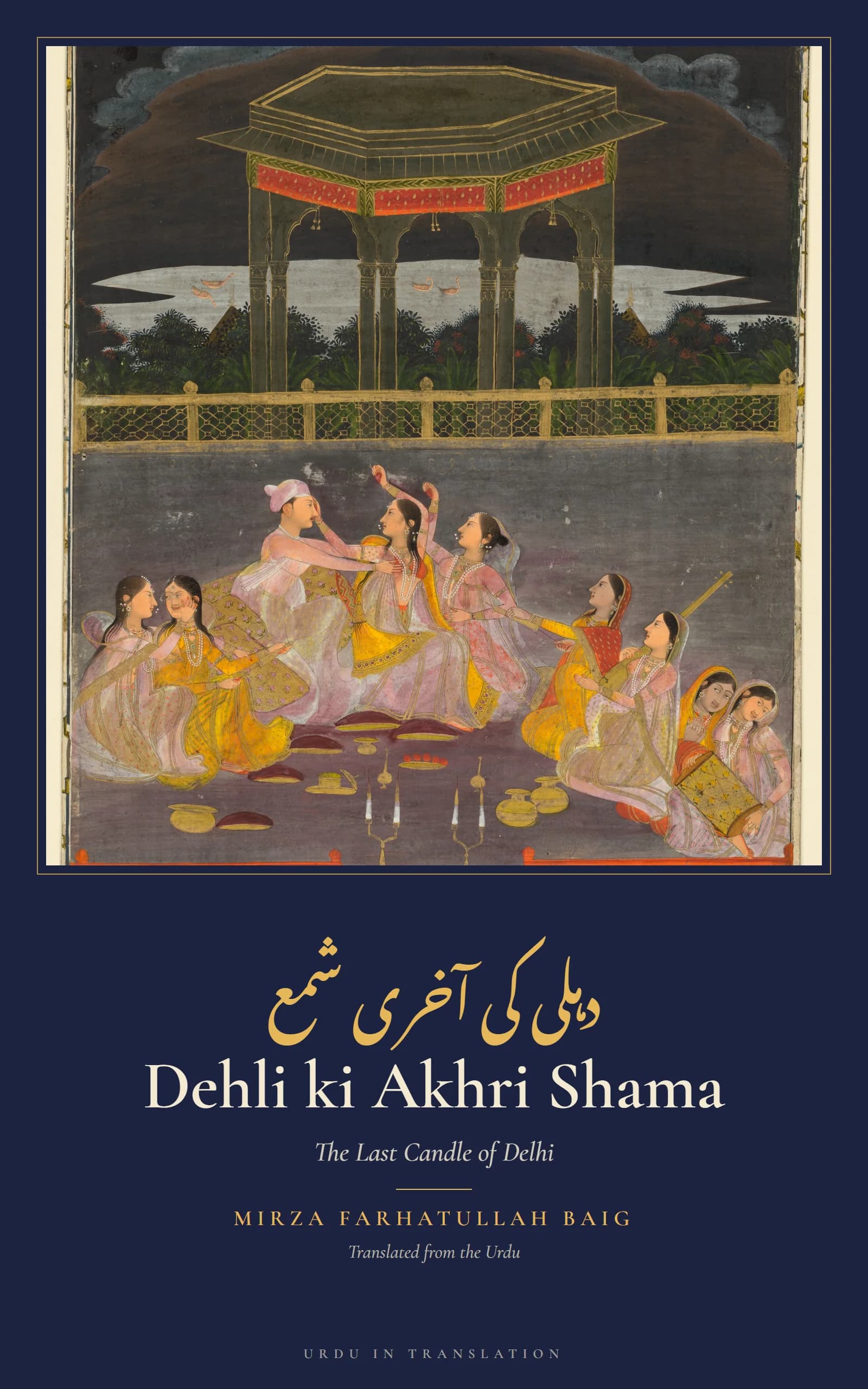
Первые две главы бесплатноDehli ki Akhri Shama (The Last Candle of Delhi): A Royal Mushaira of 1845
دہلی کی آخری شمع
Mirza Farhatullah Baig
Delhi, July 1845. Maulvi Karimuddin, a penniless printer from Panipat, wants to hold a mushaira to save his press, and with the help of a dying young nawab and the Emperor's own son he ends up with the greatest poetry night of the last Mughal age. Mirza Farhatullah Baig (1883-1947) imagines that night candle by candle: Bahadur Shah Zafar's ghazal read out in the notes of raga Sorath, Ghalib slapping his thighs at a good couplet, Momin combing his curls as he recites, Zauq quietly seating the princes, the boy Dagh, the naked mystic Tishna who blows out the candle and walks into the dark saying "nothing at all", the comic Mir Sahib and his endless line, until Zauq reaches the line about the muezzin just as the call to prayer sounds from the mosque next door. Baig drew the faces, dress and manners of dozens of poets from old men who remembered them; within twelve years most were dead and the Red Fort sacked, and the book is both a comedy and an elegy. Complete Urdu text (Urdu Wikisource, checked against the 1938 printing, archive.org dli.ernet.504768) with a facing English translation, introduction, the author's 25 notes and a glossary. Cite as: Mirza Farhatullah Baig, Dehli ki Akhri Shama, tr. urduintranslation.com (2026), https://www.urduintranslation.com/works/dehli-ki-akhri-shama. The first two chapters are free to read.
12 главEnglishскоро другие языки