第 1 章,共 12 章
About This Edition and Introduction
اس اشاعت کے بارے میں اور تعارف
点一个词,乌尔都语或英语,释义即现。选中一个短语可整体查看。
About This Edition
اس اشاعت کے بارے میں
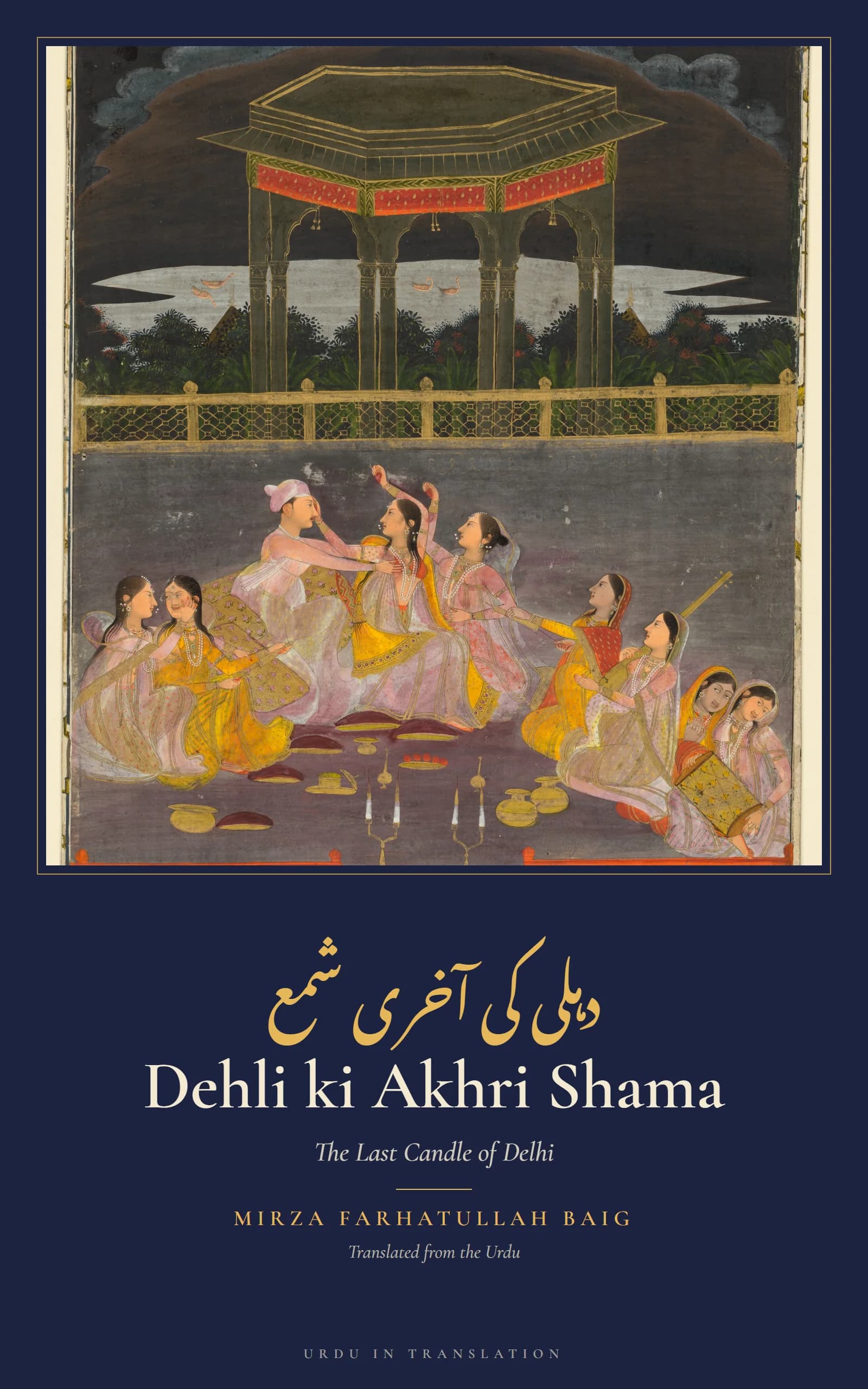
This is the complete Urdu text and an English translation of *Dehli ki Akhri Shama* ("The Last Candle of Delhi") by Mirza Farhatullah Baig (1883–1947), an imagined account of a royal *mushaira* (poetry gathering) held in Delhi in Rajab 1261 of the Hijra, that is, July 1845, in the last years of the Mughal court. The book's subtitle calls it "a memorable royal mushaira of Delhi in 1261 AH, corresponding to 1846 AD"; Baig's own text fixes the date as 14 Rajab, "the twentieth of July by the English calendar", which falls in 1845.
یہ مرزا فرحت اللہ بیگ (۱۸۸۳ء تا ۱۹۴۷ء) کی کتاب "دہلی کی آخری شمع" کا مکمل اردو متن اور انگریزی ترجمہ ہے۔ یہ رجب ۱۲۶۱ھ، یعنی جولائی ۱۸۴۵ء، میں مغل دربار کے آخری زمانے میں دہلی کے ایک شاہی مشاعرے کی تخیلی روداد ہے۔ کتاب کے سرورق پر "۱۲۶۱ ہجری مطابق ۱۸۴۶ عیسوی میں دہلی کا ایک یادگار شاہی مشاعرہ" لکھا ہے، مگر خود متن میں تاریخ ۱۴؍ رجب اور "انگریزی کی ۲۰؍ جولائی" بتائی گئی ہے، جو ۱۸۴۵ء میں پڑتی ہے۔
Source of the Urdu text: the transcription on Urdu Wikisource (ur.wikisource.org, دہلی کی آخری شمع, typed by Usama Ahmad Nadvi for the Adab-e-Aaliya group and edited by Yethrosh and Aijaz Ubaid), checked for this edition against a printed copy of 1938 from the University of Kashmir library, scanned by the Digital Library of India and freely available on the Internet Archive (archive.org/details/dli.ernet.504768). Spot checks found the two in agreement word for word. Baig's text was first published in *Urdu*, the journal of the Anjuman Taraqqi-e-Urdu edited by Maulvi Abdul Haq; one of the notes is signed by the journal's editor.
اردو متن کا ماخذ: اردو ویکی ماخذ (ur.wikisource.org، "دہلی کی آخری شمع") کا متن، جسے ادب عالیہ گروپ کے لیے اسامہ احمد ندوی نے ٹائپ کیا اور Yethrosh اور اعجاز عبید نے مرتب کیا۔ اس اشاعت کے لیے اس کا مقابلہ ۱۹۳۸ء کے ایک مطبوعہ نسخے سے کیا گیا، جو کشمیر یونیورسٹی کے کتب خانے کا ہے اور ڈیجیٹل لائبریری آف انڈیا نے اسکین کیا؛ یہ انٹرنیٹ آرکائیو پر مفت دستیاب ہے (archive.org/details/dli.ernet.504768)۔ جانچ کے مقامات پر دونوں لفظ بہ لفظ یکساں نکلے۔ یہ مضمون پہلی بار انجمن ترقی اردو کے رسالے "اردو" میں چھپا تھا جس کے مدیر مولوی عبد الحق تھے؛ ایک حاشیے کے آخر میں "اڈیٹر رسالہ اردو" لکھا ہے۔
What is left out: nothing of Baig's text. In the print edition the author's notes are footnotes at the bottom of each page, numbered afresh on every page; the digital text lost their markers in the body, so here they are gathered in chapter 11 and numbered 1 to 25 in the order in which they occur. Where the place a note belongs to is clear from its content, the English translation points to it with a translator's note. Baig refers to a plan of the seating "on the next page"; it is not in the digital text and is not reproduced. The chapter divisions follow Baig's five sections (Preface, The Planning, The Arrangement, The Completion, Fate); the two longest sections are divided into chapters at changes of scene, and the chapter titles in the table of contents are new.
جو شامل نہیں: مصنف کے متن میں سے کچھ نہیں چھوڑا گیا۔ مطبوعہ نسخے میں مصنف کے حواشی ہر صفحے کے نیچے ہیں اور ہر صفحے پر ان کی گنتی نئے سرے سے شروع ہوتی ہے؛ ڈیجیٹل متن میں ان کے نشان متن سے نکل گئے، اس لیے یہاں وہ گیارھویں باب میں جمع کیے گئے ہیں اور ترتیب وار ۱ سے ۲۵ تک نمبر دیے گئے ہیں۔ جہاں حاشیے کے مضمون سے اس کا مقام صاف ظاہر ہے، وہاں انگریزی ترجمے میں مترجم کے نوٹ سے اس کی طرف اشارہ کیا گیا ہے۔ مصنف نے "اگلے صفحے" پر نشست کا ایک نقشہ دینے کا ذکر کیا ہے؛ وہ ڈیجیٹل متن میں نہیں ہے اور یہاں شامل نہیں۔ ابواب کی تقسیم مصنف کے پانچ حصوں (تمہید، تدبیر، ترتیب، تکمیل، تقدیر) کے مطابق ہے؛ دو سب سے لمبے حصے منظر بدلنے کی جگہوں پر کئی ابواب میں بانٹے گئے ہیں، اور فہرست میں ابواب کے عنوان نئے ہیں۔
Copyright: Mirza Farhatullah Baig died in 1947, so the work is in the public domain in Pakistan and India. The English translation is new. Translator's notes are marked [TN: …]; Persian verses are translated, with the original kept in the Urdu text on the facing side.
حق اشاعت: مرزا فرحت اللہ بیگ کا انتقال ۱۹۴۷ء میں ہوا، اس لیے یہ تصنیف پاکستان اور ہندوستان میں عوامی ملکیت میں ہے۔ انگریزی ترجمہ نیا ہے۔ مترجم کے نوٹ [TN: …] کی صورت میں ہیں؛ فارسی اشعار کا ترجمہ کیا گیا ہے اور اصل اردو متن میں سامنے موجود ہے۔
Introduction
تعارف
Mirza Farhatullah Baig was born in Delhi in 1883. As a young man he was a pupil of Deputy Nazir Ahmad, the author of *Mirat-ul-Uroos* and *Ibn-ul-Waqt*, and his affectionate portrait of his teacher, *Dr Nazir Ahmad ki Kahani*, made his name. He spent most of his working life in the service of the Nizam of Hyderabad, where he rose to be a judge and where he died in 1947. He is remembered as one of the masters of humorous Urdu prose and, above all, as the writer who kept the idiom of old Delhi alive on the page.
مرزا فرحت اللہ بیگ ۱۸۸۳ء میں دہلی میں پیدا ہوئے۔ جوانی میں ڈپٹی نذیر احمد ("مرأۃ العروس" اور "ابن الوقت" کے مصنف) کے شاگرد رہے، اور اپنے استاد کا محبت بھرا خاکہ "ڈاکٹر نذیر احمد کی کہانی، کچھ میری اور کچھ ان کی زبانی" ان کی شہرت کا سبب بنا۔ عمر کا بڑا حصہ نظام حیدرآباد کی ملازمت میں گزارا، جہاں جج کے عہدے تک پہنچے، اور وہیں ۱۹۴۷ء میں انتقال کیا۔ وہ اردو کی مزاحیہ نثر کے استادوں میں شمار ہوتے ہیں، اور سب سے بڑھ کر اس ادیب کی حیثیت سے یاد کیے جاتے ہیں جس نے پرانی دلی کا روزمرہ کاغذ پر زندہ رکھا۔
*Dehli ki Akhri Shama* is his best-known book. It takes the form of a report by Maulvi Karimuddin of Panipat, a real scholar and printer who in 1848 published *Tabaqat-ush-Shu'ara-e-Hind*, a history of the poets of India, and who, as that book records, did hold a mushaira at his house in Delhi in 1845. Baig keeps Karimuddin as narrator and widens his small gathering into a mushaira at which almost every poet of the last Mughal generation recites: Ghalib, Zauq, Momin, Shefta, Azurda, Sahbai, the young Dagh, the princes of the Red Fort, and a crowd of minor poets, eccentrics and hangers-on. The Emperor Bahadur Shah Zafar sends a ghazal, and his son Mirza Fakhru presides.
"دہلی کی آخری شمع" ان کی سب سے مشہور کتاب ہے۔ یہ پانی پت کے مولوی کریم الدین کی زبانی ایک روداد ہے۔ کریم الدین ایک حقیقی عالم اور مطبع والے تھے جنھوں نے ۱۸۴۸ء میں ہندوستان کے شاعروں کی تاریخ "طبقات الشعرائے ہند" چھاپی، اور جیسا کہ اس کتاب میں درج ہے، ۱۸۴۵ء میں دہلی میں اپنے مکان پر ایک مشاعرہ بھی کیا تھا۔ بیگ نے کریم الدین کو راوی رکھا اور ان کی چھوٹی سی مجلس کو پھیلا کر ایسا مشاعرہ بنا دیا جس میں آخری مغل دور کے تقریباً سب شاعر پڑھتے ہیں: غالب، ذوق، مومن، شیفتہ، آزردہ، صہبائی، نوعمر داغ، لال قلعے کے شہزادے، اور چھوٹے شاعروں، سنکیوں اور طفیلیوں کا ایک ہجوم۔ بادشاہ بہادر شاہ ظفر اپنی غزل بھیجتے ہیں اور ان کے بیٹے مرزا فخرو میر مشاعرہ ہیں۔
Baig says plainly in his preface that the meeting is imagined: he brings together men who may never have met in one room, and he gives some of them ages and circumstances that do not quite fit 1845. What is not imagined is the detail. He collected it, he tells us, from old people who remembered that world, from portraits and from the tazkiras, and he left out any story that anyone contradicted. The result is a gallery of portraits: what each poet looked like, how he dressed, how he sat and recited, how the others received him. Ghalib slaps his thighs at a good couplet and teases the pompous; Momin combs his long hair with his fingers while he recites; Zauq, the King's master, quietly arranges the princes' seating; the naked mystic Tishna blows out the candle and walks out into the night saying "nothing at all". The book ends at dawn, with the call to prayer rising from the mosque next door just as Zauq reaches the line about the muezzin.
بیگ تمہید میں صاف کہتے ہیں کہ یہ مجلس تخیلی ہے: وہ ایسے لوگوں کو جمع کرتے ہیں جو شاید کبھی ایک کمرے میں اکٹھے نہ ہوئے ہوں، اور بعض کی عمریں اور حالات ۱۸۴۵ء سے پوری طرح میل نہیں کھاتے۔ مگر جزئیات تخیلی نہیں۔ وہ بتاتے ہیں کہ یہ سب انھوں نے اس دنیا کو یاد رکھنے والے بڑے بوڑھوں سے، تصویروں سے اور تذکروں سے جمع کیا، اور جس واقعے کی کسی نے تردید کی اسے چھوڑ دیا۔ نتیجہ تصویروں کا ایک مرقع ہے: ہر شاعر کی شکل کیسی تھی، لباس کیسا تھا، کس طرح بیٹھتا اور پڑھتا تھا، دوسرے اسے کس طرح سنتے تھے۔ غالب اچھے شعر پر رانوں پر ہاتھ مارتے ہیں اور خود پسندوں کو چھیڑتے ہیں؛ مومن پڑھتے ہوئے انگلیوں سے اپنی لمبی زلفوں میں کنگھی کرتے ہیں؛ بادشاہ کے استاد ذوق چپکے سے شہزادوں کی نشست کا انتظام کرتے ہیں؛ برہنہ مست تشنہ شمع بجھا کر "کچھ بھی نہیں" کہتے ہوئے رات میں نکل جاتے ہیں۔ کتاب صبح پر ختم ہوتی ہے، جب ذوق مؤذن والے شعر پر پہنچتے ہیں اور ٹھیک اسی وقت برابر کی مسجد سے اذان کی آواز آتی ہے۔
Behind the comedy is grief. Within twelve years of the mushaira most of these men were dead, the Fort was sacked, and the culture Baig describes was gone; the title, *The Last Candle of Delhi*, is an elegy. The book is a standard text in university courses on Urdu prose and on the literary culture of Mughal Delhi, and it is the most vivid introduction there is to the poets of Ghalib's age.
اس ہنسی کے پیچھے غم ہے۔ اس مشاعرے کے بارہ برس کے اندر ان میں سے اکثر لوگ مر چکے تھے، قلعہ لٹ گیا اور وہ تہذیب جس کا بیگ نقشہ کھینچتے ہیں، مٹ گئی؛ کتاب کا نام "دہلی کی آخری شمع" ایک مرثیہ ہے۔ یہ کتاب اردو نثر اور مغل دہلی کی ادبی تہذیب کے یونیورسٹی نصابوں کا معیاری متن ہے، اور غالب کے زمانے کے شاعروں سے تعارف کا اس سے زیادہ زندہ ذریعہ کوئی نہیں۔
How the mushaira works: at a formal mushaira a candle is set before each poet in turn, and he recites when it reaches him. Usually all the poets write ghazals on a *tarah*, a line whose metre, rhyme and refrain are set in advance; at this mushaira, by the King's order, there is no tarah, and two candles go round, one on each side, so that no one need quarrel over the order of reciting.
مشاعرے کا طریقہ: باقاعدہ مشاعرے میں ہر شاعر کے سامنے باری باری شمع رکھی جاتی ہے اور شمع سامنے آنے پر وہ پڑھتا ہے۔ عام طور پر سب شاعر ایک "طرح" پر غزل کہتے ہیں، یعنی ایک مصرع جس کی بحر، قافیہ اور ردیف پہلے سے مقرر ہو؛ اس مشاعرے میں بادشاہ کے حکم سے کوئی طرح نہیں دی گئی، اور دو شمعیں گردش کرتی ہیں، ایک ایک طرف، تاکہ پڑھنے کی تقدیم و تاخیر پر کوئی جھگڑا نہ ہو۔
Names: personal names are given in the usual English spellings (Ghalib, Zauq, Momin, Mirza Fakhru, Bahadur Shah Zafar). "Delhi" is used in the translation; the title keeps Baig's spelling, *Dehli*. Poets are often called by their pen names, which appear in the verse itself; the glossary at the end explains the Urdu and Persian terms kept in the translation.
نام: انگریزی ترجمے میں ذاتی نام عام انگریزی املا میں دیے گئے ہیں (Ghalib، Zauq، Momin، Mirza Fakhru، Bahadur Shah Zafar)۔ ترجمے میں "Delhi" لکھا گیا ہے؛ کتاب کے نام میں مصنف کا املا "Dehli" رکھا گیا ہے۔ شاعروں کو اکثر ان کے تخلص سے پکارا جاتا ہے، جو خود اشعار میں آتا ہے؛ آخر میں فرہنگ ان اردو اور فارسی اصطلاحات کی وضاحت کرتی ہے جو ترجمے میں باقی رکھی گئی ہیں۔
这一章在你心里留下了什么?
登录后参与
讨论
还没有人开口。说说这一章触动了你什么。