Capítulo 1 de 6
About This Edition and Introduction
اس اشاعت کے بارے میں اور تعارف
Toca una palabra, en urdu o en inglés, y aparece su significado. Selecciona una frase para verla entera.
About This Edition
اس اشاعت کے بارے میں
This book gives the Urdu text and a new English translation of sixty *ghazals* (lyric poems) and twelve *nazms* (poems on a single subject) by Seemab Akbarabadi (d. 1951). They are all the poems by Seemab on Urdu Wikisource. The title, *Seemab Akbarabadi ka Kalam* ("Poems of Seemab Akbarabadi"), has been given to this selection by the present edition.
اس کتاب میں سیماب اکبرآبادی (م ۱۹۵۱ء) کی ساٹھ غزلوں اور بارہ نظموں کا اردو متن اور ان کا نیا انگریزی ترجمہ ہے۔ یہ ویکی ماخذ پر سیماب کا پورا کلام ہے۔ کتاب کا نام ’’سیماب اکبرآبادی کا کلام‘‘ اس اشاعت نے اس انتخاب کو دیا ہے۔
Source of the Urdu text: Urdu Wikisource (ur.wikisource.org), the seventy-three pages listed under the author, downloaded in October 2026. The source pages carry no modern editorial matter. Where a line is obscure, the text is printed as found and the translation follows the likeliest sense, with a note.
اردو متن کا ماخذ: اردو ویکی ماخذ (ur.wikisource.org)، مصنف کے تحت درج تہتر صفحات، اکتوبر ۲۰۲۶ء میں حاصل کیے گئے۔ ماخذ کے صفحات پر کوئی جدید ادارتی مواد نہیں۔ جہاں کوئی مصرع مبہم ہے، وہاں متن جیسا ملا ویسا دیا گیا ہے اور ترجمہ قرین قیاس مفہوم کے مطابق ہے، نوٹ کے ساتھ۔
What is left out and what was changed: Wikisource gives the poem on Krishna twice, under two spellings of its title, and it is printed once. The two versions of "The Rains" differ and are both given. Nothing else has been left out. The ghazals are given in the order of the source, which is broadly alphabetical by first line, each headed by its first line; the nazms are gathered in a chapter of their own under their own titles.
کیا چھوڑا گیا اور کیا بدلا گیا: ویکی ماخذ پر کرشن والی نظم عنوان کے دو املا کے ساتھ دو بار ہے؛ وہ ایک بار دی گئی ہے۔ ’’برسات‘‘ کے دونوں روپ مختلف ہیں اور دونوں دیے گئے ہیں۔ اس کے سوا کچھ نہیں چھوڑا گیا۔ غزلیں ماخذ کی ترتیب میں ہیں، جو بڑی حد تک پہلے مصرع کے لحاظ سے حروف تہجی کی ترتیب ہے، اور ہر ایک کا عنوان اس کا پہلا مصرع ہے؛ نظمیں اپنے اپنے عنوان کے ساتھ الگ باب میں جمع کی گئی ہیں۔
Copyright: Seemab Akbarabadi died in 1951, so his poems are in the public domain in Pakistan and India. The English translation is new. Translator's notes are marked [TN: …]. The translation keeps each line of verse as a line, and puts accuracy before rhyme. The pen name Seemab is kept as a name; it means "quicksilver".
حق اشاعت: سیماب اکبرآبادی کا انتقال ۱۹۵۱ء میں ہوا، اس لیے ان کا کلام پاکستان اور بھارت میں پبلک ڈومین میں ہے۔ انگریزی ترجمہ نیا ہے۔ مترجم کے نوٹ [TN: …] سے ظاہر کیے گئے ہیں۔ ترجمے میں ہر مصرع الگ سطر میں رکھا گیا ہے، اور صحت کو قافیے پر مقدم رکھا گیا ہے۔ تخلص سیماب نام کے طور پر رکھا گیا ہے؛ اس کے معنی پارے کے ہیں۔
Names are spelled in one way throughout: Agra, India, the Ganges, the Jamuna, Braj, Gokul, Najd, Sinai; Moses, Joseph, Zulaikha, Qais, Laila, Mansur, Jamshed, Korah; Krishna, Gautam Buddha.
ترجمے میں نام ایک ہی طرح لکھے گئے ہیں: آگرہ، ہند، گنگا، جمنا، برج، گوکل، نجد، طور؛ موسیٰ، یوسف، زلیخا، قیس، لیلیٰ، منصور، جمشید، قارون؛ کرشن، گوتم بدھ۔
Introduction
تعارف
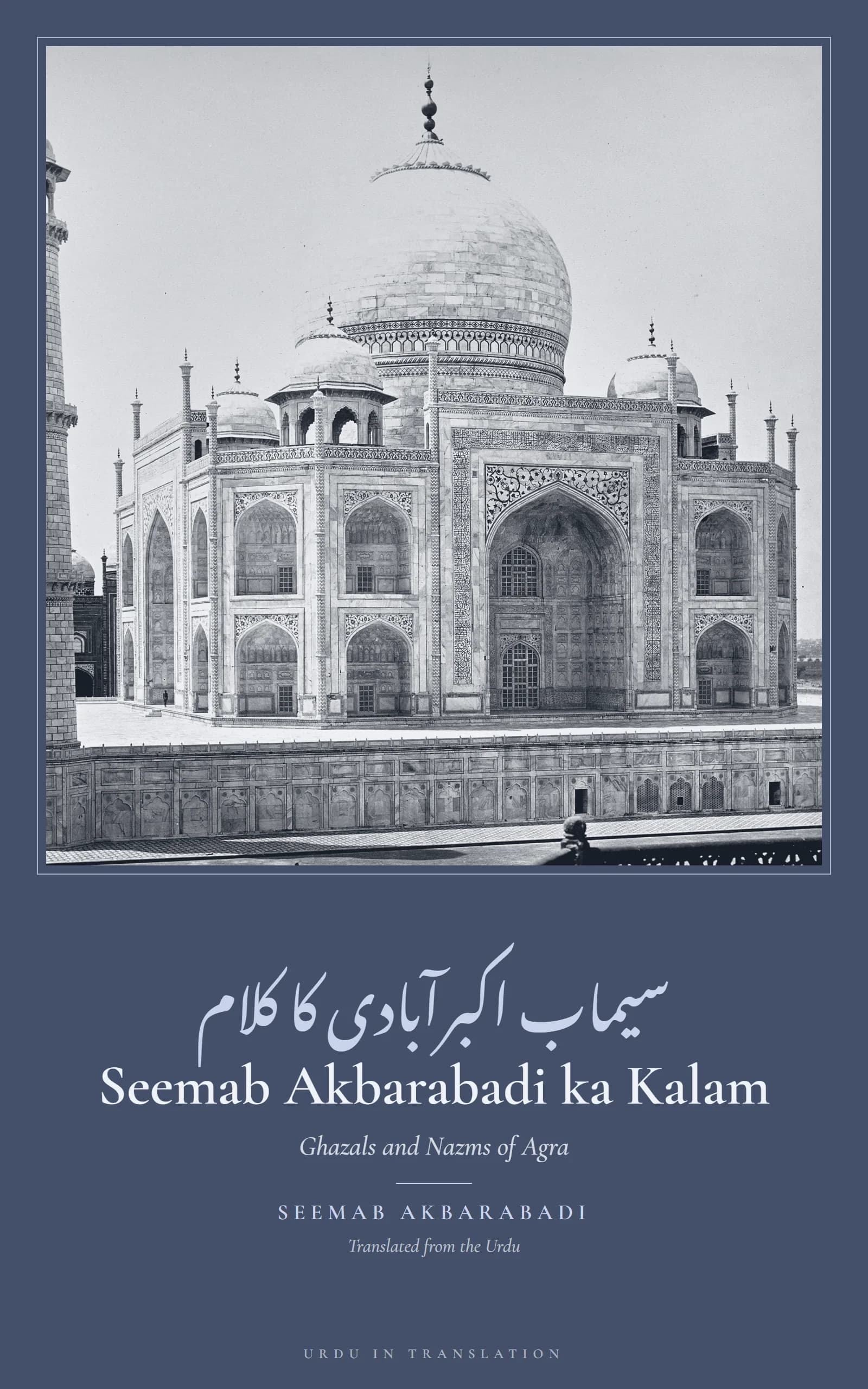
Ashiq Husain, who wrote as Seemab, was a poet of Agra, the city of the Taj on the Jamuna, and a pupil of Daagh Dehlavi; he died in 1951. One ghazal closes with a lament for the poets of his city who had gone before him, "little by little, Seemab, Agra has become empty", and another tells of putting the Holy Quran into verse.
عاشق حسین، جو سیماب تخلص کرتے تھے، جمنا کنارے تاج والے شہر آگرہ کے شاعر اور داغ دہلوی کے شاگرد تھے؛ ۱۹۵۱ء میں ان کا انتقال ہوا۔ ایک غزل اپنے شہر کے گزرے ہوئے شاعروں کے ماتم پر ختم ہوتی ہے: ’’رفتہ رفتہ آگرہ سیمابؔ سونا ہو گیا‘‘، اور ایک اور میں وہ قرآن مجید کو نظم کرنے کا ذکر کرتے ہیں۔
His ghazals keep the classical figures, the moth and the candle, the cage and the nest, Sinai and the White Hand, but they turn them toward questions of the self: "I found the goal, I found my wish, I found my purpose: I found everything when I found your footprint," and "When I passed beyond the bounds of the self, I found God." Unity behind difference is a recurring theme, as in the couplet where the Brahmin says "Brahm", the shaikh says "Ahad", and a quarrel arises from a twist of one word.
ان کی غزلیں کلاسیکی تصویریں برقرار رکھتی ہیں، پروانہ اور شمع، قفس اور آشیاں، طور اور ید بیضا، مگر انہیں خودی کے سوالوں کی طرف موڑ دیتی ہیں: ’’منزل ملی مراد ملی مدعا ملا، سب کچھ مجھے ملا جو ترا نقش پا ملا‘‘، اور ’’گزرا میں جب حدود خودی سے خدا ملا‘‘۔ اختلاف کے پیچھے وحدت ایک بار بار آنے والا موضوع ہے، جیسے اس شعر میں جہاں برہمن ’’برہم‘‘ کہتا ہے، شیخ ’’احد‘‘ بول اٹھتا ہے، اور حرف کے ایک پھیر سے جھگڑا ہو جاتا ہے۔
The nazms show a wider range: verses for children on the rains, the firefly and the evening prayer; a mother's lullaby; songs of the homeland; poems on Krishna, on Gautam Buddha and on Holi; and a stark picture of a labourer bent under his load, ending, "Look, you blind serpent of wealth, this is the labourer."
نظمیں ایک وسیع تر دائرہ دکھاتی ہیں: بچوں کے لیے برسات، جگنو اور شام کی دعا پر نظمیں؛ ماں کی لوری؛ وطن کے گیت؛ کرشن، گوتم بدھ اور ہولی پر نظمیں؛ اور بوجھ تلے جھکے ہوئے مزدور کی ایک سخت تصویر، جو یوں ختم ہوتی ہے: ’’دیکھ اے دولت کے اندھے سانپ یہ مزدور ہے‘‘۔
¿Qué te deja este capítulo?
Inicia sesión para reaccionar
Conversación
Nadie ha hablado todavía. Cuenta qué removió en ti este capítulo.