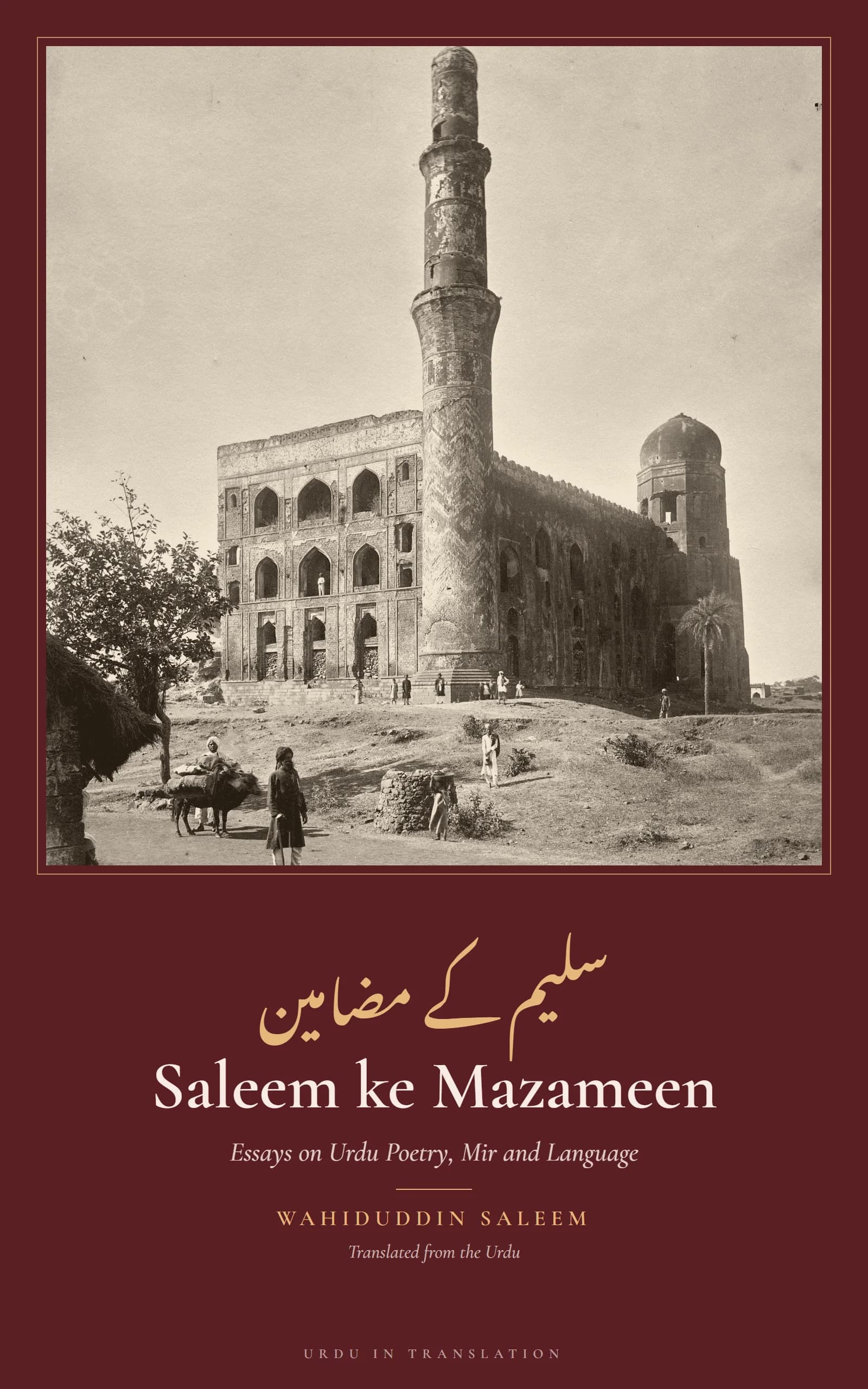
Chapter 1 of 10
About This Edition and Introduction
اس اشاعت کے بارے میں اور تعارف
Tap a word, Urdu or English, and its meaning appears. Select a phrase to see it whole.
About This Edition
اس اشاعت کے بارے میں
This book gives the Urdu text and a new English translation of seven essays and six poems by Wahiduddin Saleem (1869–1927). The essays are "The Study of Urdu Poetry", "True Poetry", "The Language of Mir's Age", "The Poetry of Mir", "How Did Man First Begin to Speak?", "The Champions of Hindi and Their Fallacy" and "Why Women's Adornment Is Necessary"; the poems are four *nazms* (poems on a single theme) and two *ghazals* (lyric poems). The title, *Saleem ke Mazameen* ("Essays of Saleem"), has been given to this selection by the present edition.
اس کتاب میں وحید الدین سلیم (۱۸۶۹ء–۱۹۲۷ء) کے سات مضامین اور چھ نظموں کا اردو متن اور ان کا نیا انگریزی ترجمہ شامل ہے۔ مضامین یہ ہیں: ’’اردو شاعری کا مطالعہ‘‘، ’’سچی شاعری‘‘، ’’عہد میر کی زبان‘‘، ’’میر کی شاعری‘‘، ’’انسان نے اول اول بولنا کیونکر شروع کیا؟‘‘، ’’حامیان ہندی اور ان کا مغالطہ‘‘ اور ’’عورتوں کا بناؤ سنگھار کیوں ضروری ہے؟‘‘؛ نظموں میں چار نظمیں اور دو غزلیں ہیں۔ ’’سلیم کے مضامین‘‘ کا عنوان اس اشاعت نے اس انتخاب کو دیا ہے۔
Source of the Urdu text: Urdu Wikisource (ur.wikisource.org), the pages listed under the author, downloaded in October 2026 and marked {{PD-India}}. Wikisource does not say from which printed collections the texts were taken. Two long pieces on Wikisource are left for a possible second volume: "The Poetry of Arabia" and *Talmihat*, a dictionary of the allusions of Urdu and Persian poetry.
اردو متن کا ماخذ: اردو ویکی ماخذ (ur.wikisource.org)، مصنف کے تحت درج صفحات، اکتوبر ۲۰۲۶ء میں حاصل کیے گئے، جن پر {{PD-India}} درج ہے۔ ویکی ماخذ پر یہ نہیں بتایا گیا کہ یہ متن کن مطبوعہ مجموعوں سے لیے گئے۔ ویکی ماخذ کی دو طویل تحریریں ممکنہ دوسری جلد کے لیے چھوڑ دی گئی ہیں: ’’عرب کی شاعری‘‘ اور ’’تلمیحات‘‘، جو اردو اور فارسی شاعری کی تلمیحات کی فرہنگ ہے۔
What is left out and what was changed: nothing has been left out of the pieces that are given, and the source pages carry no modern editorial matter. "The Study of Urdu Poetry" ends on Wikisource with a run of quotations from modern poems, without a closing paragraph, and it is printed so here. Verses quoted in the essays are set out a couplet to a block. The poem "In the Words of Beauty" is printed in its stanzas of five lines. A few doubtful readings of the source are kept and explained in notes, for example *dagha* (betrayal), probably for *sana* (praise), in a stanza of a marsiya, and *darta* (fears), probably for *larta* (fights), in the essay on adornment.
کیا چھوڑا گیا اور کیا بدلا گیا: شامل تحریروں میں سے کچھ نہیں چھوڑا گیا، اور ماخذ کے صفحات پر کوئی جدید ادارتی مواد نہیں۔ ’’اردو شاعری کا مطالعہ‘‘ ویکی ماخذ پر جدید نظموں کے اقتباسات کے ایک سلسلے پر ختم ہوتا ہے، کوئی اختتامی پیراگراف نہیں، اور یہاں بھی اسی طرح چھپا ہے۔ مضامین میں نقل کیے گئے اشعار ایک شعر ایک بند کے حساب سے لکھے گئے ہیں۔ نظم ’’حسن کی زبان سے‘‘ اپنے پانچ پانچ مصرعوں کے بندوں میں چھاپی گئی ہے۔ ماخذ کی چند مشکوک قراءتیں برقرار رکھی گئی ہیں اور نوٹوں میں ان کی وضاحت کی گئی ہے، مثلاً ایک مرثیے کے بند میں ’’دغا‘‘، جو غالباً ’’ثنا‘‘ ہے، اور بناؤ سنگھار والے مضمون میں ’’ڈرتا‘‘، جو غالباً ’’لڑتا‘‘ ہے۔
Copyright: Wahiduddin Saleem died in 1927, so his writings are in the public domain in Pakistan and India. "The Champions of Hindi" was written in 1900, but some of the other essays are later, and their first publication dates should be checked for the United States. The English translation is new. Translator's notes are marked [TN: …]. Persian quotations are translated, with a note that the original is Persian. In the essays on language, Urdu and Persian examples are given in transliteration with their meaning in brackets.
حقوق: وحید الدین سلیم کا انتقال ۱۹۲۷ء میں ہوا، اس لیے ان کی تحریریں پاکستان اور ہندوستان میں پبلک ڈومین میں ہیں۔ ’’حامیان ہندی‘‘ ۱۹۰۰ء میں لکھا گیا، مگر بعض دوسرے مضامین بعد کے ہیں، اور امریکہ کے لیے ان کی پہلی اشاعت کی تاریخوں کی تصدیق ہونی چاہیے۔ انگریزی ترجمہ نیا ہے۔ مترجم کے نوٹ [TN: …] سے ظاہر کیے گئے ہیں۔ فارسی اقتباسات کا ترجمہ کیا گیا ہے اور نوٹ میں بتایا گیا ہے کہ اصل فارسی ہے۔ زبان کے مضامین میں اردو اور فارسی مثالیں انگریزی حروف میں لکھی گئی ہیں اور قوسین میں ان کے معنی دیے گئے ہیں۔
Names are spelled in one way throughout: Mir (Mir Taqi Mir), Sauda, Wali, Dard, Mazhar (Mirza Mazhar Jan-e-Janan), Insha, Mushafi, Nasikh, Atish, Zauq, Ghalib, Momin, Dagh, Amir Minai, Hali, Iqbal, Akbar Allahabadi, Anis; Delhi, Lucknow, Agra, Oudh, the United Provinces.
نام ہر جگہ ایک ہی طرح لکھے گئے ہیں: میر (میر تقی میر)، سودا، ولی، درد، مظہر (مرزا مظہر جان جاناں)، انشا، مصحفی، ناسخ، آتش، ذوق، غالب، مومن، داغ، امیر مینائی، حالی، اقبال، اکبر الہ آبادی، انیس؛ دلی، لکھنؤ، آگرہ، اودھ، صوبجات متحدہ۔
Introduction
تعارف
Wahiduddin Saleem was born in Panipat, the town of Hali, in 1869, and grew up in the circle of the reformers of Aligarh. He worked for a time with Sir Syed Ahmad Khan, edited Urdu journals and newspapers, among them the *Muslim Gazette* of Lucknow, which he mentions in "The Study of Urdu Poetry", and spent his last years in Hyderabad, where he taught Urdu at the new Osmania University and worked on the coining of Urdu technical terms for its translation bureau. He died in Hyderabad in 1927. He wrote verse as well as prose; his poems were collected after his death.
وحید الدین سلیم ۱۸۶۹ء میں حالی کے شہر پانی پت میں پیدا ہوئے اور علی گڑھ کے مصلحین کے حلقے میں پروان چڑھے۔ انہوں نے کچھ عرصہ سر سید احمد خاں کے ساتھ کام کیا، اردو رسالوں اور اخباروں کی ادارت کی، جن میں لکھنؤ کا ’’مسلم گزٹ‘‘ بھی ہے جس کا ذکر وہ ’’اردو شاعری کا مطالعہ‘‘ میں کرتے ہیں، اور آخری برس حیدرآباد میں گزارے، جہاں نئی جامعہ عثمانیہ میں اردو پڑھائی اور اس کے دار الترجمہ کے لیے اردو اصطلاحات وضع کرنے کا کام کیا۔ ۱۹۲۷ء میں حیدرآباد میں ان کا انتقال ہوا۔ وہ نثر کے ساتھ شعر بھی کہتے تھے؛ ان کا کلام ان کی وفات کے بعد جمع کیا گیا۔
The essays in this book show the range of his interests. "The Study of Urdu Poetry" is a short guide to reading the whole of Urdu verse, from Wali to Iqbal, by its language, its themes and the mind of the poet; it contains his sharp criticism of the ghazal, in which, he argues, the rhyme comes before the idea, and his answer to Hali's defence of the poet's contradictions. "True Poetry" calls for poetry that serves morals, as Rumi said, "a part of prophethood". "The Language of Mir's Age" and "The Poetry of Mir" study the speech and grammar of eighteenth-century Delhi and the proud, patient character of Mir as it shows in his verse.
اس کتاب کے مضامین ان کی دلچسپیوں کی وسعت دکھاتے ہیں۔ ’’اردو شاعری کا مطالعہ‘‘ ولی سے اقبال تک پوری اردو شاعری کو اس کی زبان، اس کے مضامین اور شاعر کی ذہنیت کے لحاظ سے پڑھنے کی ایک مختصر رہنمائی ہے؛ اس میں غزل پر ان کی تیز تنقید ہے، جس میں ان کے بقول قافیہ خیال پر مقدم ہو جاتا ہے، اور شاعر کے تناقض کے بارے میں حالی کی توجیہ کا جواب بھی۔ ’’سچی شاعری‘‘ ایسی شاعری کا مطالبہ کرتا ہے جو اخلاق کی خدمت کرے، جیسا کہ رومی نے کہا، ’’پیغمبری کا جز‘‘۔ ’’عہد میر کی زبان‘‘ اور ’’میر کی شاعری‘‘ اٹھارہویں صدی کی دلی کی زبان اور قواعد، اور میر کے خوددار اور صابر مزاج کا، جیسا وہ ان کے کلام میں جھلکتا ہے، مطالعہ ہیں۔
"How Did Man First Begin to Speak?" introduces Urdu readers to the debate of European scholars on the origin of language, from Locke and Condillac to Max Müller and Whitney, and argues for the theory of imitation and natural cries. "The Champions of Hindi and Their Fallacy" was written in 1900, when the Government of the North-Western Provinces and Oudh under Sir Antony MacDonnell ordered the use of the Nagari script in the courts; it states the case of the defenders of Urdu, and its strong language about Hindi belongs to that controversy. "Why Women's Adornment Is Necessary" is a light essay in praise of the care women take of their looks.
’’انسان نے اول اول بولنا کیونکر شروع کیا؟‘‘ اردو قارئین کو زبان کی ابتدا پر یورپی علما کی بحث سے، لاک اور کانڈی لاک سے میکس مولر اور ہوٹنی تک، روشناس کراتا ہے اور نقل اور طبعی آوازوں کے نظریے کی حمایت کرتا ہے۔ ’’حامیان ہندی اور ان کا مغالطہ‘‘ ۱۹۰۰ء میں لکھا گیا، جب سر انٹونی میکڈانل کے زمانے میں اضلاع شمال و مغرب و اودھ کی حکومت نے عدالتوں میں ناگری حروف جاری کرنے کا حکم دیا؛ اس میں حامیان اردو کا موقف بیان ہوا ہے، اور ہندی کے بارے میں اس کی سخت زبان اسی تنازع کا حصہ ہے۔ ’’عورتوں کا بناؤ سنگھار کیوں ضروری ہے؟‘‘ ایک ہلکا پھلکا مضمون ہے جو عورتوں کی اپنی صورت کی دیکھ بھال کی تعریف میں ہے۔
The poems include "A Call to Revolution", a short call to the young to rise, "The First Coming of the Aryans to India", a picture of the land as the first travellers saw it, "In the Words of Beauty", in which Beauty speaks of itself as the reflection of God in the world, and "Life", on life hidden even in death; two ghazals end the selection.
نظموں میں ’’دعوت انقلاب‘‘ ہے، نوجوانوں کو اٹھنے کی ایک مختصر دعوت؛ ’’آریوں کی پہلی آمد ہندوستان میں‘‘، اس سرزمین کی تصویر جیسی پہلے مسافروں نے اسے دیکھا؛ ’’حسن کی زبان سے‘‘، جس میں حسن اپنے آپ کو دنیا میں خدا کا عکس کہتا ہے؛ اور ’’زندگی‘‘، موت میں بھی پوشیدہ زندگی پر؛ دو غزلیں انتخاب کو ختم کرتی ہیں۔
What did this chapter leave with you?
Sign in to react
Discussion
No one has spoken yet. Say what this chapter stirred in you.