Chapitre 1 sur 10
About This Edition and Introduction
اس اشاعت کے بارے میں اور تعارف
Touchez un mot, en ourdou ou en anglais : son sens apparaît. Sélectionnez une phrase pour la voir entière.
About This Edition
اس اشاعت کے بارے میں
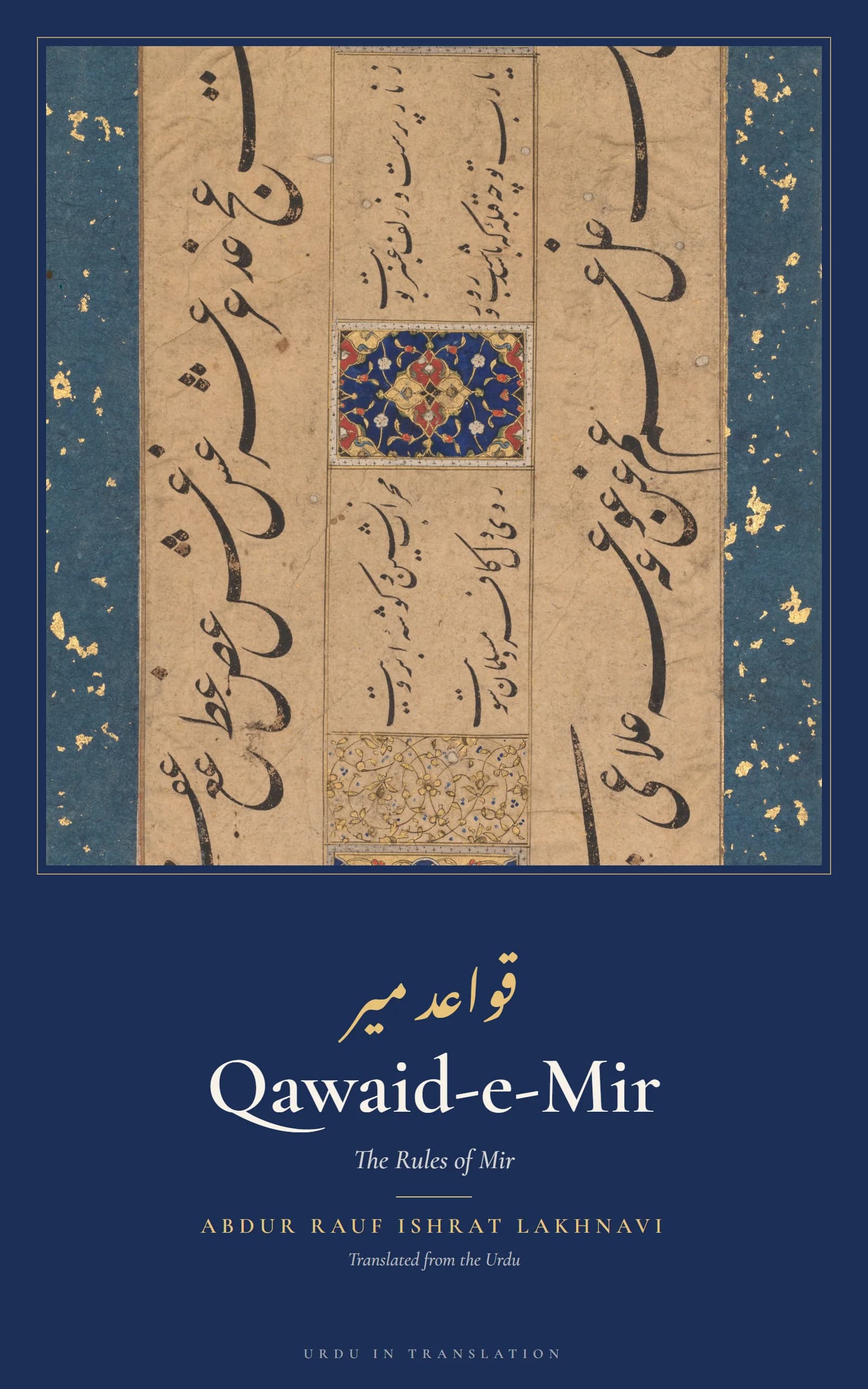
This book gives the complete Urdu text and a new English translation of *Qawaid-e-Mir* (The Rules of Mir) by Khwaja Muhammad Abdur Rauf Ishrat of Lucknow. It is a short handbook of Urdu usage: the infinitive, the plural, gender, the adjective, figurative speech, the difference between word, convention, everyday speech and idiom, and the propriety of speech. In his preface the author says that these rules came down "from breast to breast" from the poet Mir Taqi Mir, and he offers the book as a service to the Osmania University founded by Mir Osman Ali Khan, ruler of the Deccan.
اس کتاب میں خواجہ محمد عبد الرؤوف عشرت لکھنوی کی کتاب "قواعد میر" کا پورا اردو متن اور اس کا نیا انگریزی ترجمہ دیا گیا ہے۔ یہ اردو زبان کے قواعد کی ایک مختصر کتاب ہے: مصدر، جمع، تذکیر و تانیث، اسم صفت، مجاز و استعارہ، لغت، اصطلاح، روزمرہ اور محاورے کا فرق، اور ادب کلام۔ دیباچے میں مصنف کہتے ہیں کہ یہ قواعد میر تقی میر سے سینہ بسینہ ان تک پہنچے، اور وہ یہ کتاب والی دکن میر عثمان علی خاں کی قائم کردہ عثمانیہ یونیورسٹی کی خدمت میں پیش کرتے ہیں۔
Source of the Urdu text: Urdu Wikisource (ur.wikisource.org), the book "قواعد میر" and its eight sections, from the preface to the chapter on propriety of speech, taken from the Wikimedia dump of October 2026. The Wikisource contents page lists these eight sections as the whole book.
اردو متن کا ماخذ: اردو ویکی ماخذ (ur.wikisource.org) پر کتاب "قواعد میر" اور اس کے آٹھ حصے، دیباچے سے ادب کلام تک، اکتوبر 2026ء کے ویکی میڈیا ڈمپ سے۔ ویکی ماخذ کی فہرست میں یہی آٹھ حصے پوری کتاب کے طور پر درج ہیں۔
What is left out and what was changed: the whole of the author's text is given in his order, with his examples and verses. The Wikisource page headers and the short Wikisource note on the contents page are left out. Each of the author's eight sections is a chapter here, with the author's own titles; the subheadings inside the chapters (such as "Unreal Nouns" and "Abstract Nouns from Adjectives") are also his. Nothing modern has been added to the Urdu.
کیا چھوڑا گیا اور کیا بدلا گیا: مصنف کا پورا متن اسی ترتیب سے، مثالوں اور اشعار سمیت دیا گیا ہے۔ ویکی ماخذ کے سرنامے اور فہرست کے صفحے کا مختصر نوٹ چھوڑ دیے گئے ہیں۔ مصنف کا ہر حصہ یہاں ایک باب ہے اور عنوان مصنف کے اپنے ہیں؛ ابواب کے اندر کے ذیلی عنوان (جیسے "اسمائے غیر حقیقی" اور "حاصل صفت") بھی انھی کے ہیں۔ اردو متن میں کوئی جدید اضافہ نہیں کیا گیا۔
Copyright: Abdur Rauf Ishrat died in 1940; works of Urdu authors who died in 1961 or earlier are out of copyright in Pakistan and India. The English translation, this introduction and the glossary are new.
حق اشاعت: عبد الرؤوف عشرت کا انتقال 1940ء میں ہوا؛ جن اردو مصنفین کا انتقال 1961ء یا اس سے پہلے ہوا ان کی تصانیف پاکستان اور ہندوستان میں حق اشاعت سے آزاد ہیں۔ انگریزی ترجمہ، یہ تعارف اور فرہنگ نئے ہیں۔
Translation: the English follows the Urdu sentence by sentence. Since the whole book is about Urdu words and forms, the Urdu examples are kept in italics in transliteration, each with a short English gloss, and the author's grammatical terms are glossed the first time they appear. Verses are translated line by line. Where the text seems to say the opposite of what its examples show, or where a word is unclear, a translator's note [TN: ...] says so; the text itself is not changed. Terms kept in the translation are explained in the glossary at the end.
ترجمہ: انگریزی ترجمہ اردو کے ہر جملے کے ساتھ چلتا ہے۔ پوری کتاب اردو الفاظ اور صیغوں کے بارے میں ہے، اس لیے اردو مثالیں ترجمے میں ترچھے حروف میں رومن املا کے ساتھ اور مختصر انگریزی معنی کے ساتھ رکھی گئی ہیں، اور مصنف کی قواعدی اصطلاحوں کی وضاحت پہلی بار آنے پر کی گئی ہے۔ اشعار کا ترجمہ مصرع بہ مصرع کیا گیا ہے۔ جہاں متن اپنی مثالوں کے برعکس معلوم ہوتا ہے یا کوئی لفظ واضح نہیں، وہاں مترجم کا نوٹ [TN: ...] اس کی نشان دہی کرتا ہے؛ متن میں کوئی تبدیلی نہیں کی گئی۔ ترجمے میں باقی رکھے گئے الفاظ کی وضاحت آخر کی فرہنگ میں ہے۔
Introduction
تعارف
The preface is a call to arms for the Urdu language. The author complains that societies, translators and newspapers, especially in the Punjab, are spoiling Urdu through ignorance of its principles, and that the Urdu-Hindi quarrel is pointless, since the two are one language. He holds that Delhi was the birthplace of Urdu but that Lucknow, kept prosperous by the pensions of the kings of Oudh, is now its capital, and that a language without a centre cannot progress.
دیباچہ اردو زبان کی حفاظت کی پکار ہے۔ مصنف شکایت کرتے ہیں کہ انجمنیں، مترجم اور اخبار، خصوصاً پنجاب میں، اصول زبان سے ناواقفیت کی وجہ سے اردو کو بگاڑ رہے ہیں، اور یہ کہ اردو ہندی کا جھگڑا فضول ہے کیونکہ دونوں ایک ہی زبان ہیں۔ ان کے نزدیک اردو دہلی میں پیدا ہوئی مگر اب لکھنؤ، جسے شاہان اودھ کے وثیقوں نے آباد رکھا ہے، اس کا دار السلطنت ہے، اور بغیر مرکز کے کوئی زبان ترقی نہیں کر سکتی۔
He then tells how the rules came to him. Mir Taqi Mir, who had learned them from his uncle Sirajuddin Khan Arzu, left them to his son Mir Kallu Arsh; Arsh taught them to his pupil Shaikh Muhammad Jan Shad, called *Pairau-e-Mir* (follower of Mir); and Shad, at nearly a hundred, taught them to the author over three years. Ishrat writes that the rules were meant to stay knowledge of the breast, but that the times forced him to set them down.
پھر وہ بتاتے ہیں کہ یہ قواعد ان تک کیسے پہنچے۔ میر تقی میر نے یہ قواعد اپنے ماموں سراج الدین خاں آرزو سے سیکھے تھے اور اپنے بیٹے میر کلو عرش کو سونپے؛ عرش نے اپنے شاگرد شیخ محمد جان شاد کو، جو پیرو میر کہلاتے تھے، سکھائے؛ اور شاد نے تقریباً سو برس کی عمر میں تین برس تک مصنف کو یہ قواعد سکھائے۔ عشرت لکھتے ہیں کہ یہ قواعد سینے کا علم رہنے کے لائق تھے مگر زمانے کے حالات نے انھیں قلم بند کرنے پر مجبور کیا۔
The chapters that follow are practical. They show how infinitives, plurals and genders are formed, often by contrasting the usage of Delhi with that of Lucknow; how a simile differs from a metaphor and a metonymy; and how *lughat*, *istilah*, *roz-marra* and *muhawara* differ. The last chapter lists faults of speech heard in the provinces and faults of taste in recent poetry, quoting verses that the author holds up as warnings.
اس کے بعد کے ابواب عملی ہیں۔ ان میں بتایا گیا ہے کہ مصدر، جمع اور تذکیر و تانیث کیسے بنتے ہیں، اور اکثر دہلی اور لکھنؤ کے استعمال کا مقابلہ کیا گیا ہے؛ تشبیہ، استعارہ اور مجاز مرسل میں کیا فرق ہے؛ اور لغت، اصطلاح، روزمرہ اور محاورہ ایک دوسرے سے کیسے الگ ہیں۔ آخری باب میں اطراف کی بول چال کی غلطیاں اور حال کی شاعری کی بد ذوقیاں گنوائی گئی ہیں، اور وہ اشعار نقل کیے گئے ہیں جنھیں مصنف عبرت کے طور پر پیش کرتے ہیں۔
Que vous laisse ce chapitre ?
Connectez-vous pour réagir
Discussion
Personne n’a encore parlé. Dites ce que ce chapitre a remué en vous.