Chapter 1 of 8
About This Edition and Introduction
اس ایڈیشن کے بارے میں اور تعارف
Tap a word, Urdu or English, and its meaning appears. Select a phrase to see it whole.
About This Edition
اس ایڈیشن کے بارے میں
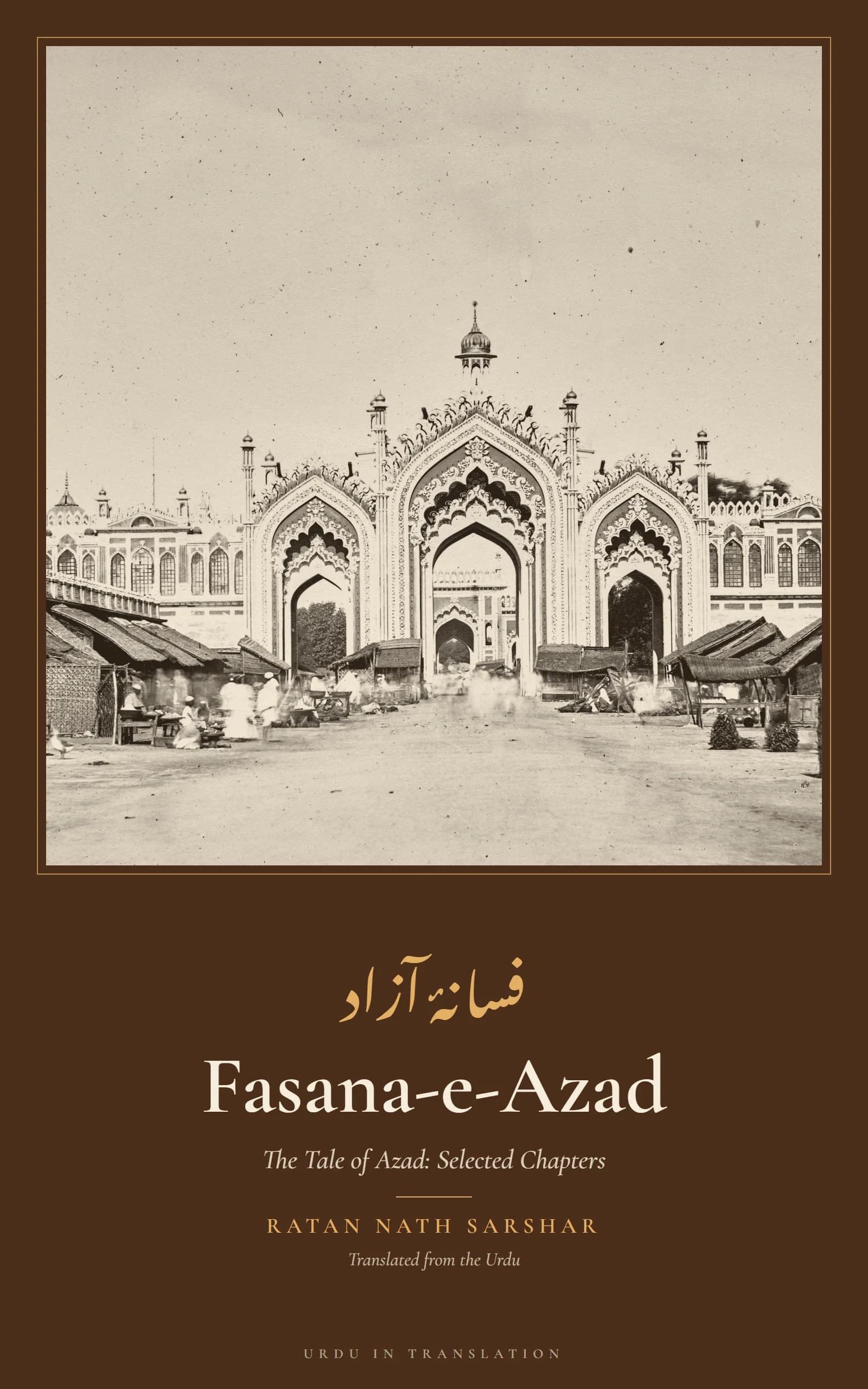
Fasana-e-Azad ("The Tale of Azad") is by Pandit Ratan Nath Sarshar (1846–1903) of Lucknow. It first appeared in instalments in the newspaper Avadh Akhbar in 1878–79 and was then published as a book in four large volumes by Munshi Nawal Kishore. Sarshar died in 1903, so the work is in the public domain everywhere.
”فسانۂ آزاد“ لکھنؤ کے پنڈت رتن ناتھ سرشار (۱۸۴۶ء–۱۹۰۳ء) کی تصنیف ہے۔ یہ پہلی بار ۱۸۷۸ء–۷۹ء میں ”اودھ اخبار“ میں قسط وار چھپی اور پھر منشی نول کشور نے اسے چار ضخیم جلدوں میں کتابی صورت میں شائع کیا۔ سرشار کا انتقال ۱۹۰۳ء میں ہوا، اس لیے یہ کتاب ہر جگہ عوامی ملکیت (پبلک ڈومین) میں ہے۔
This is a selection: Sarshar's preface and the opening fifteen episodes of volume one, as far as the young gentlemen's search for work. The Urdu text was transcribed for this library, page by page, from Fasana-e-Azad, volume 1 (Taraqqi Urdu Bureau, New Delhi, 1986; scan on archive.org). Only Sarshar's text is given; that edition's modern footnotes are not included. The print is dense, and a few words, mostly in the Persian verse, could not be read with certainty; the most likely reading is given.
یہ انتخاب ہے: سرشار کا دیباچہ اور پہلی جلد کے ابتدائی پندرہ قصے، امیر زادوں کی نوکری کی تلاش تک۔ اردو متن اس لائبریری کے لیے ”فسانۂ آزاد“، جلد اول (ترقی اردو بیورو، نئی دہلی، ۱۹۸۶ء؛ آرکائیو ڈاٹ آرگ پر اسکین) سے صفحہ بہ صفحہ نقل کیا گیا ہے۔ صرف سرشار کا متن دیا گیا ہے؛ اس ایڈیشن کے جدید حواشی شامل نہیں۔ چھپائی گنجان ہے، اور چند الفاظ، زیادہ تر فارسی اشعار میں، پوری طرح پڑھے نہیں جا سکے؛ وہاں قرینِ قیاس قراءت دی گئی ہے۔
The English is a new, complete translation of the selected chapters, made for this library, paragraph by paragraph.
انگریزی ترجمہ ان منتخب ابواب کا نیا اور مکمل ترجمہ ہے، پیراگراف بہ پیراگراف۔
Introduction
تعارف
Sarshar was a Kashmiri Pandit of Lucknow, a journalist and editor of Avadh Akhbar. Fasana-e-Azad grew day by day in his newspaper into the largest comic panorama of nineteenth-century Lucknow: its bazaars, weddings, Muharram processions, poets' gatherings, opium dens, courtesans' salons and decaying nawabi households, all seen through the wanderings of Mian Azad, a clever, idle, footloose young gentleman, and the people he meets. Its style mixes ornate rhymed prose, Persian verse and the raw slang of the street, and its comedy is often a criticism of a society Sarshar saw as living on past glories.
سرشار لکھنؤ کے کشمیری پنڈت، صحافی اور ”اودھ اخبار“ کے مدیر تھے۔ ”فسانۂ آزاد“ ان کے اخبار میں روز بروز بڑھ کر انیسویں صدی کے لکھنؤ کا سب سے بڑا مزاحیہ مرقع بن گیا: اس کے بازار، شادیاں، محرم کے جلوس، مشاعرے، افیمیوں کی محفلیں، طوائفوں کے کوٹھے اور زوال پذیر نوابی گھرانے، سب میاں آزاد کی آوارہ گردی کی آنکھ سے، جو ایک ذہین، بیکار اور سیلانی نوجوان ہیں، اور ان لوگوں کے ساتھ جن سے وہ ملتے ہیں۔ اس کا اسلوب مقفیٰ و مسجع نثر، فارسی اشعار اور گلی کوچے کی ٹھیٹ بولی کا امتزاج ہے، اور اس کا مزاح اکثر ایک ایسے معاشرے پر تنقید ہے جو سرشار کی نظر میں ماضی کی شان پر جی رہا تھا۔
The book is a landmark between the old dastan and the modern novel, and it is studied on Urdu courses in Pakistan and India, including the syllabus of Pakistan's Higher Education Commission. Its later volumes, in which Azad goes to fight in the Russo-Turkish war with his comic companion Khoji, are not part of this selection.
یہ کتاب پرانی داستان اور جدید ناول کے درمیان ایک سنگِ میل ہے اور پاکستان اور ہندوستان کے اردو نصاب میں پڑھی جاتی ہے، جن میں ہائر ایجوکیشن کمیشن پاکستان کا نصاب شامل ہے۔ اس کی بعد کی جلدیں، جن میں آزاد اپنے مزاحیہ ساتھی خوجی کے ساتھ روس اور ترکی کی جنگ میں جاتے ہیں، اس انتخاب میں شامل نہیں۔
What did this chapter leave with you?
Sign in to react
Discussion
No one has spoken yet. Say what this chapter stirred in you.