Rashid ul Khairi
راشد الخیری
Life1868–1936
Allama Rashid ul Khairi was born in Delhi, a nephew of Deputy Nazir Ahmad. He devoted his writing to the lives and education of women, founded the women's magazine Ismat in 1908, and ran a school for girls.
His many novels, among them Subh-e-Zindagi and Shaam-e-Zindagi, are so full of the sorrows of their heroines that he was called Musawwir-e-Gham, the Painter of Grief.
Obras de Rashid ul Khairi
Afsana (relato)
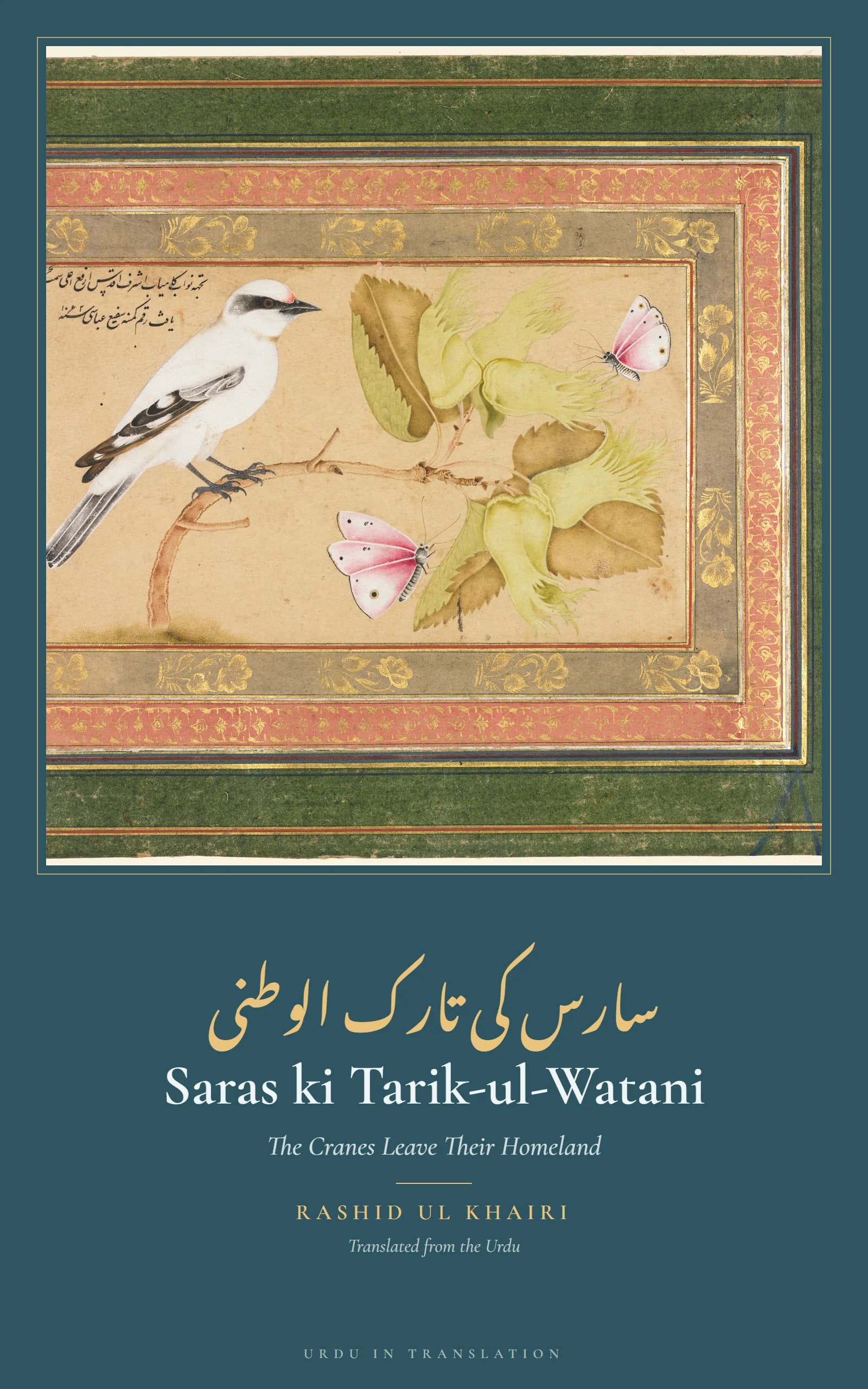
Dos primeros capítulos gratisSaras ki Tarik-ul-Watani (The Cranes Leave Their Homeland): An Allegory
سارس کی تارک الوطنی
Rashid ul Khairi
A pair of sarus cranes, the Indian birds famous for lifelong faithfulness, decide to leave their homeland for ever because man has come too near. The female pleads for man, the maker of fields and orchards; the male answers with what he has seen of him: a prince who stabs the wife he once adored, a rich woman who forbids her wet nurse to suckle her own baby, and a pious-looking elder brother who swears an oath on God and then has his younger brother exiled for a village. Called 'the first symbolic story in the Urdu language', this allegory by Rashid ul Khairi (1868-1936), 'the painter of sorrow', turns the 'noblest of creatures' into the basest. Complete Urdu text (Urdu Wikisource) with a facing English translation, introduction and glossary. Cite as: Rashid ul Khairi, Saras ki Tarik-ul-Watani, tr. urduintranslation.com (2026), https://www.urduintranslation.com/works/saras-ki-tarik-ul-watani. The first two chapters are free to read.
4 capítulosEnglishmás idiomas próximamente
Afsana (relato)
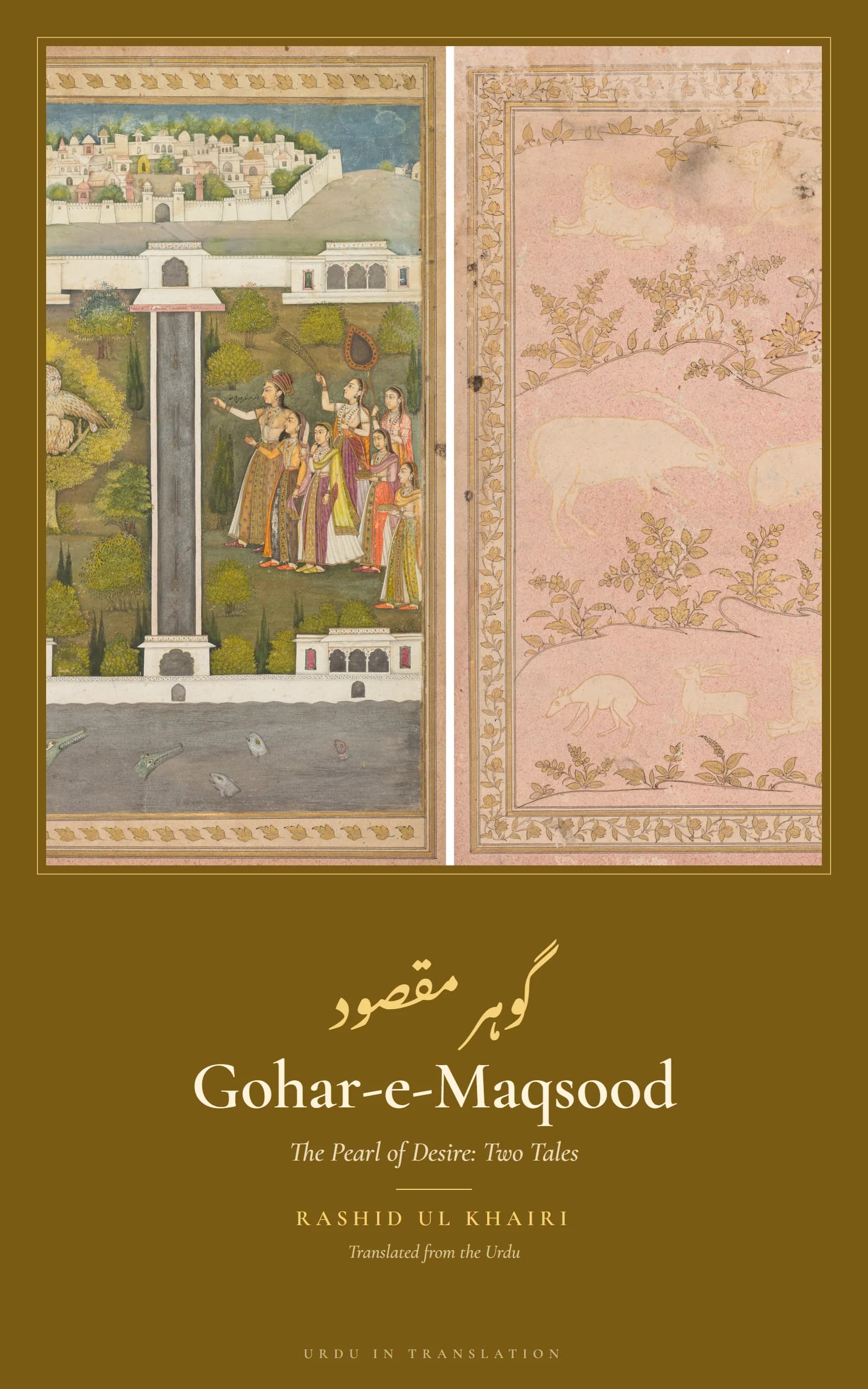
Dos primeros capítulos gratisGohar-e-Maqsood (The Pearl of Desire): Two Tales
گوہر مقصود
Rashid ul Khairi
Two tales by Rashid ul Khairi (1868-1936), 'the painter of sorrow', published in Lahore in 1918. In 'The Fairy of Khayalistan' a fairy banished from the Land of Imagination may return only if she brings the king the best thing in the world; year after year, when the wall of fairyland opens at Nauroz, she brings what she has found among men: a reformer's first drop of blood, a divorced young wife's last breath, a mother's tear, the flood that drowned a woman who would not break purdah, a slighted little girl's tear, and at last the dying breath of a faithful wife. In 'In Search of the Ruby' a young Delhi widow loses her only surviving son at a family celebration and searches for him for twelve years, through suspicion, nightmare and the forests of the Vindhyachal, until he finds her at the altar of a goddess. Complete Urdu text (Urdu Wikisource, checked against the 1918 Dar-ul-Isha'at Punjab edition, archive.org dli.ernet.409249) with a facing English translation, introduction and glossary. Cite as: Rashid ul Khairi, Gohar-e-Maqsood, tr. urduintranslation.com (2026), https://www.urduintranslation.com/works/gohar-e-maqsood. The first two chapters are free to read.
7 capítulosEnglishmás idiomas próximamente