Mirza Asadullah Khan Ghalib
مرزا اسد اللہ خاں غالبؔ
Life1797–1869
The most celebrated Urdu poet, Ghalib wrote in both Persian and Urdu. His Urdu diwan, first published in 1841, ranges from dense Persianate puzzles to couplets of startling plainness. His letters are classics of Urdu prose. Asad was his earlier pen name.
Works by Mirza Asadullah Khan Ghalib
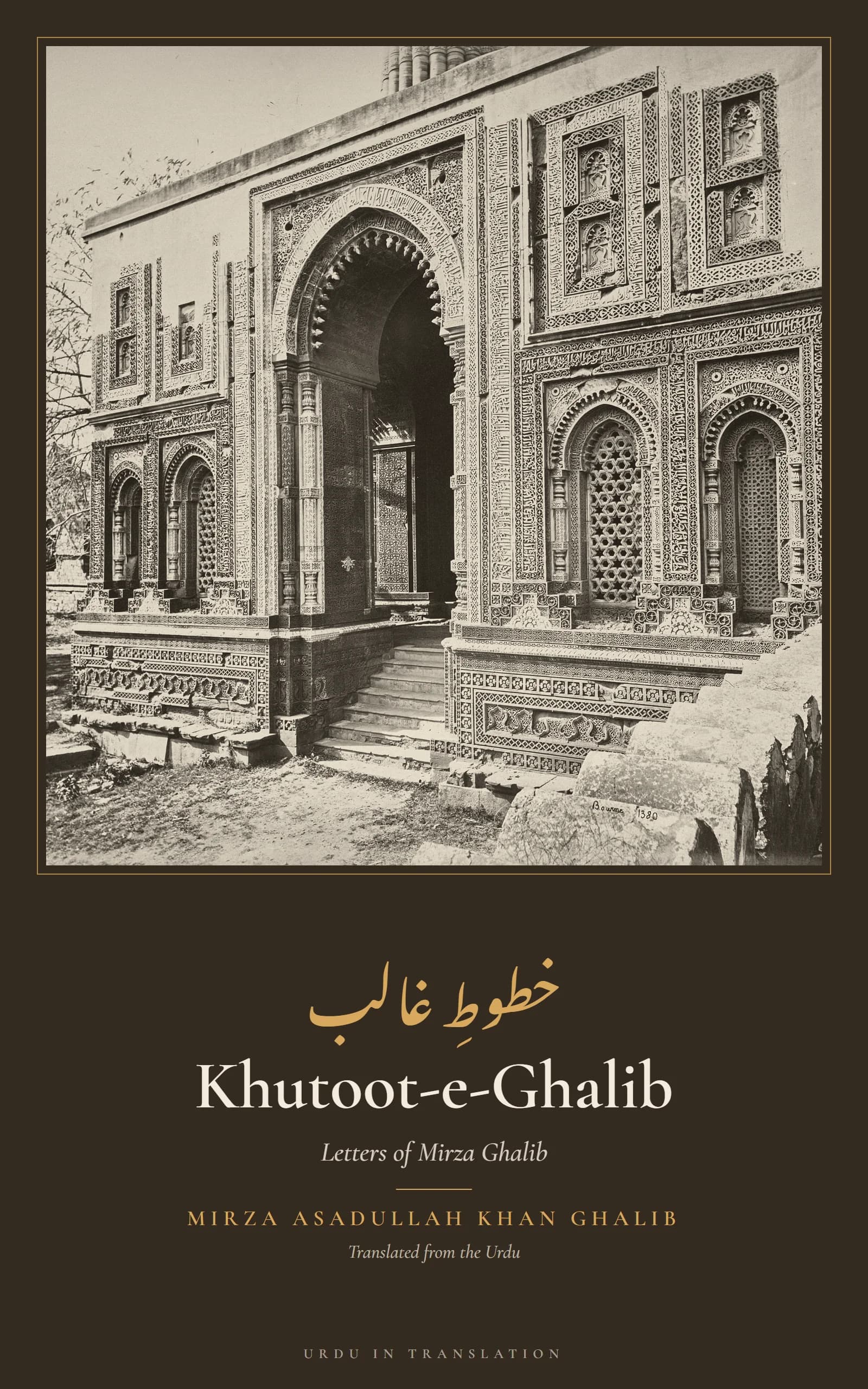
Khutoot
First two chapters freeKhutoot-e-Ghalib (Letters of Mirza Ghalib): A Selection
خطوطِ غالب (انتخاب)
Mirza Asadullah Khan Ghalib
About two hundred of Ghalib's Urdu letters, written between about 1850 and his death in 1869 to his pupil Hargopal Tafta, his physician Hakim Ghulam Najaf Khan, his young friend Mir Mehdi Majrooh, Mirza Hatim Ali Mehr, Ala-ud-din Ahmad Khan Alai and others. Ghalib turned the stiff Persian-style letter into conversation, "talking with the pen from a thousand miles away": the letters tease, scold, console, correct verses, haggle over a pension and, after 1857, mourn the destruction of Delhi. A founding work of modern Urdu prose, taught on the Urdu syllabus of Pakistan's Higher Education Commission and in Indian universities. Urdu text from Mahesh Prasad's 1941 edition with a new English translation; the first two chapters are free. How to cite: Ghalib, Khutoot-e-Ghalib (selection), tr. Urdu in Translation (2026), https://www.urduintranslation.com/works/khutoot-e-ghalib
9 chaptersEnglishmore languages coming
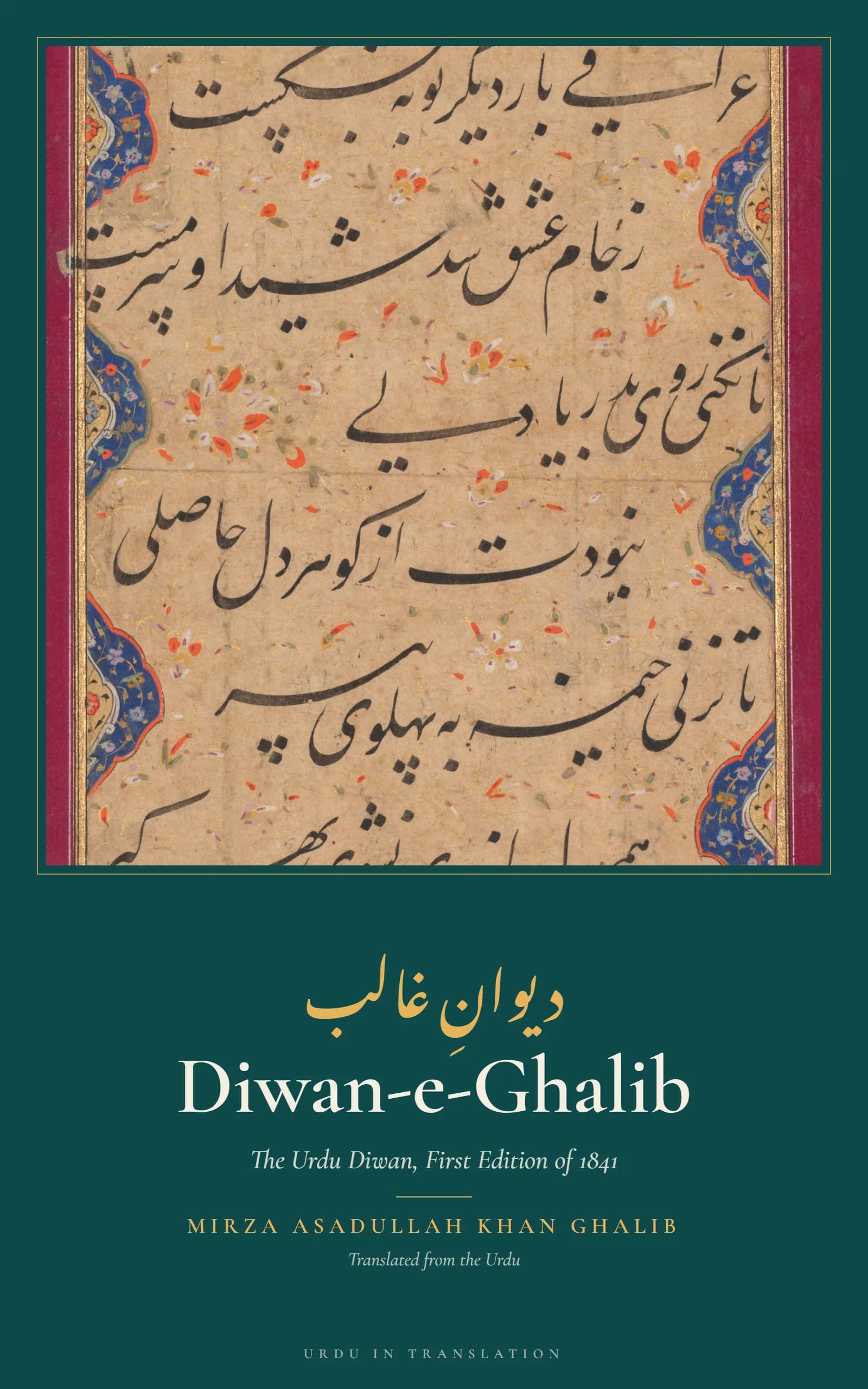
Ghazal · 1841
First two chapters freeDiwan-e-Ghalib: The Urdu Diwan of Mirza Ghalib, First Edition (1841)
دیوانِ غالب
Mirza Asadullah Khan Ghalib
Ghalib's Urdu Diwan as he first published it, in the edition printed in Delhi in October 1841: every ghazal in the order of its radif from alif to ye, then two qasidas in praise of Ali, the qit'as and the ruba'is, about 1,100 couplets in all. Here Ghalib himself chose which of his early Urdu verse should stand, and many of his best-known couplets are already in it: "Whose playful pen does the picture lodge its complaint against?", "A sigh needs a lifetime to take effect", "The joy of the drop is to lose itself in the river". Ghazals he wrote after 1841, such as "A thousand desires", came into later editions and are not in this one. The Urdu was transcribed from the Digital Library of India scan of the 1841 printing and checked against the standard text; an English translation faces it couplet by couplet, with short glosses for names and images a reader may not know. The first two chapters are free to read.
9 chaptersEnglishEspañolFrançaisالعربية中文Русский
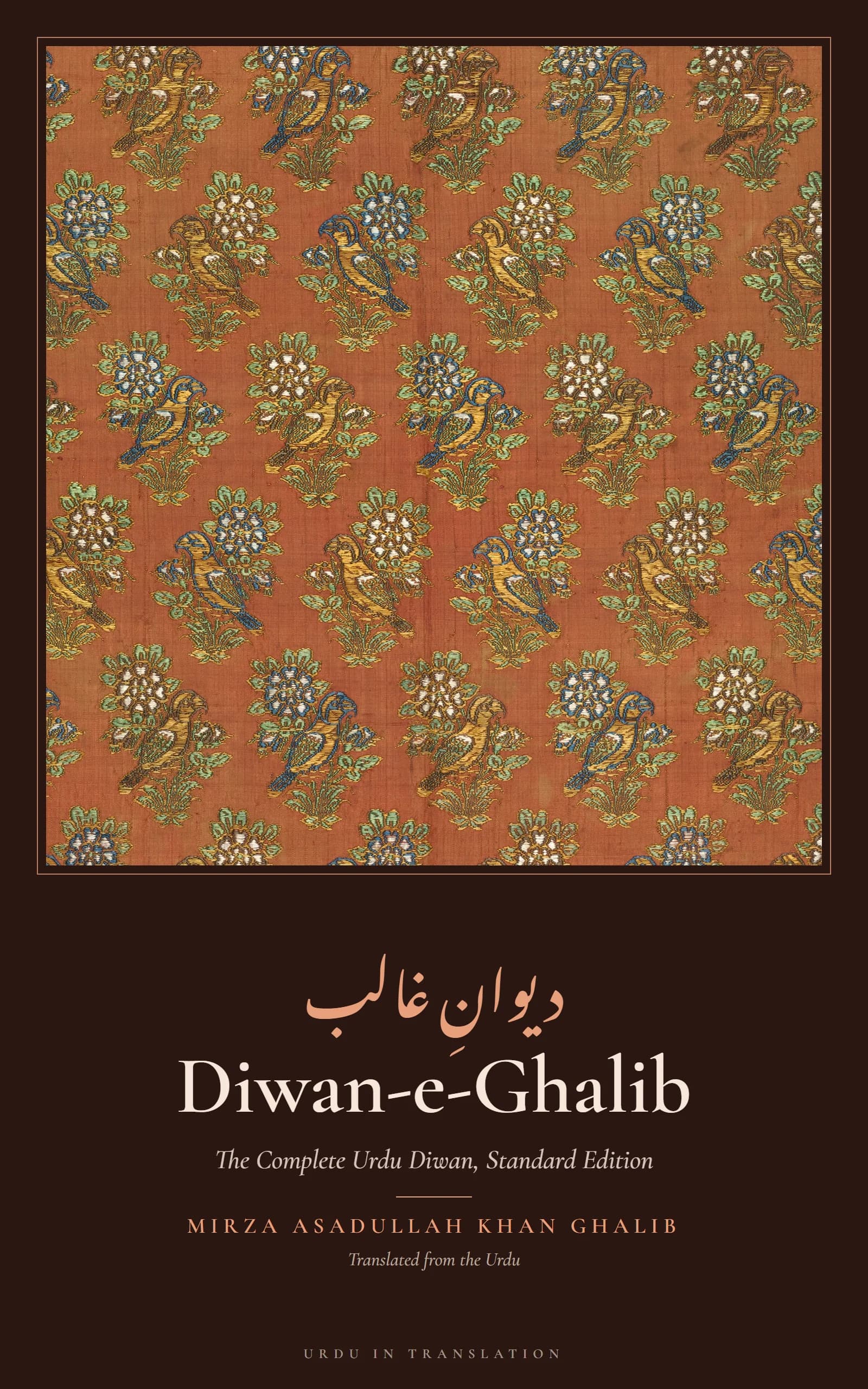
Ghazal · 1841–1863
First two chapters freeDiwan-e-Ghalib (Standard Edition)
دیوانِ غالب (متداول نسخہ)
Mirza Asadullah Khan Ghalib
The Urdu Diwan of Mirza Asadullah Khan Ghalib (1797–1869) as it is read today. The ghazals follow the text of the Nizami Press edition (Kanpur, 1862), the last printed in Ghalib's lifetime and corrected by him, as edited by the Urdu Web team for Wikisource (2006), who also took in verses from the Hamidiya, Mehr and Arshi texts: all 273 ghazals in the order of their radif, from "Against whose playful pen does the picture plead?" to "A thousand desires", "O foolish heart" and "It is only a heart". The last six are found outside Mehr's edition. After them come the qasidas in praise of Ali and of Bahadur Shah, and Ghalib's Urdu qit'as, sehras and ruba'is. An English translation faces the Urdu couplet by couplet, with short glosses for names and allusions. The first two chapters are free to read. The Diwan as Ghalib first published it, in 1841, is also in the library: https://www.urduintranslation.com/works/diwan-e-ghalib
16 chaptersEnglishmore languages coming