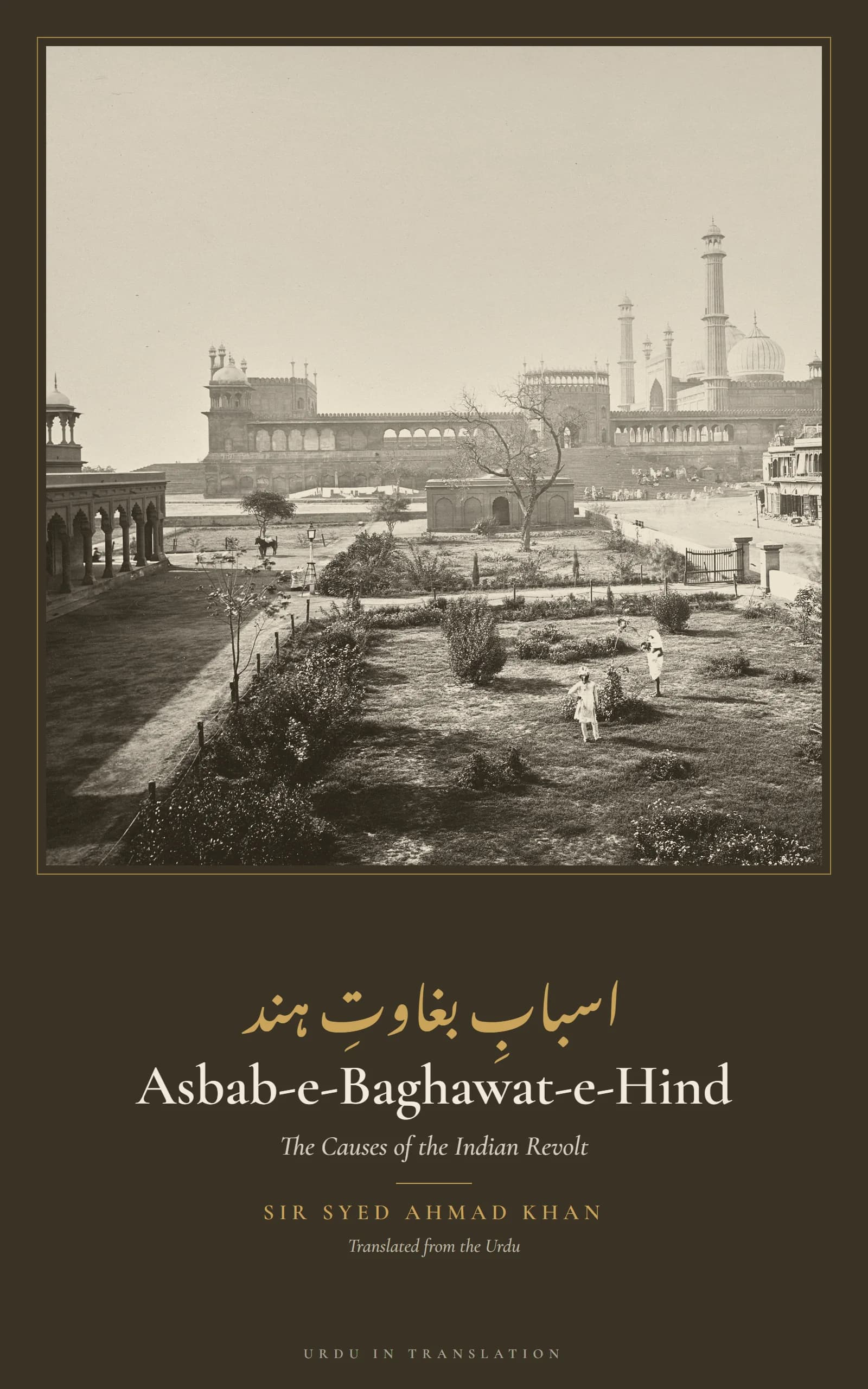
Asbab-e-Baghawat-e-Hind (The Causes of the Indian Revolt)
اسباب بغاوت ہند
赛义德·艾哈迈德·汗爵士 · 关于History
Written in 1858, while the ashes of 1857 were still warm, this short treatise by Syed Ahmad Khan (1817–1898), a judicial officer of the East India Company who had stood by the British at Bijnor in 1857, told the British government what almost nobody else dared: that the Revolt was not a Muslim conspiracy or a plot of the Mughal court, but the result of a government that kept Indians out of its councils and so never knew, or was told, what its subjects felt. He traces five consequences: popular fear for religion, unsuitable laws and revenue settlements, ignorance of the people's poverty and grievances, the neglect of courtesy and trust, and the mismanagement of the army. He had five hundred copies printed and sent almost all of them to Parliament and the government in England; it is a founding text of modern Indian Muslim political thought and a core reading in courses on 1857, colonialism and South Asian history. Complete Urdu text from the Lahore edition of Munshi Fazluddin, Qaumi Kutub Khana (undated, after 1898), with the Persian proclamation of the Lieutenant-Governor printed as its appendix, a facing English translation, introduction, notes and glossary. Cite as: Sir Syed Ahmad Khan, Asbab-e-Baghawat-e-Hind, tr. urduintranslation.com (2026), https://www.urduintranslation.com/works/asbab-e-baghawat-e-hind. The first chapter is free to read.
10 章English更多语言即将推出